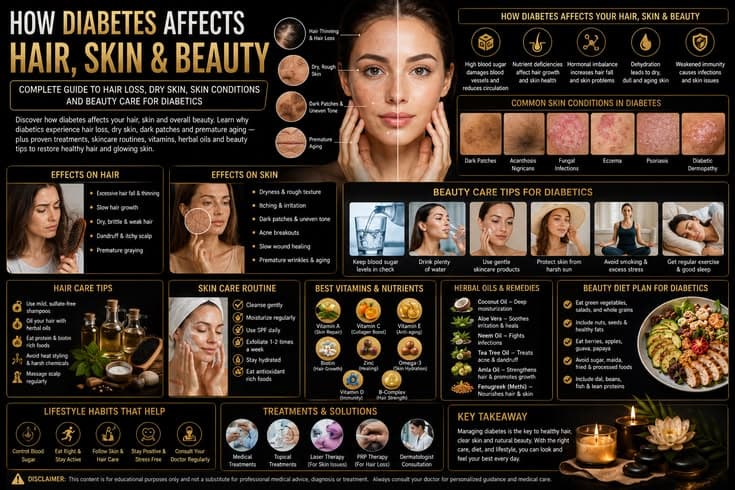
How Diabetes Affects Hair, Skin and Beauty: Complete Guide to Hair Loss, Dry Skin, Skin Conditions and Beauty Care for Diabetics
Diabetes is known primarily as a blood sugar disease — but its effects reach far beyond the pancreas. Millions of diabetic patients around the world notice significant changes in their hair, skin, and overall appearance that they do not immediately connect to their blood sugar levels. Hair begins to thin. Skin becomes dry and cracked. Dark patches appear around the neck. Wounds take weeks to heal. These are not cosmetic coincidences — they are direct consequences of how chronic high blood sugar disrupts the body's biological systems. This complete guide explains every connection between diabetes and your beauty, and what you can do about it.
How High Blood Sugar Damages Your Body's Beauty Systems
To understand why diabetes affects your hair and skin, you need to understand what chronically high blood glucose actually does inside your body. When sugar circulates in the bloodstream at elevated levels over months and years, it triggers a cascade of damage through several distinct pathways.
Glycation — Sugar Attacking Your Proteins
Glycation is the process by which excess sugar molecules attach themselves to proteins and fats in the body, forming compounds called Advanced Glycation End-products, or AGEs. These AGEs are particularly destructive to collagen and elastin — the two proteins responsible for keeping skin firm, elastic, and youthful. When collagen fibers become cross-linked by AGEs, they stiffen and lose their ability to regenerate. The result is accelerated skin aging, premature wrinkling, loss of skin elasticity, and delayed wound healing. This is why poorly controlled diabetics often appear older than their chronological age.
Damaged Blood Vessels — Starving Your Skin and Scalp
High blood sugar gradually damages both large and small blood vessels throughout the body. The small blood vessels — capillaries — are particularly vulnerable. When these capillaries are damaged, they cannot efficiently deliver oxygen and nutrients to the tissues they serve, including the skin and hair follicles. A hair follicle that is not receiving adequate blood supply will weaken, shrink, produce thinner hair shafts, and eventually stop producing hair altogether. Similarly, skin that is not receiving adequate circulation becomes dry, fragile, and slow to heal from any injury.
Nerve Damage — Disrupting the Skin's Natural Functions
Diabetic neuropathy — nerve damage caused by prolonged high blood sugar — affects many of the body's automatic functions, including sweating. The nerves that signal sweat glands to produce moisture can become damaged, leaving the skin unable to maintain its natural lubrication. This is a major reason why diabetic patients develop extremely dry, cracked skin even in warm weather conditions.
Weakened Immune System — Opening the Door to Infections
High glucose levels impair the function of white blood cells, reducing the body's ability to fight off bacterial and fungal infections. The elevated sugar in blood and tissues also creates an environment in which bacteria and fungi thrive. This combination explains why diabetics experience significantly higher rates of skin infections, fungal rashes, and slow-healing wounds compared to non-diabetics.
Diabetes and Hair Loss — Why Your Hair Is Falling Out
Hair loss is one of the most distressing but least discussed complications of diabetes. The connection is real and well-documented. Chronically high blood glucose damages the blood vessels supplying the scalp, disrupts the hormonal environment necessary for healthy hair growth, depletes essential nutrients, and can trigger autoimmune reactions that attack hair follicles directly.
The Hair Growth Cycle and How Diabetes Disrupts It
Healthy hair spends approximately two to six years in the active growing phase (anagen), followed by a brief transition period, and then a resting phase (telogen) of about three to four months before shedding. In a healthy scalp, only about 10 to 15 percent of hairs are in the resting phase at any given time. When the body is under metabolic stress — as it is in poorly controlled diabetes — a much higher percentage of follicles are pushed prematurely into the resting phase, resulting in widespread shedding. This pattern of diffuse hair loss is called telogen effluvium, and it can cause dramatic thinning across the entire scalp within weeks to months of a blood sugar crisis.
Insulin Resistance and Androgenic Hair Loss
People with Type 2 diabetes often have elevated insulin levels as the body tries to compensate for insulin resistance. High insulin stimulates the production of androgens — male hormones — in both men and women. Elevated androgens cause hair follicles to miniaturize over time, producing progressively thinner and shorter hairs until the follicle eventually becomes dormant. This is the same mechanism behind male and female pattern baldness, which is why Type 2 diabetes significantly increases the risk of patterned hair thinning in women as well as men.
Type 1 Diabetes and Alopecia Areata
Type 1 diabetes is an autoimmune disease — the immune system attacks the body's own cells. This autoimmune tendency also increases the risk of developing alopecia areata, a condition in which the immune system specifically attacks hair follicles, creating patchy, circular bald spots on the scalp and body. People with Type 1 diabetes are significantly more likely to develop alopecia areata than the general population.
Where Diabetes Hair Loss Appears
Unlike typical male pattern baldness that begins at the temples or crown, diabetes-related hair loss often presents as general diffuse thinning across the whole scalp. It can also cause noticeable hair loss on the arms, legs, and other body parts — a sign worth reporting to your doctor as it may indicate poor circulation in the extremities. Hair may also become thinner in texture, more brittle, and slower to grow even when it is not actively shedding.
| Type of Hair Loss | Cause in Diabetics | Pattern | Reversible? | Primary Treatment |
|---|---|---|---|---|
| Telogen Effluvium | Metabolic stress, blood sugar spikes, nutritional deficiency | Diffuse thinning across whole scalp | Yes — with blood sugar control | Glucose management, nutrition, stress reduction |
| Androgenic Alopecia | Insulin resistance raising androgen levels | Patterned thinning at crown or temples | Partially — with treatment | Minoxidil, Finasteride (men), Spironolactone (women) |
| Alopecia Areata | Autoimmune attack on follicles (more common in Type 1) | Circular patchy bald spots | Often yes — with treatment | Steroid injections, immunotherapy, JAK inhibitors |
| Circulatory Hair Loss | Poor blood supply to scalp due to vessel damage | General thinning, especially on legs and arms | Partially | Blood sugar control, scalp massage, exercise |
| Medication-Induced | Some diabetes medications (Metformin may reduce B12) | Diffuse thinning | Yes — with supplementation | B12 supplementation, medication review with doctor |
Treatments for Diabetes-Related Hair Loss — Medical, Natural and Topical
The good news is that diabetes-related hair loss is largely reversible when the underlying blood sugar problem is addressed. Hair follicles that have been weakened by poor circulation and metabolic stress can recover when conditions improve. Recovery typically takes two to four months of consistent blood sugar management before visible regrowth begins.
First Step — Stabilize Your Blood Sugar
No hair treatment will be fully effective until blood glucose levels are brought under control. High blood sugar is the root cause of the follicle damage — treating only the hair without addressing the metabolic environment is like watering a plant while keeping it in toxic soil. Work with your doctor to bring your fasting blood sugar and A1C into target range through medication, diet adjustments, and regular physical activity.
Medical Treatments
Minoxidil (sold as Rogaine) is the most widely used FDA-approved topical treatment for hair loss in both men and women. It works by dilating blood vessels in the scalp and extending the active growing phase of hair follicles. For men, oral Finasteride (Propecia) blocks the conversion of testosterone to DHT, the androgen responsible for follicle miniaturization. Women who cannot use Finasteride may be prescribed Spironolactone, which blocks androgen receptors. For alopecia areata, dermatologists may prescribe corticosteroid injections or newer JAK inhibitor medications that suppress the autoimmune attack on follicles.
Natural Oils for Scalp Health
Several natural oils have research support for improving scalp circulation and stimulating follicle activity. Rosemary oil is the most well-studied — a 2015 clinical study found it performed comparably to 2% Minoxidil for treating androgenetic alopecia. It works by increasing blood circulation in the scalp. Mix 5 to 6 drops of rosemary essential oil into a tablespoon of carrier oil such as coconut or jojoba oil, massage into the scalp, and leave for at least 30 minutes before washing.
Coconut oil penetrates the hair shaft and reduces protein loss, keeping hair structurally stronger. Castor oil is rich in ricinoleic acid which supports scalp circulation. Amla (Indian Gooseberry) oil is a traditional remedy widely used across South Asia for hair strengthening and promoting density.
Scalp Massage
A simple 4 to 5 minute daily scalp massage using your fingertips — moving in small circular motions — has been shown in studies to improve hair thickness and density. The mechanism is simple: mechanical stimulation increases blood flow to the follicles, delivering more oxygen and nutrients to support hair production. Doing this consistently over 24 weeks showed measurable improvements in a 2019 clinical study.
Nutritional Support
Diabetics are particularly prone to deficiencies in several nutrients critical for hair health. Biotin (Vitamin B7) supports keratin production and may be depleted in diabetics. Vitamin D plays a role in the hair growth cycle and is commonly deficient in diabetics. Iron carries oxygen to follicles — anemia is a significant driver of hair loss. Zinc supports tissue repair and follicle function. Omega-3 fatty acids reduce scalp inflammation. Before supplementing, request blood tests from your doctor to identify specific deficiencies rather than taking supplements blindly.
| Nutrient | Role in Hair Health | Best Food Sources | Supplement Dose (consult doctor) | Why Diabetics Need More |
|---|---|---|---|---|
| Biotin (Vitamin B7) | Builds keratin — the protein hair is made of | Eggs, almonds, sweet potatoes, oats, salmon | 3 to 5 mg daily | Diabetics may have lower biotin levels than normal |
| Vitamin D | Activates hair follicle receptors, supports growth cycle | Fatty fish, fortified milk, egg yolks, sunlight | 2,000 IU daily minimum | Frequently deficient in diabetics and insulin-resistant patients |
| Iron | Carries oxygen to hair follicles via red blood cells | Lean red meat, spinach, lentils, beans | As directed by blood test results | Poor circulation in diabetes reduces iron delivery to scalp |
| Zinc | Supports tissue growth and repair around follicles | Beef, lentils, oysters, pumpkin seeds | 8 to 11 mg daily | Zinc deficiency linked to hair loss and immune dysfunction |
| Vitamin B12 | Supports red blood cell production and nerve health | Meat, fish, dairy, eggs | 1,000 mcg daily if deficient | Metformin reduces B12 absorption — important for long-term users |
| Omega-3 Fatty Acids | Reduces scalp inflammation, moisturizes follicles | Salmon, mackerel, walnuts, flaxseed, chia seeds | 1,000 to 2,000 mg fish oil daily | Reduces inflammation that drives both hair loss and blood sugar issues |
Need Hair Loss Treatment Products? If you are looking for specific shampoos, hair oils, hair growth creams, vitamins, or medical treatments for diabetic hair loss — contact us on WhatsApp: +92 347 193 6923. We can guide you on the best products available for your specific condition.
10 Skin Problems Caused by Diabetes — Warning Signs to Know
The skin is often where diabetes reveals itself first — even before a formal diagnosis. Dermatologists and endocrinologists consistently identify skin changes as among the earliest warning signs of prediabetes and uncontrolled blood sugar. Learning to recognize these signs can lead to earlier diagnosis and intervention.
1. Diabetic Dermopathy — Shin Spots
The most common skin condition in diabetics, appearing as small, round, flat, brownish-red spots on the shins. They are caused by changes in the small blood vessels and are completely harmless but can indicate the presence of other diabetes-related complications. They tend to fade slowly over 18 to 24 months when blood sugar is well controlled.
2. Acanthosis Nigricans — Dark Velvety Patches
Dark, thick, velvety patches of skin appearing on the back of the neck, armpits, groin, or other skin folds. This condition is directly caused by high insulin levels stimulating skin cell growth, making it one of the most reliable visible signs of insulin resistance and prediabetes. Losing weight and reducing insulin levels can significantly lighten these patches.
3. Dry, Itchy Skin (Diabetic Xerosis)
Excessive dryness affecting the entire body, particularly the legs and feet, caused by dehydration from frequent urination, nerve damage reducing sweating, and poor circulation. The skin becomes so dry it cracks and bleeds, creating entry points for bacterial infection. Intensive daily moisturizing with ceramide-rich creams is essential.
4. Eruptive Xanthomatosis
Sudden outbreaks of small, yellowish pimple-like bumps on the buttocks, thighs, elbows, or knees, caused by very high triglyceride levels that occur with severely uncontrolled diabetes. These bumps disappear once triglycerides and blood sugar are brought under control.
5. Necrobiosis Lipoidica
A relatively rare but distinctive condition causing yellowing, reddish, or brownish patches with a shiny, waxy center — usually appearing on the shins. The patches grow slowly and can ulcerate. Blood sugar control is the primary management approach.
6. Diabetic Blisters (Bullosis Diabeticorum)
Large, painless, fluid-filled blisters that appear suddenly on the hands, feet, or lower legs without any injury. They resemble burn blisters and heal on their own in a few weeks but require careful monitoring for secondary infection.
7. Bacterial Skin Infections
High blood sugar weakens the immune system, making diabetics significantly more susceptible to staph and strep infections. Common forms include folliculitis (infected hair follicles), boils, carbuncles, and cellulitis. Any infection that seems to be spreading rapidly or is accompanied by fever requires immediate medical attention.
8. Fungal Skin Infections
High glucose levels in sweat and skin secretions create an ideal breeding environment for fungi, particularly Candida albicans. This results in itchy, red, moist rashes in warm body folds — armpits, beneath the breasts, groin, between the fingers, and in the corners of the mouth. Athlete's foot, jock itch, and vaginal yeast infections are also significantly more common in diabetics.
9. Open Sores and Diabetic Ulcers
Poor circulation and neuropathy combine to make wounds on the feet and legs extremely slow to heal. Minor cuts, blisters, or pressure sores that would heal in days for a healthy person can take weeks or months in a diabetic — and can progress to severe infections requiring hospitalization. Daily foot inspection is essential.
10. Skin Tags
Multiple small, soft skin growths hanging from a stalk — most commonly on the eyelids, neck, armpits, and groin. While harmless, having many skin tags is associated with insulin resistance and may indicate the presence of undiagnosed Type 2 diabetes.
| Condition | Medical Name | Appearance | Location | Action Required |
|---|---|---|---|---|
| Shin Spots | Diabetic Dermopathy | Small flat brownish-red spots | Shins | Tell doctor; improve blood sugar control |
| Dark Velvety Patches | Acanthosis Nigricans | Dark, thick, velvety skin | Neck, armpits, groin | Test for diabetes; lose weight; reduce insulin resistance |
| Yellow Bumps | Eruptive Xanthomatosis | Small yellowish pimple-like bumps | Buttocks, thighs, elbows | Urgent blood sugar and triglyceride control |
| Waxy Patches | Necrobiosis Lipoidica | Yellow-brown shiny patches | Shins | See dermatologist; blood sugar control |
| Sudden Blisters | Bullosis Diabeticorum | Large painless fluid-filled blisters | Hands, feet, lower legs | Do not pop; see doctor immediately |
| Fungal Rash | Candidal Intertrigo | Red, moist, itchy rash with blisters at edges | Skin folds, groin, armpits | Antifungal treatment; blood sugar control |
| Non-healing Sores | Diabetic Ulcers | Open wounds that do not close | Feet and lower legs | Immediate medical care — risk of amputation if neglected |
Complete Skincare Routine for Diabetic Patients
Diabetic skin requires a more intentional and consistent care routine than non-diabetic skin. The combination of reduced circulation, impaired nerve function, and compromised skin barrier means that ordinary skincare practices are often insufficient. The goal is to maintain intensive moisture, prevent infection, and protect the skin barrier from damage.
Step 1 — Gentle Cleansing
Use a mild, soap-free, pH-balanced cleanser every day. Regular soaps — especially antibacterial or strongly fragranced varieties — strip the skin's natural oils and further compromise the already-weakened skin barrier. Look for cleansers labeled hypoallergenic and fragrance-free. Take showers or baths for 5 to 10 minutes maximum in warm — never hot — water. Hot water strips natural moisture aggressively.
Step 2 — Drying Correctly
After washing, gently pat the skin dry with a 100 percent cotton towel — never rub. Pay special attention to drying skin folds — under the arms, beneath the breasts, between the toes, and in the groin area. Trapped moisture in skin folds creates ideal conditions for fungal infections. Between the toes must be dried thoroughly after every wash.
Step 3 — Moisturizing Within 3 Minutes
Apply moisturizer while the skin is still slightly damp — this traps the residual moisture and dramatically increases the effectiveness of the product. For diabetic skin, thick creams or ointments containing ceramides (which rebuild the skin barrier) or urea (which draws moisture into the skin and softens thick, rough areas) are far superior to thin watery lotions that evaporate quickly. Apply to the entire body daily, but never between the toes — the extra moisture there encourages fungal growth.
Step 4 — Daily Foot Inspection
Use a handheld mirror to check the soles of your feet every single day for cuts, blisters, redness, or open sores. Neuropathy means you may not feel a wound on your foot until it has become seriously infected. Diabetic foot ulcers that go unnoticed are a leading cause of hospitalization and lower limb amputations worldwide — but they are almost entirely preventable with consistent daily inspection.
| Step | Action | Product Type | What to Avoid | Why It Matters |
|---|---|---|---|---|
| Morning Cleanse | Wash face and body with gentle cleanser | pH-balanced, fragrance-free, soap-free cleanser | Antibacterial soap, deodorant soap, hot water | Protects natural skin oils and barrier |
| Pat Dry | Gently pat skin with cotton towel | 100% cotton soft towel | Rubbing, rough towels | Prevents micro-tears in fragile diabetic skin |
| Moisturize | Apply thick cream within 3 minutes of bathing | Ceramide cream, urea cream (10-25%), glycerin ointment | Watery lotions, fragranced creams, between toes | Locks in moisture, rebuilds skin barrier |
| Foot Care | Inspect, dry, and moisturize feet | Specialized foot cream with urea | Lotion between toes, soaking feet too long | Prevents ulcers and fungal infections |
| Sun Protection | Apply mineral sunscreen to exposed areas | Mineral SPF 30+ (zinc oxide or titanium dioxide) | Chemical sunscreens with fragrance | UV damage accelerates glycation and skin aging |
| Evening Inspection | Check entire body for sores, cuts, changes | Handheld mirror | Skipping foot inspection even one day | Early detection prevents minor wounds becoming major infections |
Looking for Diabetic Skincare Products? For recommendations on the best moisturizers, fragrance-free cleansers, foot creams, and skin protection products specifically for diabetic patients — WhatsApp us at +92 347 193 6923. We can help you find the right products for your specific skin concerns.
Diabetes and Premature Aging — How Blood Sugar Accelerates the Clock
Research consistently shows that diabetes accelerates biological aging at a cellular level. The combination of glycation damage to structural proteins, chronic oxidative stress from free radicals generated by high glucose, and persistent low-grade inflammation collectively damage cells faster than normal aging would. Studies have found that people with poorly controlled Type 2 diabetes show brain aging patterns comparable to individuals up to 26 percent older than their actual age. Skin aging follows a similar pattern — the collagen cross-linking caused by AGEs leads to premature wrinkling, sagging, and loss of skin radiance that can make diabetics appear significantly older than their years.
What Glycation Does to Your Skin
When glucose attaches to collagen and elastin fibers through the glycation process, it creates rigid cross-links between adjacent protein chains. These cross-linked fibers lose their flexibility and ability to regenerate. The skin becomes less resilient, more prone to wrinkling with normal facial movements, and loses its capacity to bounce back from compression. The healthy, plump, radiant skin quality that people associate with youth is largely determined by healthy collagen — and glycation attacks it directly.
Slowing Diabetic Aging
The primary defense against diabetes-accelerated aging is strict blood sugar control — keeping glucose levels consistently in the target range dramatically reduces the rate of new AGE formation and the rate of oxidative damage. Beyond glucose management, antioxidant-rich foods like berries, dark leafy greens, and green tea help neutralize the free radicals generated by high blood sugar. Vitamin C is essential for collagen synthesis and can partially counteract glycation damage. Mineral sunscreen provides critical protection — UV radiation dramatically accelerates glycation, making sun protection doubly important for diabetics.
| Biological Process | Normal Aging | Accelerated by Diabetes | Visible Effect | How to Slow It |
|---|---|---|---|---|
| Collagen Glycation | Gradual over decades | Significantly faster with high blood sugar | Premature wrinkles, skin sagging, loss of firmness | Blood sugar control, Vitamin C, sun protection |
| Oxidative Stress | Steady accumulation with age | Dramatically increased by high glucose | Dull skin, accelerated cell damage | Antioxidant-rich diet, exercise, blood sugar management |
| Telomere Shortening | Natural cellular clock | Faster in insulin-resistant cells | Faster overall cell aging and organ decline | Lifestyle interventions, metformin (under medical guidance) |
| Collagen Production | Declines gradually after 25 | Reduced by up to 40% in diabetics | Thin skin, poor wound healing, fragile vessels | Blood sugar control, protein-rich diet, collagen supplements |
| Chronic Inflammation | Increases slowly with age | Elevated by high glucose and insulin resistance | Skin redness, faster tissue breakdown | Anti-inflammatory diet, weight management, exercise |
Diabetes and Collagen Loss — Why Your Skin Loses Its Glow
Collagen is the most abundant protein in the human body, forming the structural scaffold of skin, tendons, cartilage, blood vessels, and bones. For diabetics, collagen is under attack from multiple directions simultaneously — production is reduced, existing collagen is degraded faster, and the structural quality of whatever collagen remains is compromised by glycation.
Studies have found that people with Type 1 diabetes have a reduction in collagen deposition of up to 40 percent compared to non-diabetics, regardless of how well their blood sugar is controlled. In Type 2 diabetes, the damage is dose-dependent — the higher and more chronic the blood sugar elevation, the more severe the collagen impairment.
For skin, the practical result of collagen loss includes reduced elasticity and firmness, increased visibility of fine lines and wrinkles, slower healing from any skin damage, increased susceptibility to bruising, and a general loss of the skin's natural radiance and moisture retention ability.
Collagen supplements — specifically unflavored, pure collagen peptides — are generally safe for diabetics because they contain zero carbohydrates and do not spike blood sugar. Some research even suggests that glycine, the main amino acid in collagen, may support insulin function. However, diabetics with kidney disease (nephropathy) should consult their doctor before significantly increasing protein intake, including collagen supplements.
Practical Beauty Tips for Diabetic Patients — Daily Habits That Make a Difference
Managing your appearance with diabetes does not require a complicated routine — it requires consistent application of a few fundamentally important habits. The following tips address the specific vulnerabilities of diabetic skin and hair from a practical, daily perspective.
Hair Care Habits
Switch to sulfate-free, mild shampoos that clean without stripping the scalp of its natural oils. Avoid daily heat styling — blow dryers, straighteners, and curling irons cause breakage in hair that is already structurally weaker from nutrient deficiencies. Avoid tight hairstyles like high ponytails, tight braids, or extensions that pull on roots and cause traction alopecia. Massage your scalp for 4 to 5 minutes every day using your fingertips — this simple practice meaningfully improves scalp circulation. When using essential oils like rosemary, always dilute in a carrier oil before applying to the scalp.
Face Care Habits
Cleanse with a gentle, soap-free wash in the morning and evening. Never use hot water on the face. Apply a fragrance-free ceramide moisturizer morning and night. Use a mineral-based sunscreen with SPF 30 or higher every single morning — UV exposure accelerates both glycation and hyperpigmentation in diabetic skin. If you wear makeup, choose fragrance-free, hypoallergenic formulas. Avoid heavy foundations that clog pores on skin already prone to infection.
Nail Care
Never cut cuticles — this creates open doorways for bacterial infection in skin with reduced immune function. File nails rather than cutting aggressively. Avoid ingrown toenails by cutting nails straight across. Do not use chemical corn or callus removers on the feet — see a podiatrist instead. If getting pedicures, choose salons with strict sterilization practices or consult a podiatrist for professional foot care.
Blood Sugar Control IS Beauty Care
The single most effective beauty treatment for a diabetic is well-managed blood glucose. Studies and clinical experience consistently show that patients who bring their A1C into target range see improvements in skin condition, reduction in hair shedding, better wound healing, and a general improvement in appearance within months. No skincare product compensates for chronically elevated blood sugar — but consistent glucose management makes every other beauty intervention more effective.
| Area | Do This | Avoid This | Why |
|---|---|---|---|
| Hair Washing | Sulfate-free mild shampoo, lukewarm water, gentle scalp massage | Hot water, harsh shampoos, vigorous scrubbing | Protects fragile follicles and scalp oils |
| Hair Styling | Air dry when possible, loose hairstyles, wide-tooth combs | Daily heat styling, tight hairstyles, fine-tooth combs on wet hair | Diabetic hair is more brittle and prone to breakage |
| Face Cleansing | Soap-free pH-balanced cleanser, lukewarm water, pat dry | Hot water, fragranced products, rubbing dry | Maintains skin barrier integrity |
| Moisturizing | Ceramide creams, apply while damp, fragrance-free | Watery lotions, fragranced creams, skipping days | Repairs and maintains the diabetic skin barrier |
| Sun Protection | Mineral SPF 30+ every morning, reapply every 2 hours outdoors | Skipping sunscreen, chemical sunscreens with fragrance | UV accelerates glycation and skin aging in diabetics |
| Nail Care | File nails straight, push back cuticles gently, visit podiatrist | Cutting cuticles, chemical corn removers, walking barefoot | Any skin breach is an infection risk for diabetics |
| Foot Care | Daily inspection, dry between toes, proper footwear | Tight shoes, walking barefoot, soaking feet in hot water | Diabetic feet are high infection and ulcer risk areas |
Natural Hair Remedies for Diabetic Hair Loss — Oils, Herbs and Home Treatments
Several natural remedies have scientific or traditional support for improving scalp health and stimulating hair growth. These work best as supportive treatments alongside proper blood sugar management and medical care.
Rosemary Oil
The most evidence-supported natural hair growth remedy. A clinical study comparing rosemary oil to Minoxidil 2% found comparable results after 6 months of use. It works by stimulating blood circulation in the scalp. Mix 5 drops in a tablespoon of coconut or jojoba oil, massage into scalp, leave 30 minutes before washing. Use 2 to 3 times per week.
Onion Juice
A 2014 clinical study found that onion juice applied to the scalp significantly improved hair regrowth in patients with alopecia areata. The sulfur compounds in onion juice support keratinocyte growth factor, which plays a role in follicle development. Blend a few onions, strain the juice, apply directly to scalp, leave 15 minutes, then shampoo thoroughly.
Coconut Oil
Penetrates the hair shaft to reduce protein loss and maintains the scalp microbiome. Apply warm coconut oil to scalp and hair length, leave for 2 to 4 hours or overnight, then wash with gentle shampoo. Particularly useful for preventing the brittle, breakage-prone hair texture associated with nutritional deficiencies in diabetics.
Aloe Vera
Aloe vera soothes the scalp, reduces dandruff, and helps unblock follicles by removing excess sebum. Apply pure aloe vera gel directly to the scalp 30 minutes before washing. The same aloe vera gel that works as a blood sugar remedy can also benefit the scalp when applied topically.
Amla (Indian Gooseberry) Oil
Widely used across South Asia for hair strengthening. Rich in Vitamin C — which is critical for collagen synthesis — amla oil supports scalp circulation and provides antioxidant protection to follicles. Warm slightly before massaging into the scalp, leave for at least an hour before washing.
| Oil | Active Compounds | How It Helps | How to Use | Frequency |
|---|---|---|---|---|
| Rosemary Oil | Rosmarinic acid, carnosol | Stimulates scalp circulation; comparable to Minoxidil | 5-6 drops in carrier oil, massage into scalp | 3 times per week |
| Coconut Oil | Lauric acid | Penetrates hair shaft, reduces protein loss | Warm and apply to scalp and hair, leave 2+ hours | 2 to 3 times per week |
| Castor Oil | Ricinoleic acid | Supports scalp circulation and moisture | Mix with lighter carrier oil (coconut), apply to scalp | Once or twice per week |
| Amla Oil | Vitamin C, tannins | Collagen support, antioxidant protection for follicles | Warm and massage into scalp, leave 1 hour | 2 to 3 times per week |
| Jojoba Oil | Liquid wax esters | Mimics scalp's natural sebum, balances scalp moisture | Apply directly to scalp and hair lengths | 2 to 3 times per week |
Summary — Managing Your Beauty Alongside Diabetes
Diabetes affects hair, skin, and appearance through multiple connected pathways — damaged blood vessels, glycation of structural proteins, nerve damage, immune suppression, and hormonal disruption. None of these are cosmetic problems in isolation; they are signs of what high blood sugar is doing to the body's tissues.
The most important truth about diabetic hair and skin care is that the most powerful intervention is not a shampoo, cream, or vitamin — it is blood sugar control. When glucose is consistently managed within the target range, hair loss slows and often reverses, skin retains its moisture and barrier function better, wounds heal faster, and the rate of premature aging slows significantly. Every other treatment — oils, vitamins, moisturizers, medical therapies — works better when built on the foundation of good metabolic control.
Use fragrance-free, ceramide-rich moisturizers daily. Inspect your feet every single day. Take a gentle sulfate-free shampoo and massage your scalp regularly. Use rosemary oil for scalp circulation. Ensure your nutrition covers biotin, Vitamin D, iron, zinc, and B12. Protect your skin from the sun every morning. And work with your healthcare team to keep your A1C in target range.
Medical Disclaimer: This article provides general educational information about how diabetes affects hair and skin. It is not a substitute for professional medical advice, diagnosis, or treatment. Always consult your doctor, dermatologist, or endocrinologist before starting any new supplement, medication, or treatment program — especially if you have diabetes or other medical conditions.
Products Available for Diabetic Hair & Skin Care: If you need guidance on specific shampoos, hair growth oils, scalp serums, diabetic skin creams, moisturizers, vitamins, or Minoxidil-based treatments for diabetic hair loss — contact us directly on WhatsApp: +92 347 193 6923. We are here to help you find the right products for your specific hair and skin concerns.