HbA1c Test Explained: How Hemoglobin Reveals Your 3-Month Blood Sugar Story
Imagine a man who has started noticing frequent urination and an unusual increase in hunger. He suspects it might be sugar — diabetes — and decides to get an HbA1c test done. But what actually happens to the blood he gives? What is hemoglobin really doing inside his red blood cells, and how does a lab technician turn a single drop of blood into a percentage that tells a three-month story of his blood sugar? This guide walks through the entire journey — from oxygen transport inside a red blood cell, to how glucose quietly and permanently attaches itself to hemoglobin, to exactly how the HbA1c test is performed in the laboratory, and what every result range actually means.
1. What Is the HbA1c Test?
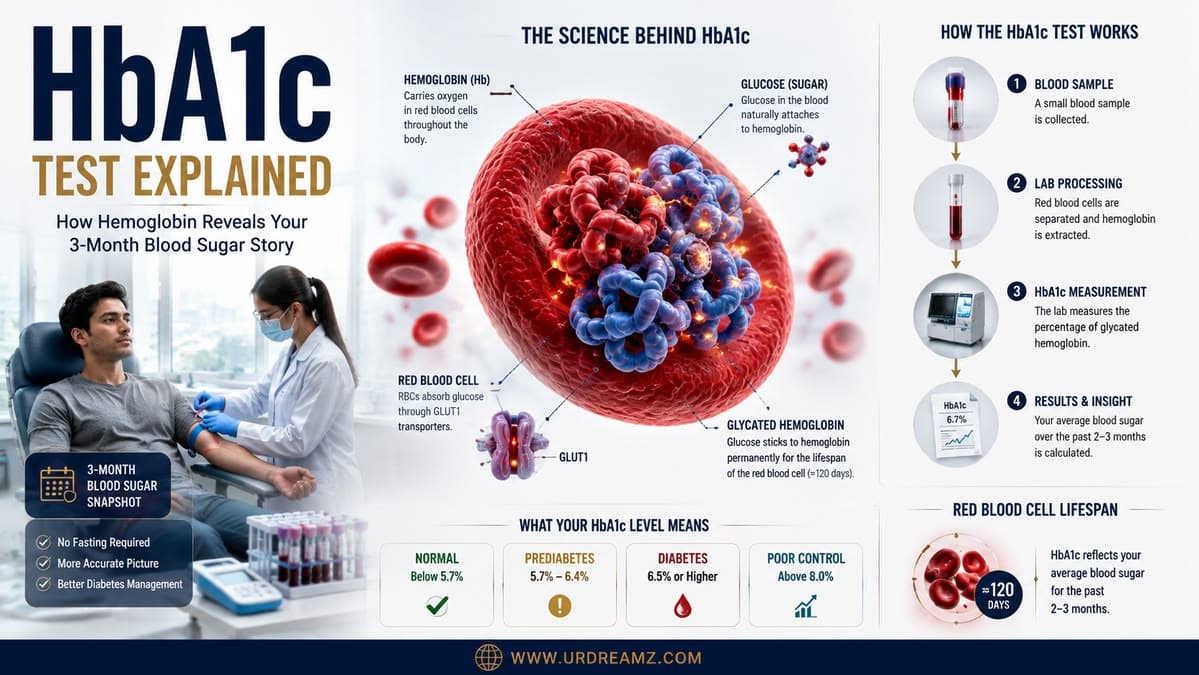
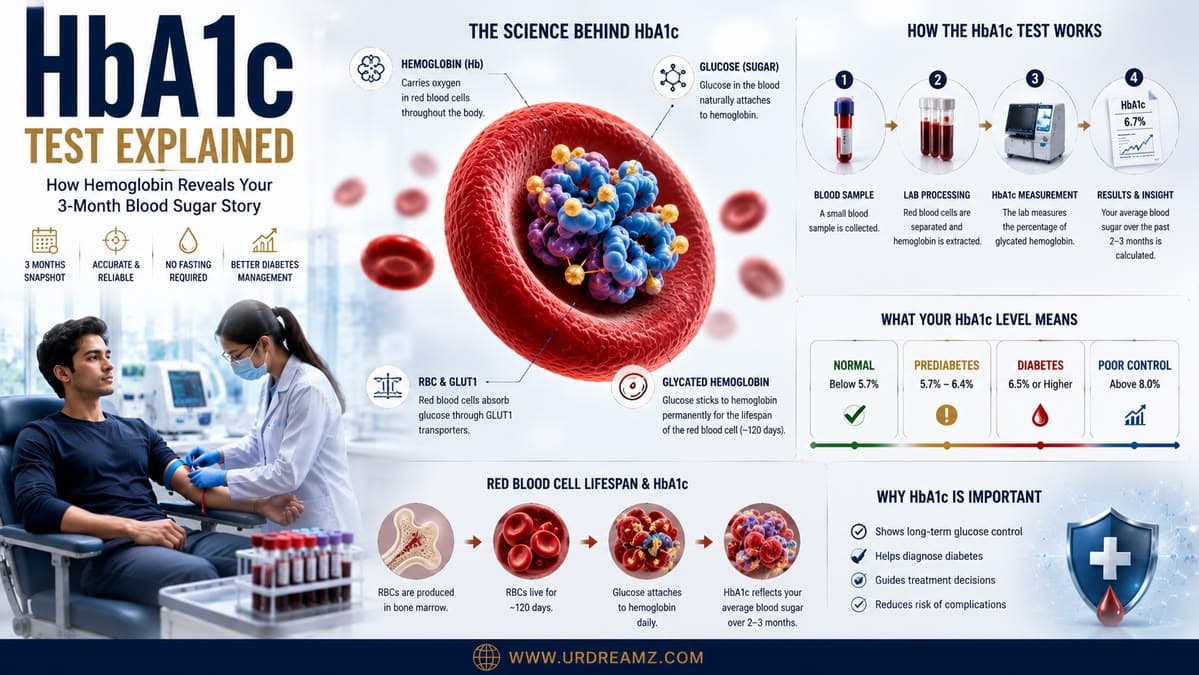
The HbA1c test, also known as the glycated hemoglobin test or A1C test, is a simple blood test that reveals your average blood sugar level over the past two to three months. Unlike a regular blood sugar check, which only shows your glucose level at that exact moment, HbA1c works like a long-term report card — it tells your doctor how well-controlled your blood sugar has been over an extended period, regardless of what you ate for breakfast that morning or how stressed you were the night before the test.
What makes HbA1c genuinely unique among blood sugar tests is that it does not measure glucose directly at all — it measures a byproduct of glucose's interaction with your own red blood cells over time. In a sense, your red blood cells act as tiny, unbiased witnesses that have been quietly recording your blood sugar history for months, and the HbA1c test is simply a way of reading that record back. This is why the test has become the preferred tool for both diagnosing diabetes and tracking how well a treatment plan is working over the following months.
2. Why Would Someone Need an HbA1c Test?
Consider someone who has started noticing frequent urination and unusually increased hunger — two of the earliest and most recognizable warning signs of high blood sugar. Concerned that this might indicate diabetes, this person decides to get an HbA1c test. Rather than relying on a single momentary blood sugar reading, which can vary based on food, stress, or time of day, the HbA1c test gives a far more reliable picture, because it is built from something the body cannot easily hide or fake: the red blood cells themselves.
3. Understanding Red Blood Cells: The Carrier of the Story
When blood is drawn from a vein for testing, it is not a single uniform liquid — it is a mixture of plasma (the watery component) and various blood cells, the most abundant of which are red blood cells (RBCs). In just one millimeter of blood, there are approximately five to six billion red blood cells. Each of these microscopic cells carries within it the very protein that makes the HbA1c test possible: hemoglobin.
Red blood cells are unusual compared to almost every other cell in the human body in one striking way: they have no nucleus. During their development in the bone marrow, immature red blood cells actually expel their nucleus before entering the bloodstream, freeing up more internal space to be packed almost entirely with hemoglobin. This design trade-off means red blood cells cannot repair themselves, cannot divide, and cannot manufacture new proteins once they are mature — they are essentially specialized, short-lived delivery vehicles built for one job: carrying hemoglobin, and through it, oxygen, throughout the body.
4. What Is Hemoglobin, and Why Do We Have So Much of It?
Hemoglobin is a specialized protein found inside red blood cells, and it exists in astonishing quantities — a single red blood cell contains roughly 270 to 300 million hemoglobin molecules. This enormous number is not accidental; hemoglobin's entire job is to transport oxygen throughout the body, and the body needs a constant, massive supply of it to keep every tissue, organ, and cell adequately oxygenated at all times.
5. The Four Types of Hemoglobin
Hemoglobin is not a single uniform molecule — several distinct types exist in the human body, each denoted by a different letter. The most common form found in adults is HbA (Hemoglobin A), which makes up the vast majority of total hemoglobin. Alongside HbA, the body also contains smaller amounts of HbA2, HbC, HbD, and HbF (fetal hemoglobin, which is dominant before birth and largely replaced by HbA after infancy). It is specifically HbA — the dominant adult form — that becomes relevant to the HbA1c test, since it is this form of hemoglobin that becomes "glycated," or coated with sugar, in proportion to blood glucose levels.
6. How Hemoglobin Carries Oxygen Through the Body
Every time a person breathes in, oxygen enters the lungs and needs a way to reach every tissue throughout the body — a job hemoglobin performs with remarkable efficiency. Each single hemoglobin molecule (HbA) is capable of binding to four oxygen molecules simultaneously, one on each of its four protein subunits. Once these four oxygen molecules are bound, the hemoglobin — now traveling inside a red blood cell moving through the bloodstream — delivers this oxygen to tissues throughout the entire body, from the brain to the toes.
7. The Return Journey: Carrying Carbon Dioxide Back
Hemoglobin's job does not end once oxygen is delivered. After tissues use the delivered oxygen for cellular metabolism, they produce carbon dioxide (CO₂) as a waste product. Hemoglobin picks up a portion of this carbon dioxide and carries it back through the bloodstream to the lungs, where it is exhaled out of the body with every breath. This continuous two-way cycle — oxygen out, carbon dioxide back — is what keeps every cell in the body supplied with the oxygen it needs to survive, and it is entirely dependent on hemoglobin functioning properly.
8. How Red Blood Cells Get Their Energy
Interestingly, mature red blood cells lack a nucleus — a feature that distinguishes them from almost every other cell type in the human body. Despite this, red blood cells are still very much alive and require energy to maintain their structure and function throughout their roughly 120-day lifespan. To meet this energy need, red blood cells must continuously take in glucose from the bloodstream, which they use as their primary fuel source through a metabolic process that does not rely on a cell nucleus.
9. GLUT1 vs GLUT4: Two Different Doors for Glucose
Glucose cannot simply drift into a cell on its own — it needs a specific transport protein, or "door," embedded in the cell membrane to let it through. Different cell types in the body use different glucose transporter proteins, and two of the most important are GLUT1 and GLUT4.
| Transporter | Found In | Requires Insulin? |
|---|---|---|
| GLUT1 | Red blood cells, brain cells, and other tissues with constant glucose needs | No — works independently of insulin |
| GLUT4 | Muscle cells and fat (adipose) cells | Yes — only activates when insulin signals it to |
Red blood cells rely specifically on GLUT1 to bring glucose in from the bloodstream. This is a critical detail, because it means red blood cells do not need insulin's permission to absorb glucose — they can take in sugar directly from whatever concentration is circulating in the blood at any given time.
This is fundamentally different from how muscle and fat cells behave. Those tissues, which rely on GLUT4, essentially keep their glucose "doors" locked until insulin arrives and unlocks them, allowing glucose to move from the bloodstream into the cell for storage or immediate energy use. Red blood cells have no such lock — their GLUT1 transporters remain constantly open, passively allowing glucose to move in whenever blood glucose concentration is high enough to create a favorable gradient, following the simple physical principle of diffusion from an area of higher concentration to lower concentration.
10. Why GLUT1 Is a Blessing and a Risk at the Same Time
The fact that red blood cells and brain cells use GLUT1, which does not depend on insulin, is in many ways a biological safeguard — it ensures that the brain and blood cells always have access to glucose, even during periods when insulin signaling is disrupted, which could otherwise be catastrophic for such energy-critical tissues. However, this same independence becomes a liability in the context of diabetes: because GLUT1 does not check insulin levels before letting glucose in, when blood sugar rises to abnormally high levels, red blood cells simply absorb more and more glucose without any built-in braking mechanism, which is precisely what sets the stage for glycation and, ultimately, an elevated HbA1c reading.
11. What Happens When Insulin Stops Working Properly
Under normal, healthy conditions, insulin — a hormone released by the pancreas — signals cells throughout the body (particularly those relying on GLUT4, such as muscle and fat cells) to absorb glucose from the bloodstream, keeping blood sugar levels within a tightly regulated range. In diabetes, this signaling system breaks down: either the pancreas fails to produce enough insulin (as in type 1 diabetes), or the body's cells become resistant to insulin's signal and stop responding properly (as in type 2 diabetes). When this happens, glucose that should have been absorbed by muscle and fat cells instead remains stuck circulating in the bloodstream at abnormally high concentrations — a condition called hyperglycemia — and it is this excess circulating glucose that red blood cells, via their insulin-independent GLUT1 transporters, end up absorbing in unusually large amounts.
This chain of events explains why HbA1c works so well as an indirect measure of diabetes control, even though it never directly interacts with insulin at all. The red blood cells are simply passive bystanders that happen to sit in the bloodstream and absorb whatever glucose concentration surrounds them — they have no way of knowing whether that glucose is elevated because of a missing pancreas hormone, a resistant muscle cell, or any other underlying cause. This is precisely what makes HbA1c such a universal marker across every type of diabetes: it does not care why blood sugar is high, only that it has been high, making it equally useful whether the underlying problem originates in the pancreas, the muscles, or anywhere else in the body's glucose-regulating system.
12. How Glucose Attaches to Hemoglobin: The Glycation Process
Once excess glucose enters a red blood cell, some of it comes into direct contact with the hemoglobin molecules floating inside. Glucose molecules can chemically attach themselves to specific amino acid sites on the hemoglobin protein — particularly a specific site on the beta-chain called valine. This attachment does not require any enzyme to catalyze it; it happens spontaneously through a slow chemical reaction called non-enzymatic glycation. The more glucose that is circulating in the blood, and the longer that glucose remains at elevated levels, the more hemoglobin molecules end up with sugar permanently attached to them.
This process is often compared to what happens when sugar is left to slowly caramelize on a warm surface over time — not through any deliberate chemical reaction being driven by an enzyme, but simply through prolonged, passive contact. In the body, this same slow, passive process is technically referred to as the Maillard reaction in its early stages, the same basic chemistry responsible for browning in cooked food, though inside the bloodstream it unfolds gradually over weeks rather than minutes. The higher and more sustained the glucose concentration inside a red blood cell, the greater the statistical likelihood that any individual hemoglobin molecule will end up glycated before that cell eventually dies and is cleared from circulation.
13. From Hemoglobin to Glycated Hemoglobin (HbA1c)
Once glucose has chemically bonded to hemoglobin in this way, the resulting molecule is no longer plain HbA — it is now called glycated hemoglobin, and in laboratory terminology, this specific glycated fraction is referred to as HbA1c. Essentially, HbA1c is simply hemoglobin that has picked up and permanently retained a sugar molecule during its 120-day lifespan inside a red blood cell. The proportion of a person's total hemoglobin that exists in this glycated form is exactly what the HbA1c test measures and reports as a percentage.
It is worth noting that a small amount of glycated hemoglobin exists in everyone, even people without diabetes, simply because a healthy body always has some baseline level of circulating glucose. This is exactly why the normal reference range for HbA1c is not zero, but rather below 5.7% — a small percentage of hemoglobin becoming glycated is a completely normal, expected part of everyday metabolism. It is only when this percentage climbs meaningfully higher, reflecting sustained elevated blood glucose over months, that it signals prediabetes or diabetes.
14. Why This Bond Cannot Be Undone
One of the most important features of the glucose-hemoglobin bond formed during glycation is that it is covalent — a strong, stable chemical bond that, once formed, does not spontaneously break apart. This means that once a hemoglobin molecule becomes glycated, it remains glycated for the rest of that molecule's lifespan; there is no natural process that removes the sugar once it has attached. This permanence is precisely what makes HbA1c such a reliable long-term marker — it cannot be temporarily "reset" by a single day of healthy eating or a brief improvement in blood sugar the way a same-day glucose reading can.
15. Why Red Blood Cell Lifespan Matters So Much
A typical red blood cell survives in circulation for approximately 120 days, or about three to four months, before it is naturally broken down and replaced by the body. Because glycation accumulates gradually and permanently over this entire lifespan, the HbA1c test effectively captures an average snapshot of blood sugar levels across the most recent two to three months — roughly reflecting the population of red blood cells currently in circulation, weighted somewhat toward more recent weeks since newer cells make up a larger share of the total. This is the fundamental biological reason why HbA1c is described as a "long-term" blood sugar indicator rather than a single-moment reading.
To put this weighting into more concrete terms, researchers generally estimate that the most recent 30 days before a test contribute roughly half of the final HbA1c result, the 30 to 60 days before that contribute about a quarter, and the remaining 60 to 90 days contribute the final quarter. This is because, at any given moment, a person's total red blood cell population is a mix of cells at every stage of their 120-day lifecycle — some just released from the bone marrow days ago, others nearing the end of their lifespan — and this natural, ongoing turnover is what gives HbA1c its gradually shifting, rolling-average character, rather than behaving like a fixed snapshot that only changes once every three months.
16. Step-by-Step: How the HbA1c Test Is Actually Performed
When a patient goes to a laboratory for an HbA1c test, blood is drawn from a vein in the arm (or occasionally via a finger-prick, depending on the equipment available) and collected into a special tube, typically containing EDTA, an anticoagulant that prevents the blood from clotting before it can be processed. From here, the sample goes through several distinct laboratory steps before a final percentage appears on the report.
17. Centrifugation: Separating Blood Into Layers
The collected blood sample is placed into a centrifuge machine, which spins the sample at high speed. This spinning force separates the blood into its component layers based on density — plasma (the liquid portion) settles toward the top, while the heavier red blood cells settle toward the bottom. Laboratory technicians can then isolate and work specifically with the red blood cell layer, since this is where the hemoglobin — and therefore the glycated hemoglobin — resides.
18. Hemolysis: Breaking Open the Red Blood Cells
Once the red blood cells are isolated, they need to be broken open so that the hemoglobin inside can be accessed and measured — a process called hemolysis. This is commonly achieved by placing the red blood cells into a hypotonic solution, meaning a liquid with a lower solute concentration than the inside of the cell. Because water naturally moves toward areas of higher solute concentration, this hypotonic environment causes water to rush into the red blood cells, causing them to swell and eventually rupture, releasing all of their internal hemoglobin — including both the normal, unglycated hemoglobin and the sugar-coated HbA1c fraction — into the surrounding solution for analysis.
19. HPLC: The Gold-Standard Measurement Method
With hemoglobin now released from the ruptured red blood cells, the sample is passed through an analytical instrument to measure exactly what fraction of the total hemoglobin is glycated. The internationally recognized gold-standard technique for this is called High-Performance Liquid Chromatography (HPLC). In simple terms, this machine separates different types of hemoglobin molecules based on subtle differences in their chemical properties, allowing it to distinguish glycated hemoglobin (HbA1c) from normal, unglycated hemoglobin. The machine then calculates what percentage of the total hemoglobin pool is glycated, and this percentage is what appears on the final laboratory report — for example, 5.5%, 6.2%, or 7.1%.
Mechanically, HPLC works by pushing the liquefied hemoglobin sample through a narrow column packed with a specialized material. As the sample flows through this column, different hemoglobin variants — including glycated and non-glycated forms — travel through it at slightly different speeds, based on subtle differences in their electrical charge and molecular structure. A detector positioned at the end of the column records exactly when each hemoglobin fraction emerges, producing a chart called a chromatogram, from which the laboratory software calculates the relative proportion of glycated hemoglobin compared to the total. This entire analysis, once the machine begins running, typically takes only a few minutes per sample, which is part of why HbA1c results are often available on the same day the blood is drawn.
20. Other Methods Used to Measure HbA1c
While HPLC remains the gold standard, several other laboratory methods are also used around the world to measure HbA1c, depending on the equipment and resources available at a given facility.
| Method | Description |
|---|---|
| HPLC (High-Performance Liquid Chromatography) | Gold-standard method; separates hemoglobin types with high precision |
| Immunoassay | Uses antibodies that specifically bind to glycated hemoglobin |
| Enzymatic Method | Uses specific enzymes to detect and quantify glycated hemoglobin |
| Boronate Affinity Chromatography | Uses boronate molecules that bind selectively to glucose-attached hemoglobin |
| Capillary Electrophoresis | Separates hemoglobin types based on electrical charge and size |
21. Understanding Your HbA1c Result: Normal, Prediabetes, Diabetes
Once the laboratory calculates the percentage of glycated hemoglobin in a blood sample, that number is compared against internationally recognized diagnostic thresholds to classify a person's blood sugar status.
| Category | HbA1c (%) | HbA1c (mmol/mol) |
|---|---|---|
| Normal | Below 5.7% | Below 39 mmol/mol |
| Prediabetes | 5.7% – 6.4% | 39 – 46 mmol/mol |
| Diabetes | 6.5% or higher | 48 mmol/mol or higher |
A result below 5.7% generally means blood sugar has been within a healthy range over the past two to three months. A result between 5.7% and 6.4% indicates prediabetes — a warning sign that blood sugar is higher than normal and that the risk of progressing to full type 2 diabetes is significantly elevated, making this an important window for lifestyle changes. A result of 6.5% or higher generally indicates diabetes, though doctors typically confirm this with a repeat test or additional clinical evaluation, especially if the person has no obvious symptoms.
22. HbA1c in Percentage vs mmol/mol
Depending on the country and laboratory, HbA1c results may be reported using two different units: the traditional percentage (%) scale, commonly used in the United States and many parts of Asia including Pakistan, or the mmol/mol scale, which is the standardized international unit used more commonly in the United Kingdom, Australia, and much of Europe. Both units measure exactly the same underlying biological value — the proportion of glycated hemoglobin — just expressed on different numerical scales, and conversion calculators are widely available for translating between the two.
23. Estimated Average Glucose (eAG): Turning a Percentage Into mg/dL
Because most people are more familiar with everyday blood sugar readings expressed in mg/dL (milligrams per deciliter) rather than an HbA1c percentage, doctors often convert the HbA1c result into an Estimated Average Glucose (eAG) value using a standardized formula: eAG (mg/dL) = (28.7 × HbA1c%) − 46.7. For example, an HbA1c of 7% corresponds to an estimated average glucose of approximately 154 mg/dL. This conversion helps patients relate their HbA1c percentage to the kind of glucose numbers they may already be familiar with from home glucose meters.
| HbA1c (%) | Estimated Average Glucose (mg/dL) |
|---|---|
| 5% | ~97 |
| 6% | ~126 |
| 7% | ~154 |
| 8% | ~183 |
| 9% | ~212 |
| 10% | ~240 |
24. HbA1c Targets for People Already Diagnosed With Diabetes
For individuals who have already been diagnosed with diabetes, the goal of ongoing HbA1c testing shifts from diagnosis to management — tracking how well a treatment plan, whether based on diet, oral medication, or insulin, is keeping blood sugar under control over time. A general target of below 7.0% is commonly recommended for many adults with diabetes, though the ideal target can vary considerably based on age, the presence of other health conditions, and how long a person has had diabetes.
25. HbA1c Targets in Type 1 Diabetes
For most adults with type 1 diabetes, the commonly recommended target is an HbA1c of 6.5% (48 mmol/mol) or lower, provided this can be achieved safely without triggering frequent episodes of low blood sugar (hypoglycemia). Because type 1 diabetes involves a complete lack of natural insulin production, careful balancing between insulin dosing and blood sugar control is essential, and some patients may be given a slightly higher individualized target — such as 7.0% or above — if they have a history of severe hypoglycemia or reduced awareness of low blood sugar symptoms. Testing every three to six months is generally advised, with more frequent testing recommended whenever insulin therapy is adjusted.
26. HbA1c Targets in Type 2 Diabetes
For most non-pregnant adults with type 2 diabetes, a general target of below 7% (53 mmol/mol) is recommended by many health authorities to reduce the risk of long-term complications affecting blood vessels and organs. However, this target is not one-size-fits-all: older adults, or those with multiple coexisting health conditions, may be given a more relaxed target — sometimes 7.5% to 8% — to prioritize safety and reduce the risk of low blood sugar episodes and medication burden, while younger or otherwise healthy individuals may aim for a stricter target below 6.5% if it can be achieved safely.
Different medical organizations around the world have historically offered slightly different guidance on exactly where this target should sit, reflecting an ongoing, healthy scientific debate rather than a single settled answer. The American Diabetes Association has generally recommended a target below 7% for many nonpregnant adults, while the American College of Physicians has suggested a somewhat more flexible range of 7% to 8% for certain patients, prioritizing a reduced risk of hypoglycemia and a lighter medication burden over pursuing the tightest possible number. In practice, this means two different doctors might reasonably set slightly different HbA1c goals for two patients with otherwise similar profiles, which is why an individualized conversation between a patient and their care team remains the most reliable way to settle on a personal target.
| Patient Group | Typical HbA1c Target |
|---|---|
| Most adults with type 2 diabetes | Below 7.0% (53 mmol/mol) |
| Younger, healthier individuals | Below 6.5% (48 mmol/mol), if safely achievable |
| Older adults / multiple health conditions | 7.5% – 8.0% (or individualized) |
| Most adults with type 1 diabetes | 6.5% (48 mmol/mol) or lower, if safe |
27. How Often Should You Test Your HbA1c?
For individuals whose diabetes is well-controlled and stable, testing HbA1c approximately twice a year is generally sufficient to confirm that blood sugar management remains on track. However, if a treatment plan has recently changed — for example, a new medication or insulin dose — or if blood sugar levels appear unstable, doctors typically recommend testing more frequently, often every three months, since this aligns closely with the roughly 120-day lifespan of red blood cells and allows enough time for a meaningful shift in the HbA1c percentage to become visible.
28. HbA1c vs Fasting Blood Sugar
Fasting Blood Sugar (FBS) measures blood glucose after eight to twelve hours without eating, offering a snapshot of glucose levels at a single moment in time. HbA1c, by contrast, reflects an average across two to three months and does not require fasting at all.
| Feature | HbA1c | Fasting Blood Sugar |
|---|---|---|
| Time Frame Reflected | 2–3 months average | Single moment in time |
| Fasting Required | No | Yes (8–12 hours) |
| Normal Range | Below 5.7% | Below 100 mg/dL |
| Diabetes Threshold | 6.5% or higher | 126 mg/dL or higher |
| Affected by Recent Meal/Stress | Minimally | Significantly |
29. HbA1c vs Random Blood Sugar
Random Blood Sugar (RBS) can be measured at any time of day, regardless of when the person last ate, and is often used for quick screening or in emergency settings. While useful for a rapid check, a single random reading can be heavily influenced by recent food intake, activity, or stress, making it far less reliable than HbA1c for assessing long-term glucose control, though a very high random reading — 200 mg/dL or above, especially alongside classic symptoms — can strongly suggest diabetes on its own.
30. HbA1c vs Oral Glucose Tolerance Test (OGTT)
The Oral Glucose Tolerance Test (OGTT) involves measuring fasting blood sugar, then having the patient drink a standardized glucose solution, followed by a second blood sugar measurement two hours later to see how effectively the body clears the glucose load. While the OGTT can offer detailed diagnostic confirmation, particularly in cases like gestational diabetes during pregnancy, it is more time-consuming and less convenient than a single HbA1c blood draw, which is why HbA1c is generally preferred for routine screening and monitoring outside of pregnancy.
31. HbA1c vs Continuous Glucose Monitoring (CGM)
Continuous Glucose Monitoring (CGM) uses a small sensor placed under the skin to track glucose levels in real time throughout the day and night, offering a far more detailed picture of glucose fluctuations than any single blood test. CGM data is often summarized using a metric called "Time in Range" (TIR), which measures the percentage of time a person's glucose stays within a healthy target range, commonly aiming for above 70% of the day. While CGM provides granular, real-time detail that HbA1c cannot, HbA1c remains valuable as a simple, standardized, and widely accessible long-term average that does not require wearing a device continuously.
32. Do You Need to Fast Before an HbA1c Test?
One of the most practical advantages of the HbA1c test is that it does not require fasting. Because the test measures a cumulative average built up gradually over months, a single meal eaten shortly before the blood draw has virtually no meaningful effect on the result — unlike fasting blood sugar or OGTT, which are directly influenced by recent food intake. This makes HbA1c a far more convenient test logistically, since patients can have it done at any time of day without needing to plan around an overnight fast.
33. Conditions That Can Distort Your HbA1c Result
While HbA1c is generally a reliable marker, certain medical conditions can distort the result in ways that no longer accurately reflect a person's true average blood sugar. These conditions typically work by altering red blood cell lifespan or hemoglobin structure, both of which are central to how the test works.
| Condition | Effect on HbA1c |
|---|---|
| Iron deficiency anemia | Can falsely raise HbA1c |
| Hemolytic anemia / recent blood loss | Can falsely lower HbA1c (shortened RBC lifespan) |
| Kidney disease (renal failure) | Can falsely raise HbA1c |
| Liver disease | Can falsely lower HbA1c |
| Recent blood transfusion | Distorts result due to mixed-age red blood cell population |
| Certain hemoglobin variants (e.g., sickle cell trait) | Can interfere with accurate measurement |
| Pregnancy | HbA1c is generally considered less reliable; other glucose tests are preferred |
Because of these limitations, doctors typically interpret HbA1c results alongside a person's broader clinical history and, when necessary, alongside other glucose tests such as fasting blood sugar or OGTT, rather than relying on HbA1c in complete isolation.
34. Recognizing the Symptoms of High Blood Sugar
Several warning signs commonly appear when blood sugar has been running persistently high, often prompting someone to seek an HbA1c test in the first place. These include frequent urination, unusually increased thirst, excessive hunger despite eating normally, unexplained weight loss, persistent fatigue, blurred vision, slow-healing cuts or sores, frequent infections, and numbness or tingling sensations in the hands or feet. Anyone experiencing several of these symptoms together should consider discussing testing with a healthcare provider, since early detection significantly improves the ability to manage blood sugar effectively and prevent complications.
Frequent urination and increased thirst are closely linked and often among the very first symptoms someone notices. When blood glucose rises above a certain threshold, the kidneys can no longer reabsorb all of the filtered sugar back into the bloodstream, so the excess glucose spills into the urine, pulling extra water along with it through a process called osmotic diuresis — this is what leads to more frequent trips to the bathroom, which in turn triggers increased thirst as the body tries to replace lost fluids. Similarly, excessive hunger despite normal or even increased food intake often reflects the fact that, even though plenty of glucose is circulating in the blood, insulin resistance or insufficient insulin prevents that glucose from actually entering the body's cells to be used as fuel — from the cell's perspective, it is effectively starving even while blood sugar is high, and the body responds by signaling increased hunger.
35. Why Lowering HbA1c Matters: Long-Term Complications
Chronically elevated blood sugar — reflected in a persistently high HbA1c — gradually damages blood vessels and nerves throughout the body, leading to a range of serious long-term complications if left unmanaged. The eyes can develop diabetic retinopathy, damage to the retina's blood vessels that can progress to blurred vision or blindness. The kidneys can develop diabetic nephropathy, progressive damage to the kidney's filtering structures that can advance to chronic kidney disease. The nerves can develop diabetic neuropathy, causing pain, tingling, numbness, or weakness, particularly in the hands and feet. The cardiovascular system faces an elevated risk of heart disease and stroke, as chronically high blood sugar damages arteries and accelerates atherosclerosis. Research has shown that achieving good glycemic control, with an HbA1c around 7%, can lower the risk of retinopathy by as much as 76% compared to poorly controlled blood sugar, underscoring just how much benefit comes from consistent, long-term management.
Beyond these major organ systems, poorly controlled blood sugar over time also commonly affects the feet and skin. Reduced nerve sensation (from neuropathy) combined with poor circulation (from damaged blood vessels) means that minor cuts, blisters, or pressure sores on the feet can go unnoticed and heal very slowly, sometimes progressing to infections or, in severe untreated cases, requiring amputation. The skin itself can also become more prone to dryness, and both bacterial and fungal infections become more common when blood sugar remains elevated for extended periods, since high glucose levels create a more favorable environment for certain organisms to thrive. This is precisely why doctors emphasize that lowering HbA1c is not simply about a number on a lab report — it is directly tied to protecting nearly every major organ system in the body from slow, cumulative damage.
36. How to Naturally Support a Healthy HbA1c Level
While medication is often necessary for many people with diabetes or prediabetes, several lifestyle factors play a meaningful role in supporting healthier blood sugar levels over time, which in turn is reflected in a lower HbA1c. These include eating a balanced diet rich in fiber and lower in refined sugars and processed carbohydrates, engaging in regular physical activity, maintaining a healthy body weight, managing stress levels, getting adequate sleep, and attending regular medical check-ups to monitor progress and adjust treatment as needed. It is important to note that HbA1c changes gradually — because it reflects a two-to-three-month average, meaningful improvement from a lifestyle or medication change typically takes at least that long to become fully visible in a follow-up test.
37. HbA1c Test Cost and Accessibility
The HbA1c test is widely available at hospitals, diagnostic laboratories, and many clinics, and it is generally an affordable, quick test compared to more elaborate diagnostic procedures. It requires only a small blood sample and typically returns results within a few hours to a day, depending on the laboratory and the testing method used. Because of its convenience — no fasting required, minimal blood volume needed, and reliable long-term insight — it has become the preferred standard test for both diagnosing and monitoring diabetes in clinical practice around the world.
38. Common Myths About the HbA1c Test
Several misconceptions surround the HbA1c test. Some people believe it requires fasting, similar to a fasting blood sugar test — this is false; no fasting is required. Others assume that a single day of very healthy or very unhealthy eating right before the test will significantly change the result — this is also false, since HbA1c reflects a much longer average and is largely unaffected by short-term dietary changes. Another common myth is that HbA1c alone can diagnose diabetes with complete certainty in every situation — in reality, doctors often confirm borderline or unexpected results with a repeat test or an additional glucose test, particularly in the absence of classic symptoms, and HbA1c is considered less reliable in certain conditions such as pregnancy or specific blood disorders.
39. Diabetes Type Overview: Type 1 vs Type 2 vs Gestational
Because HbA1c is used across all forms of diabetes, it helps to understand how the three most common types differ from one another, since the underlying cause of high blood sugar shapes how each type is treated and monitored.
| Type | Underlying Cause | Typical Onset | Primary Treatment |
|---|---|---|---|
| Type 1 Diabetes | Autoimmune destruction of insulin-producing beta cells; body produces little to no insulin | Often sudden; commonly diagnosed in children or young adults | Lifelong insulin therapy |
| Type 2 Diabetes | Insulin resistance and/or insufficient insulin production over time | Gradual; more common in adults, increasingly seen in younger people | Lifestyle changes, oral medications, sometimes insulin |
| Gestational Diabetes | Hormonal changes during pregnancy cause temporary insulin resistance | Typically appears in the second or third trimester | Diet and monitoring; insulin if needed; usually resolves after delivery |
In type 1 diabetes, the immune system mistakenly attacks and destroys the insulin-producing cells of the pancreas, meaning the body simply cannot produce the insulin needed to move glucose out of the bloodstream and into cells like muscle and fat tissue — this is why lifelong insulin replacement is essential from the time of diagnosis. In type 2 diabetes, the pancreas typically still produces insulin, at least initially, but the body's cells become progressively resistant to its signal, and over time the pancreas may also struggle to keep up with the increased demand — this is why type 2 diabetes is often managed initially through diet, exercise, and oral medications before insulin becomes necessary. Gestational diabetes is a distinct, temporary condition caused by pregnancy-related hormonal shifts that increase insulin resistance; while it generally resolves after childbirth, it does raise the mother's future risk of developing type 2 diabetes and requires careful monitoring during pregnancy, typically using glucose tolerance testing rather than HbA1c, since HbA1c is considered less reliable during pregnancy.
40. Frequently Asked Questions
- Q1: What does HbA1c stand for?
- HbA1c stands for glycated hemoglobin — specifically, the fraction of Hemoglobin A that has glucose permanently attached to it.
- Q2: Is fasting required for an HbA1c test?
- No. Unlike a fasting blood sugar test, HbA1c does not require any fasting and can be done at any time of day.
- Q3: What is a normal HbA1c level?
- A normal HbA1c level is generally below 5.7% (under 39 mmol/mol).
- Q4: What HbA1c level indicates prediabetes?
- An HbA1c between 5.7% and 6.4% (39–46 mmol/mol) generally indicates prediabetes.
- Q5: What HbA1c level indicates diabetes?
- An HbA1c of 6.5% (48 mmol/mol) or higher generally indicates diabetes, usually confirmed with a repeat test.
- Q6: How does glucose attach to hemoglobin?
- Glucose binds to hemoglobin through a slow, spontaneous chemical process called non-enzymatic glycation, forming a permanent covalent bond that lasts for the lifespan of that red blood cell.
- Q7: Why does HbA1c reflect roughly 2–3 months of blood sugar?
- Because red blood cells live for approximately 120 days, and glycation accumulates gradually and permanently over that lifespan, HbA1c reflects an average across roughly the past two to three months.
- Q8: How often should I get an HbA1c test?
- Generally twice a year if diabetes is well-controlled, or every three months if treatment has recently changed or blood sugar is unstable.
- Q9: What is a good HbA1c target for someone with diabetes?
- A common general target is below 7.0%, though individual targets vary based on age, other health conditions, and type of diabetes.
- Q10: Can conditions other than diabetes affect HbA1c results?
- Yes. Conditions like anemia, kidney disease, liver disease, recent blood transfusion, and certain hemoglobin variants can distort HbA1c results, making them less reliable in those situations.
- Q11: Is HbA1c the same as a regular blood sugar test?
- No. A regular blood sugar test (fasting or random) measures glucose at a single point in time, while HbA1c reflects an average over the past two to three months.
- Q12: How do red blood cells absorb glucose?
- Red blood cells absorb glucose through a transporter protein called GLUT1, which does not require insulin, unlike the GLUT4 transporter used by muscle and fat cells.
- Q13: Can HbA1c be used to diagnose type 1 diabetes?
- HbA1c is more commonly used for diagnosing and monitoring type 2 diabetes; type 1 diabetes is typically diagnosed based on symptoms and other blood glucose tests, though HbA1c can still be used for ongoing monitoring.
- Q14: What is Estimated Average Glucose (eAG)?
- eAG is a value, calculated from your HbA1c percentage using a standard formula, that converts your result into an approximate average glucose reading in mg/dL for easier comparison with everyday glucose meter readings.
- Q15: Why is HbA1c preferred over daily glucose checks for diagnosis?
- Because it is not affected by short-term fluctuations from diet, stress, or time of day, HbA1c offers a more stable, reliable long-term picture of blood sugar control, making it well-suited for diagnosis and monitoring.
41. Conclusion
The HbA1c test tells a quiet, three-month story written directly into the body's own red blood cells. From the moment oxygen is inhaled and bound to hemoglobin, to the way excess glucose slips into red blood cells through the insulin-independent GLUT1 transporter, to the slow, permanent chemical bond that forms between sugar and hemoglobin's valine site, every part of this process reflects how the body has been handling glucose over recent months. In the laboratory, that biological story is unlocked through centrifugation, hemolysis, and precise measurement techniques like HPLC, ultimately distilled into a single, meaningful percentage. Understanding what that percentage represents — not just as a number, but as the accumulated result of millions of individual glycation events inside billions of red blood cells — helps make sense of why HbA1c has become the gold-standard tool for diagnosing and managing diabetes, and why consistent, long-term blood sugar control matters so much for protecting the eyes, kidneys, nerves, and heart for years to come.