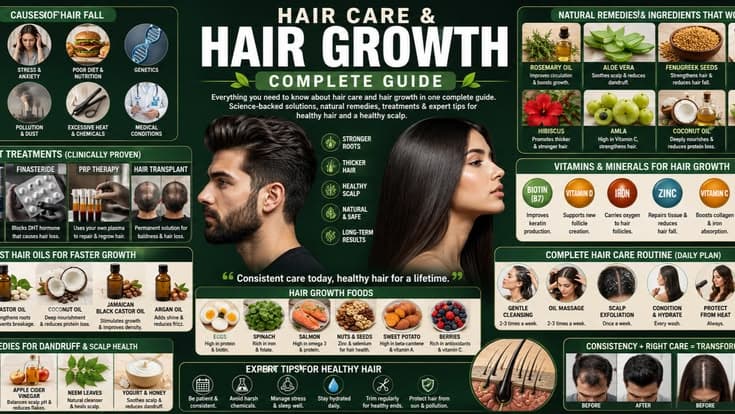
Hair Care and Hair Growth Complete Guide: Causes of Hair Fall, Best Treatments, Natural Remedies and Expert Tips
Hair loss is one of the most searched health topics in the world, and for good reason. Millions of people — men and women, young and old — wake up each morning to find extra hair on their pillow, in the shower drain, or stuck in their comb, and they want answers. Why is this happening? Can it be stopped? Can lost hair grow back?
The honest answer is: it depends entirely on the cause. Hair loss triggered by a nutritional deficiency responds beautifully to dietary changes and supplements. Hair loss caused by genetics requires a different approach altogether. Stress-induced shedding can reverse on its own. Hormonal hair loss may need medical intervention. This is why understanding the root cause of your specific hair fall is always the first and most important step.
This complete guide covers everything — from the biological reasons hair falls out to the most effective treatments available in 2026, from natural home remedies to advanced clinical procedures, from the best hair oils and vitamins to complete daily hair care routines for men, women, and beginners. Read it from start to finish for a comprehensive education, or jump directly to the section most relevant to your situation.
Important Health Note: While this guide provides comprehensive, research-based information, hair loss can sometimes indicate underlying medical conditions. Always consult a qualified dermatologist or trichologist before starting any hair loss treatment, especially oral medications. This content is for informational purposes only and does not replace professional medical advice.
Understanding Hair Growth: How Your Hair Actually Grows
Before addressing hair loss, it helps to understand how hair growth works. Every single hair on your head goes through a repeating cycle of three phases. Understanding this cycle explains why certain treatments work, why some hair loss is temporary, and why you should not panic when you see 50 to 100 hairs falling daily — because that is completely normal.
The Anagen phase is the active growth phase. Hair grows roughly 1 centimeter per month during this phase, and it lasts anywhere from 2 to 7 years depending on your genetics. Roughly 85 to 90 percent of the hair on your head is in the Anagen phase at any given time. The longer your Anagen phase, the longer your hair can grow.
The Catagen phase is a short transitional phase lasting 2 to 3 weeks where the hair follicle shrinks and detaches from its blood supply. About 1 to 3 percent of your hair is in this phase at any time.
The Telogen phase is the resting and shedding phase, lasting approximately 3 months. The hair simply sits in the follicle until it falls out naturally, making way for new hair to begin growing from the same follicle. About 10 to 15 percent of your hair is in the Telogen phase at any time, which accounts for the 50 to 100 hairs you normally shed each day.
Hair loss becomes a problem when either the Anagen phase shortens dramatically (causing thinner, weaker hairs), the Telogen phase activates too many follicles simultaneously (causing sudden shedding known as Telogen Effluvium), or the follicle itself is damaged or destroyed (causing permanent baldness).
Causes of Hair Fall: Why Is Your Hair Really Falling Out?
Hair fall is never random. Every case of hair loss has an underlying trigger, and identifying yours is the key to choosing the right solution. Here are the most common causes, explained clearly:
1. Genetics — The Most Common Cause
Androgenetic Alopecia, commonly known as male pattern baldness or female pattern hair loss, is the single most common cause of hair loss worldwide. It is caused by a genetic sensitivity to dihydrotestosterone (DHT), a hormone derived from testosterone. In genetically susceptible individuals, DHT causes hair follicles to progressively miniaturize — meaning each new hair that grows from the follicle is thinner and shorter than the previous one, until eventually the follicle stops producing visible hair altogether.
In men, this typically presents as a receding hairline followed by thinning at the crown. In women, it usually shows as diffuse thinning across the top of the scalp while the hairline remains largely intact. Androgenetic Alopecia is progressive and permanent without treatment, but it can be significantly slowed and sometimes reversed with the right interventions.
2. Hormonal Imbalances
Hormones regulate almost every biological process in your body, including your hair growth cycle. Significant hormonal changes can push large numbers of hair follicles into the resting (Telogen) phase simultaneously, causing dramatic shedding weeks or months after the triggering event.
Common hormonal triggers include pregnancy and childbirth (postpartum hair loss typically begins 3 to 4 months after delivery), menopause, polycystic ovary syndrome (PCOS) which causes elevated androgens in women, thyroid disorders (both hypothyroidism and hyperthyroidism affect hair), and hormonal contraceptive changes. The good news with most hormonally triggered hair loss is that once the hormonal issue is addressed, hair typically regrows on its own.
3. Nutritional Deficiencies
Hair is essentially a non-essential tissue from your body's perspective — when resources are scarce, your body prioritizes vital organs over hair production. This means nutritional deficiencies show up in your hair before many other places.
Iron deficiency is the single most common nutritional cause of hair loss, particularly in women of menstruating age. Low ferritin levels (the stored form of iron) are strongly associated with increased hair shedding even when hemoglobin is still within normal range. Protein deficiency, Vitamin D deficiency, zinc deficiency, and biotin deficiency can all contribute to hair thinning. A simple blood test ordered by your doctor can identify these deficiencies precisely.
4. Stress — Physical and Emotional
Both severe physical trauma (major surgery, serious illness, high fever) and intense emotional stress can trigger a type of hair loss called Telogen Effluvium. The stress response floods your body with cortisol, which disrupts the hair growth cycle and pushes abnormally large numbers of hair follicles from the growth phase into the resting phase simultaneously. The resulting shedding typically begins 2 to 3 months after the stressful event — which is why people often cannot connect the cause to the effect. This type of hair loss is almost always temporary; once the stress resolves, the hair regrows.
5. Hair Care Damage and Styling Habits
Mechanical and chemical damage to hair is far more common than most people realize. Tight hairstyles like high ponytails, tight braids, cornrows, and buns exert continuous tension on hair follicles, eventually leading to Traction Alopecia — a type of hair loss that begins at the hairline and temples. Excessive heat from flat irons, curling wands, and blow-dryers damages the hair shaft protein structure. Chemical treatments like bleaching, perming, and relaxing weaken the hair dramatically. None of these cause follicle destruction initially, but repeated damage over years can eventually cause permanent follicle scarring.
6. Medical Conditions and Medications
Certain medical conditions cause hair loss as a symptom, including autoimmune conditions like Alopecia Areata (where the immune system attacks hair follicles, causing patchy bald spots), lupus, scalp infections like ringworm (tinea capitis), and seborrheic dermatitis. Medications that list hair loss as a side effect include certain blood thinners, antidepressants, beta-blockers, chemotherapy drugs, and some acne medications containing high doses of Vitamin A. If you suspect a medication is causing your hair loss, discuss alternatives with your prescribing doctor.
| Cause | Type of Hair Loss | Temporary or Permanent | Who It Affects Most | Treatment Approach |
|---|---|---|---|---|
| Androgenetic Alopecia (Genetics) | Progressive thinning, pattern baldness | Permanent without treatment | Men and women with family history | Minoxidil, Finasteride, PRP, Hair Transplant |
| Postpartum / Hormonal Changes | Diffuse shedding (Telogen Effluvium) | Usually temporary — reverses in 6-12 months | Women — post-pregnancy, menopause, PCOS | Address underlying hormonal issue |
| Iron / Nutritional Deficiency | Diffuse thinning and increased shedding | Temporary — reverses with supplementation | Women with heavy periods, vegans, restricted diets | Blood test, targeted supplementation |
| Stress (Telogen Effluvium) | Sudden diffuse shedding 2-3 months post-stress | Temporary — usually reverses in 6-9 months | Anyone after trauma, surgery, illness, or extreme stress | Stress management, nutritional support |
| Traction Alopecia (Styling) | Thinning at hairline and temples | Temporary if caught early — can be permanent | People who wear tight hairstyles regularly | Stop tight styles, gentle hair care |
| Alopecia Areata (Autoimmune) | Patchy circular bald spots | Variable — may regrow spontaneously or require treatment | Anyone — more common in those with autoimmune history | Corticosteroids, JAK inhibitors (prescription) |
| Scalp Infection | Patchy hair loss with scalp symptoms | Temporary if treated promptly | Children and young adults most commonly | Antifungal medication |
Best Hair Growth Treatments for Men and Women in 2026
Once you have identified the cause of your hair loss, you can choose from a wide range of evidence-based treatments. These range from over-the-counter solutions to prescription medications to advanced clinical procedures. Here is a comprehensive breakdown of everything that actually works:
Minoxidil — The Gold Standard OTC Treatment
Minoxidil is the only over-the-counter ingredient approved by the FDA specifically for both male and female pattern hair loss. It works by widening blood vessels and opening potassium channels, which increases blood flow to the scalp and stimulates hair follicles to enter the active growth phase. Minoxidil does not address the underlying cause of genetic hair loss, but it effectively slows further loss and promotes regrowth in most users who apply it consistently.
For men, the standard topical formulation is 5% foam or liquid applied twice daily. For women, 2% or 5% formulations are available, applied once daily. Results are not immediate — most users see the first signs of regrowth around 4 to 6 months, with optimal results visible at 12 months. Critically, results are only maintained as long as you continue using minoxidil. If you stop, the new hairs shed and you return to your previous level of hair loss within several months.
Finasteride — Prescription DHT Blocker for Men
Finasteride is a prescription oral medication that works by blocking 5-alpha reductase, the enzyme responsible for converting testosterone to DHT. By reducing DHT levels in the scalp by approximately 70%, Finasteride prevents further follicle miniaturization and allows existing follicles to recover. Clinical studies show that roughly 80 to 90% of men who take Finasteride experience no further hair loss, and approximately two-thirds see actual regrowth. It is generally not appropriate for women of childbearing age due to the risk of birth defects if taken during pregnancy.
Spironolactone — For Women with Hormonal Hair Loss
Spironolactone is a prescription medication often used for women experiencing hair loss related to elevated androgens, such as those with PCOS or post-menopausal hormonal changes. It works as an androgen receptor blocker, reducing the effect of male hormones (including DHT) on hair follicles. It requires a prescription and should only be used under medical supervision, as it affects hormone levels and can cause side effects.
Platelet-Rich Plasma (PRP) Therapy
PRP therapy is a clinical procedure where a small sample of your own blood is taken, processed in a centrifuge to concentrate the growth factors and platelets, and then injected directly into thinning areas of the scalp. The concentrated growth factors stimulate dormant follicles, increase follicle size, and prolong the growth phase of the hair cycle. PRP is generally recommended as an adjunct treatment — meaning it works best when combined with Minoxidil or Finasteride rather than as a standalone solution. Most patients receive 3 to 4 sessions initially, followed by maintenance sessions every 6 to 12 months.
Low-Level Laser Therapy (LLLT)
LLLT devices — including laser combs, laser caps, and laser helmets — use specific wavelengths of red light to stimulate cellular activity in the scalp. The FDA has cleared several LLLT devices for treating hereditary hair loss in both men and women. Studies show modest improvements in hair density and thickness, particularly when used consistently over 6 to 12 months. LLLT is generally considered safe with minimal side effects, making it a useful addition to a comprehensive hair loss treatment plan.
Hair Transplant Surgery
Hair transplant surgery is the most permanent solution for hair loss, suitable for patients with stable hair loss who have adequate donor hair available. The two primary techniques are Follicular Unit Extraction (FUE) and Follicular Unit Transplantation (FUT). In FUE, individual follicles are extracted one by one from the donor area and implanted in balding areas, leaving tiny, almost invisible scars. In FUT, a strip of scalp is removed from the donor area, dissected into individual follicular units, and transplanted — generally allowing more grafts per session but leaving a linear scar. A newer variation called DHI (Direct Hair Implantation) uses a specialized pen tool to extract and implant simultaneously, offering greater precision.
| Treatment | How It Works | For Men | For Women | Time to See Results | Permanence |
|---|---|---|---|---|---|
| Topical Minoxidil 5% | Increases blood flow to follicles, stimulates growth phase | Yes | Yes (2% or 5%) | 4-6 months initial; 12 months optimal | Ongoing — stops working when discontinued |
| Oral Minoxidil | Same mechanism as topical but systemic | Yes | Yes (lower dose) | 3-6 months | Ongoing — maintenance required |
| Finasteride | Blocks DHT conversion enzyme | Yes | Not for childbearing age | 6-12 months | Ongoing — maintenance required |
| Spironolactone | Blocks androgen receptors | Rarely used | Yes — hormonal hair loss | 6-12 months | Ongoing — maintenance required |
| PRP Therapy | Growth factors stimulate dormant follicles | Yes | Yes | 3-6 months | Maintenance sessions needed every 6-12 months |
| LLLT Devices | Red light stimulates cellular activity | Yes | Yes | 6-12 months | Ongoing use required |
| FUE Hair Transplant | Individual follicles moved from donor to bald areas | Yes | Yes | 12-18 months for full results | Permanent — transplanted hair does not fall out |
| FUT Hair Transplant | Strip of scalp moved, dissected, transplanted | Yes | Yes | 12-18 months for full results | Permanent |
Natural Remedies for Hair Growth: What Actually Works
Natural remedies for hair growth have been used across cultures for centuries, and modern research has begun validating several of them. While natural approaches are unlikely to reverse advanced genetic baldness on their own, they can meaningfully support hair health, reduce shedding, improve scalp conditions, and complement clinical treatments effectively.
Rosemary Oil — Nature's Minoxidil
Rosemary oil has arguably the strongest scientific evidence of any natural hair growth remedy. A landmark 2015 clinical trial published in the journal SKINmed compared rosemary oil directly to 2% Minoxidil over 6 months and found them equally effective at increasing hair count — with rosemary oil causing significantly less scalp itching. A 2022 study confirmed similar findings over 6 weeks. The active compound in rosemary, carnosic acid, helps heal tissue and nerve damage in the scalp and enhances microcapillary blood flow to dormant follicles.
To use rosemary oil safely: never apply it undiluted directly to your scalp as it will cause irritation. Mix 4 to 5 drops of rosemary essential oil with one tablespoon of carrier oil (jojoba, coconut, or castor oil). Part your hair and massage the mixture into your scalp for 5 to 10 minutes. Leave on for at least 30 minutes or overnight, then wash out. Use 2 to 3 times per week consistently for at least 6 months to see meaningful results.
Scalp Massage — Simple, Free, Effective
A 2016 Japanese clinical study found that standardized scalp massage for just 4 minutes daily over 24 weeks produced measurably thicker hair strands. The mechanism is straightforward: massage stretches the cells of hair follicles, stimulating them to produce thicker hair. It also increases blood circulation, delivering more oxygen and nutrients to the follicle. You do not need any oils — simply use your fingertips to apply gentle pressure in slow circular motions across your entire scalp for 5 to 10 minutes daily.
Onion Juice — Surprisingly Proven
Onion juice is rich in sulfur, which is an essential component of keratin (the protein that makes up hair) and collagen. A small but rigorous clinical study found that participants who applied onion juice to their scalp twice daily experienced significant hair regrowth compared to those who used plain water. The juice is simple to prepare: blend one medium onion, strain out the solids, and apply the juice directly to your scalp. Leave on for 30 minutes then wash thoroughly. The smell dissipates quickly after washing.
Aloe Vera — Scalp Soother and Follicle Unclockcker
Fresh aloe vera gel contains enzymes, Vitamins A, C, and E, and minerals that soothe scalp inflammation, unclog hair follicles blocked by excess oil and product buildup, and balance scalp pH. It is particularly effective for people whose hair loss is associated with scalp inflammation or seborrheic dermatitis. Apply fresh gel directly from the aloe leaf (or pure commercial gel without additives) to your scalp, leave for 30 to 60 minutes, and wash out with a mild shampoo.
Castor Oil — Thickness and Moisture
Castor oil is extremely rich in ricinoleic acid and Vitamin E. It improves scalp microcirculation, deeply conditions both the scalp and hair strands, and has antifungal properties that can combat scalp infections contributing to hair loss. Because it is very thick, it is best mixed 50/50 with a lighter carrier oil like almond or coconut oil before applying. Massage into the scalp, leave overnight with a shower cap, and wash out in the morning.
Egg Hair Masks — Protein Treatment
Since hair is made primarily of protein (keratin), applying protein directly to hair — particularly damaged or brittle hair — can temporarily strengthen the shaft, reduce breakage, and improve elasticity. Beat two eggs and apply the mixture to damp hair from roots to tips. Leave for 20 to 30 minutes, then rinse with cool water (hot water cooks the egg in your hair). Use once every 2 weeks as a deep conditioning protein treatment.
| Natural Remedy | Active Mechanism | How to Use | Frequency | Evidence Level |
|---|---|---|---|---|
| Rosemary Oil | Increases scalp blood flow, stimulates dormant follicles | 4-5 drops diluted in 1 tbsp carrier oil, massage into scalp | 2-3 times per week | Strong — clinical trials comparable to 2% Minoxidil |
| Scalp Massage | Stretches follicle cells, improves circulation | 5-10 min daily with fingertips in circular motions | Daily | Moderate — clinical study showed measurable results |
| Onion Juice | Sulfur content supports keratin and collagen production | Strain juice, apply to scalp for 30 minutes then wash | 2-3 times per week | Moderate — published clinical trial showed regrowth |
| Aloe Vera Gel | Soothes inflammation, unclogs follicles, balances scalp pH | Apply fresh gel to scalp for 30-60 minutes | 2-3 times per week | Moderate — strong anti-inflammatory evidence |
| Castor Oil | Improves microcirculation, conditions scalp and strands | Mix 50/50 with lighter oil, apply overnight | 1-2 times per week | Moderate — widely used, some clinical support |
| Green Tea Rinse | EGCG blocks DHT locally, antioxidant scalp protection | Brew strong tea, cool completely, pour over scalp after washing | 2-3 times per week | Emerging — preliminary studies show promise |
| Pumpkin Seed Oil | Phytosterols may inhibit DHT activity locally | Apply topically or take as supplement | Daily supplement or 2-3x weekly topically | Moderate — published randomized controlled trial |
Best Vitamins and Supplements for Hair Growth and Thickness
Hair supplements are a massive industry, and most of them are not worth your money unless you actually have a deficiency in the nutrients they contain. Supplementing a nutrient you already have in adequate amounts will not produce magical hair growth — your body simply excretes the excess. However, correcting a genuine deficiency can produce dramatic improvements in hair health relatively quickly.
Biotin (Vitamin B7)
Biotin is perhaps the most famous hair supplement ingredient, and for good reason when used appropriately. It is essential for the production of keratin, the structural protein that comprises 90% of your hair shaft. Biotin deficiency does cause hair loss and brittle nails. However, true biotin deficiency is actually quite rare in people who eat a varied diet — eggs, nuts, seeds, and fatty fish provide abundant biotin. If you are not deficient, biotin supplements are unlikely to produce noticeable hair improvements. They are most helpful for people with documented deficiency, those following very restrictive diets, or people whose hair is brittle, breaking, and splitting rather than falling from the root.
Iron and Ferritin
Iron deficiency is the most clinically significant nutritional cause of hair loss, particularly in women. Iron is essential for red blood cells to carry oxygen to the scalp and hair follicles. Low ferritin (stored iron) is strongly associated with increased hair shedding even when a full blood count appears normal. If you are experiencing hair loss and have any risk factors for iron deficiency — heavy menstrual periods, vegetarian or vegan diet, recent pregnancy, or gastrointestinal issues — get your ferritin level specifically tested. Supplementing iron when you genuinely need it can produce significant improvement in hair shedding within 3 to 6 months.
Vitamin D
Vitamin D receptors are present in hair follicle cells, and Vitamin D plays a role in the creation of new hair follicles and the regulation of the hair growth cycle. Research consistently associates low Vitamin D levels with types of alopecia including Alopecia Areata and Telogen Effluvium. Vitamin D deficiency is extremely common globally — sun avoidance, dark skin pigmentation, living in northern latitudes, and spending most time indoors all contribute. A blood test can confirm your levels, and supplementation of Vitamin D3 (typically 1,000 to 4,000 IU daily, depending on your deficiency level) can help restore levels to the healthy range.
Zinc
Zinc is directly responsible for hair tissue growth and repair, and it maintains the function of the oil glands around hair follicles. Zinc deficiency causes hair loss that typically appears as diffuse thinning. Foods rich in zinc include oysters, beef, pumpkin seeds, and lentils. Supplementation should be approached carefully, as excessively high zinc intake can actually cause hair loss by interfering with copper absorption — another mineral needed for hair health. Supplement only under guidance if deficiency is confirmed.
Key Vitamins for Hair Growth Summary
| Nutrient | Role in Hair Health | Deficiency Signs | Best Food Sources | When to Supplement |
|---|---|---|---|---|
| Biotin (B7) | Essential for keratin production | Brittle hair, hair loss, skin rash | Eggs, nuts, seeds, salmon | Only if deficient or on restricted diet |
| Iron / Ferritin | Oxygen delivery to follicles via red blood cells | Diffuse shedding, fatigue, cold hands | Red meat, spinach, lentils, tofu | If ferritin level is low on blood test |
| Vitamin D | Follicle creation and growth cycle regulation | Diffuse thinning, fatigue, low mood | Fatty fish, fortified foods, sunlight | Very common deficiency — supplement D3 if low |
| Zinc | Hair tissue growth, repair, and follicle function | Diffuse hair loss, slow wound healing | Oysters, pumpkin seeds, beef, lentils | If blood test confirms deficiency |
| Vitamin C | Collagen synthesis and iron absorption enhancement | Dry, brittle hair, splitting ends | Berries, guava, amla, citrus fruits | Supplement if diet is low in fresh fruits |
| Omega-3 Fatty Acids | Scalp hydration, anti-inflammatory, follicle nourishment | Dry, dull hair, dry scalp, flaking | Salmon, sardines, walnuts, chia seeds | If diet is low in fatty fish and seeds |
| Vitamin E | Antioxidant protection for scalp and follicles | Hair breakage, dry split ends | Sunflower seeds, almonds, avocado | Rarely needed unless severely restricted diet |
Best Oils for Faster Hair Growth
Hair oils serve multiple purposes: some nourish the scalp and stimulate follicles, others protect the hair shaft from protein loss and breakage, and some do both. The key distinction is between carrier oils (which form the base and provide nutrients directly) and essential oils (which are highly concentrated botanical extracts that must always be diluted in a carrier oil before scalp application).
Rosemary Essential Oil is the top pick for stimulating growth, backed by the strongest scientific evidence of any natural oil. Always dilute: 4 to 5 drops per tablespoon of carrier oil.
Castor Oil is the best carrier oil for hair thickness and moisture retention. Rich in ricinoleic acid and Vitamin E, it improves scalp blood flow and deeply conditions. Its thick consistency means it should be mixed with lighter oils.
Peppermint Essential Oil has shown impressive results in animal studies — outperforming Minoxidil in one study for increasing follicle number and depth. The cooling sensation confirms increased blood circulation to the scalp. Always dilute 2 to 3 drops per tablespoon of carrier oil.
Coconut Oil is unique among carrier oils in its ability to penetrate the hair shaft (rather than just coating it) due to its small molecular size and high lauric acid content. This makes it exceptional for reducing protein loss from the hair shaft, particularly for damaged or chemically treated hair. Apply before washing as a pre-shampoo treatment for maximum benefit.
Jojoba Oil is chemically similar to your scalp's natural sebum, making it the most compatible carrier oil for scalp application. It regulates sebum production, prevents clogged follicles, and keeps the scalp balanced. Excellent for mixing with essential oils.
Pumpkin Seed Oil contains phytosterols that may inhibit 5-alpha reductase (the same enzyme blocked by Finasteride), potentially reducing DHT's effect on follicles. A published randomized controlled trial found significant hair count improvement in men who took pumpkin seed oil supplements.
Argan Oil is the premium choice for hair shaft conditioning and protection. Rich in Vitamin E and essential fatty acids, it repairs damage, reduces frizz, adds shine, and protects against heat damage. Best used on hair lengths rather than the scalp.
Dandruff Treatment at Home: Complete Guide
Dandruff affects nearly one in two people globally, making it one of the most common scalp conditions worldwide. It is characterized by dry, flaky skin on the scalp — sometimes accompanied by itching, redness, and scalp irritation. Understanding the type of dandruff you have helps you choose the most effective treatment.
What Actually Causes Dandruff?
The most common cause of dandruff is an overgrowth of a yeast-like fungus called Malassezia that naturally lives on all human scalps. In some people, an immune response to this fungus triggers accelerated skin cell turnover, causing dead skin cells to accumulate and shed as visible flakes. Other contributing factors include dry scalp (which produces smaller, whiter flakes), oily scalp (which feeds Malassezia), sensitivity to hair care products (contact dermatitis), and stress (which weakens the immune response).
Home Remedies for Dandruff
Tea Tree Oil: Has potent antifungal and antimicrobial properties that directly target Malassezia. A 2002 clinical trial found that 5% tea tree oil shampoo significantly reduced dandruff severity. Never apply undiluted — mix 2 to 3 drops into your regular shampoo or a tablespoon of carrier oil, massage into the scalp, leave for 5 to 10 minutes, then rinse thoroughly.
Apple Cider Vinegar (ACV): The acidity of ACV (pH around 2 to 3) helps balance the scalp's pH and creates an environment less hospitable to Malassezia. Mix equal parts ACV and water, apply to the scalp, leave for 15 to 20 minutes, then rinse. Some people find it mildly irritating — dilute further if needed.
Aloe Vera: The anti-inflammatory and antifungal properties of aloe vera help soothe scalp irritation, reduce redness, and combat the fungal component of dandruff. Apply pure gel to the scalp, leave for 20 to 30 minutes, and wash out with a mild shampoo.
Baking Soda: Acts as a gentle physical exfoliant that removes dead skin cell buildup and has antifungal properties. Apply directly to wet hair, massage into the scalp, leave for 1 to 2 minutes, then shampoo as normal. Use weekly rather than more frequently to avoid over-drying.
Coconut Oil + Lemon Juice: Coconut oil moisturizes and softens scalp skin while lemon juice's citric acid helps control yeast growth. Warm 2 tablespoons of coconut oil, mix with 1 tablespoon of fresh lemon juice, massage into the scalp, leave for 30 minutes, then wash out.
When to Use Anti-Dandruff Shampoo
If home remedies do not provide relief within 3 to 4 weeks, over-the-counter anti-dandruff shampoos containing medicated active ingredients are highly effective. Key ingredients to look for include zinc pyrithione (antifungal, in Head and Shoulders), selenium sulfide (reduces Malassezia and slows skin cell turnover), ketoconazole (strongest antifungal, also available in prescription 2% strength), salicylic acid (exfoliates dead skin cells and softens flakes), and coal tar (slows skin cell turnover). If OTC shampoos do not control your dandruff after 4 to 6 weeks, consult a dermatologist for prescription options.
Scalp Care Routine for Healthy Hair Growth
Your scalp is the skin from which every hair on your head grows. Just as neglecting your facial skin leads to breakouts and poor skin health, neglecting your scalp leads to clogged follicles, inflammation, dandruff, excess oil, and slower hair growth. A healthy scalp is genuinely the foundation of healthy hair — and the good news is that establishing a good scalp routine is simpler than most people think.
| Step | Action | Products / Tools | Frequency |
|---|---|---|---|
| Pre-cleanse | Scalp massage with fingertips to loosen buildup and stimulate circulation | Dry fingertips or optional carrier oil with rosemary drops | Before every wash |
| Cleanse | Shampoo scalp with gentle, pH-balanced formula targeting roots only | Sulfate-free shampoo suited to your scalp type | 2-3 times per week based on scalp type |
| Exfoliate | Remove dead skin cells, excess sebum, and product buildup from scalp | Scalp scrub or salicylic acid scalp serum | Once per week |
| Condition | Apply conditioner to mid-lengths and ends only — never to scalp roots | Moisturizing conditioner suited to hair type | Every wash |
| Treatment | Apply targeted scalp serum, tonic, or growth oil after towel-drying | Rosemary oil blend, niacinamide serum, or aloe gel | 2-3 times per week |
| Protect | Avoid tight hairstyles and excessive heat; sleep on silk or satin | Silk pillowcase, heat protectant spray | Daily |
| Deep Treatment | Weekly hair mask for deep conditioning of hair lengths | Protein mask, hydrating mask, or homemade egg/honey mask | Once per week |
Hair Growth Foods and Nutrition Guide
What you eat is reflected in your hair. Hair follicles are among the most metabolically active cells in your body, requiring a constant supply of nutrients to sustain the rapid cell division that produces new hair. When your diet is inadequate, your body deprioritizes hair production in favor of more essential organs — and your hair pays the price.
Hair is composed almost entirely of a protein called keratin, which means adequate protein intake is non-negotiable for healthy hair growth. Adults generally need 0.8 grams of protein per kilogram of body weight daily at minimum, with those who exercise heavily or are recovering from illness needing more. Beyond protein, these are the most hair-critical nutrients and their best food sources:
| Nutrient | Best Food Sources | How It Helps Hair |
|---|---|---|
| Protein (Keratin Building Block) | Eggs, chicken, salmon, lentils, paneer, Greek yogurt, nuts | Provides amino acids that build the hair shaft itself |
| Iron | Spinach, red meat, lentils, tofu, pumpkin seeds, dark chocolate | Carries oxygen to follicles via red blood cells |
| Biotin (Vitamin B7) | Eggs (yolks), almonds, walnuts, salmon, sweet potatoes | Essential for keratin production |
| Zinc | Oysters, beef, pumpkin seeds, lentils, hemp seeds | Supports follicle repair and hormone regulation |
| Vitamin C | Guava, amla, strawberries, bell peppers, citrus fruits, kiwi | Collagen synthesis and iron absorption enhancement |
| Omega-3 Fatty Acids | Salmon, sardines, mackerel, walnuts, chia seeds, flaxseeds | Reduces scalp inflammation, hydrates follicles |
| Vitamin D | Salmon, egg yolks, fortified milk, mushrooms, sunlight | Follicle creation and hair cycle regulation |
| Selenium | Brazil nuts (just 1-2 per day), tuna, eggs, sunflower seeds | Antioxidant protection for follicles |
| Vitamin E | Sunflower seeds, almonds, avocado, olive oil | Antioxidant protection, improves scalp circulation |
Foods to Limit for Scalp Health: Highly refined sugars and carbohydrates can spike insulin and potentially increase DHT production. Excessive alcohol dehydrates the hair and depletes zinc and B vitamins. Ultra-processed foods high in trans fats and additives can increase systemic inflammation that negatively affects the scalp. A Mediterranean-style diet — rich in vegetables, fruits, legumes, healthy fats, and lean proteins — is consistently associated with better hair health outcomes in research.
Complete Hair Care Routine for Healthy Hair (Beginners Guide)
Building a consistent hair care routine is one of the single most impactful things you can do for long-term hair health. Most hair damage is cumulative — the result of small daily habits compounding over months and years. The right routine protects against that damage while optimizing the conditions for maximum growth.
Step 1: Know Your Hair Type
Your hair type determines which products and techniques work best for you. Straight hair tends to distribute scalp oils efficiently but can become oily at the roots quickly, requiring more frequent washing. Wavy hair benefits from lightweight defining products and gentle diffusing. Curly and coily hair is naturally drier because the coiled structure makes it harder for scalp oils to travel down the hair shaft, requiring rich moisture and gentle handling.
Step 2: Wash With Intention
Most people over-wash their hair. Washing too frequently strips the scalp of natural oils, triggering compensatory overproduction that makes hair greasier faster — a vicious cycle. As a general guideline, fine or straight hair may need washing every 2 to 3 days. Wavy hair does well with 2 to 3 washes per week. Curly and coily hair benefits from washing once per week or even less, with co-washing (conditioner only washing) on other days. Always shampoo the scalp and roots — not the lengths. Apply conditioner to the mid-lengths and ends only.
Step 3: Handle Wet Hair Gently
Wet hair is structurally weaker than dry hair because water temporarily weakens the hydrogen bonds that give hair its strength. This means the worst time to aggressively brush, rub, or manipulate your hair is immediately after washing. Pat hair gently with a soft microfiber towel rather than rubbing vigorously. Detangle with a wide-tooth comb starting from the ends and working upward to the roots. Never use a fine-tooth comb or stiff brush on wet hair.
Step 4: Minimize Heat and Chemical Damage
Every time you use a flat iron, curling iron, or blow-dryer on high heat, you are causing some degree of protein degradation in the hair shaft. This is cumulative. The practical approach is not to eliminate heat styling entirely but to use it strategically — always on clean, dry hair, always with a heat protectant applied first, and at the lowest effective temperature setting. Aim for temperatures below 180°C (356°F) for fine hair and below 200°C (392°F) for thick hair. Air-dry as often as practically possible.
Step 5: Regular Trims
Hair grows from the roots, not the ends — so trimming does not make your hair grow faster. However, it does prevent split ends from traveling up the hair shaft, which causes progressive thinning and breaking. Regular trims every 8 to 12 weeks maintain the health of your ends and allow your hair to actually retain the length it grows. You can reduce trim frequency if you protect ends well with deep conditioning and minimal heat.
Hair Loss Prevention Tips: Protect What You Have
Prevention is always easier than reversal. These evidence-based habits help protect your hair from unnecessary loss and create optimal conditions for healthy, sustained growth.
Eat a nutrient-dense diet rich in protein, iron, zinc, Vitamin D, and Omega-3 fatty acids. Address any deficiencies identified through blood testing. Hair health is a direct reflection of overall nutritional status.
Manage stress actively. Chronic elevated cortisol disrupts the hair growth cycle. Regular physical exercise (at least 150 minutes per week), adequate sleep (7 to 9 hours), mindfulness practices, and maintaining social connections all demonstrably reduce cortisol levels and protect hair health.
Handle your hair gently. Use a wide-tooth comb. Start detangling from the ends, not the roots. Avoid aggressive brushing, particularly when wet. Sleep on silk or satin pillowcases to reduce friction-induced breakage overnight.
Avoid tight hairstyles that exert constant tension on your hairline and temporal regions. Rotate between loose and structured styles. The AAD recommends wearing high-tension styles for no more than a few hours at a time.
Address scalp health proactively. Treat dandruff, seborrheic dermatitis, or scalp inflammation promptly — these conditions can impair follicle function and contribute to hair loss over time if left unmanaged.
Act early if you notice changes. The earlier hair loss is addressed, the more options you have and the better your likely outcomes. If you notice your hairline receding, your part widening, or your hair density decreasing noticeably, schedule an appointment with a dermatologist rather than waiting to see if it resolves on its own.
Frequently Asked Questions About Hair Growth and Hair Loss
Is losing 100 hairs per day normal? Yes, completely. Losing between 50 and 100 hairs daily is within the normal range for the Telogen (resting and shedding) phase of the hair growth cycle. Hair loss becomes a concern when shedding consistently exceeds this range, when you notice visible thinning, or when hair regrowth slows noticeably.
Can lost hair grow back naturally? It depends entirely on the cause. Telogen Effluvium triggered by stress, illness, or nutritional deficiency usually regrows fully within 6 to 12 months after the cause is addressed. Androgenetic Alopecia rarely reverses completely without medical treatment, but progression can be significantly slowed. Alopecia Areata (patchy loss) can regrow spontaneously in mild cases but often requires treatment in more severe presentations.
How long does it take to see results from hair growth treatments? Hair growth is inherently slow — about 1 centimeter per month. Most hair growth treatments require 6 months of consistent use before meaningful results are visible, and 12 months for optimal assessment. This is simply the biology of the hair cycle and cannot be significantly accelerated.
Does stress cause permanent hair loss? Stress-induced Telogen Effluvium is almost always temporary. Once the stressor is removed and the body recovers, hair typically regrows fully over the following 6 to 9 months. However, chronic, ongoing stress without resolution can cause repeated cycles of shedding that cumulatively impact hair density over time.
At what age should I start hair loss treatment? The sooner the better once you notice changes. There is no age minimum for addressing hair loss. The earlier you begin appropriate treatment, the more hair you preserve and the better your long-term outcomes.
Conclusion: Your Complete Hair Health Roadmap
Hair health is not a single issue with a single solution — it is the product of multiple interacting factors: genetics, hormones, nutrition, scalp health, hair care practices, stress levels, and overall lifestyle. The good news is that most causes of hair loss are addressable, and even genetic hair loss can be substantially managed with the right treatment approach started at the right time.
The foundation of any successful hair health strategy is always the same: identify the specific cause (through observation, blood testing, and if needed, consultation with a dermatologist), address deficiencies and lifestyle factors first, build a gentle and consistent hair care routine, and then layer appropriate treatments on top of that foundation. Natural remedies like rosemary oil, scalp massage, and nutritional optimization can produce meaningful results for mild to moderate hair loss and work synergistically with clinical treatments for more advanced cases.
Whether your goal is to stop hair fall, regrow thinning hair, treat dandruff, or simply maintain the healthy hair you have, the path is clear: start with the basics, be consistent, be patient, and consult a qualified professional when you need guidance beyond what general information can provide.
Always consult a qualified dermatologist or trichologist before beginning any hair loss treatment program, particularly oral medications like Finasteride or Minoxidil. The information in this guide is educational and does not replace professional medical advice.
Related Articles
- Rosemary Oil for Hair Growth: Complete How-To Guide with Research
- Best Vitamins and Supplements for Hair Growth and Thickness in 2026
- Hair Transplant Complete Guide: FUE vs FUT, Costs, and Recovery
- Dandruff Treatment at Home: 10 Proven Natural Remedies
- Best Foods for Hair Growth: Complete Nutrition and Diet Guide