Diabetic Recipes and Blood Sugar Friendly Foods: Complete Guide to What to Eat and Avoid for Diabetes
Managing diabetes through food is one of the most powerful tools available to anyone living with this condition. The relationship between what you eat and how your blood sugar responds is direct, immediate, and entirely within your control. A meal high in refined carbohydrates and added sugars can push blood glucose to dangerous levels within minutes. A meal built around fiber, lean protein, and healthy fats can keep blood sugar stable for hours.
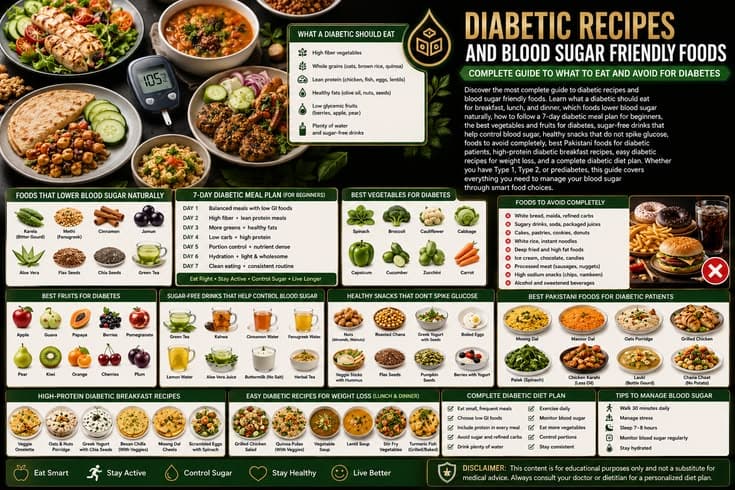
This complete guide covers everything you need to know about eating well with diabetes: which foods actively help control blood sugar, which ones to avoid, how to structure your meals throughout the day, the best diabetic breakfast ideas, healthy lunch and dinner recipes, blood-sugar-friendly snacks, what fruits and vegetables are safest to eat, sugar-free drinks that actually help, and a complete 7-day beginner meal plan. We have also included a section specifically on Pakistani and South Asian foods for diabetic patients, because managing diabetes looks different depending on your traditional cuisine.
Medical Disclaimer: This guide is for educational purposes only. Diabetes is a serious medical condition that requires personalized care. Always consult your doctor, endocrinologist, or a registered dietitian before making significant changes to your diet or stopping any medications. If you need guidance on herbal medicines, supplements, or specialized diabetic products, you can contact a wellness specialist on WhatsApp at +923471936923.
Understanding Blood Sugar: Why Food Choices Matter So Much
Every time you eat carbohydrates — whether from bread, rice, fruit, or milk — your digestive system breaks them down into glucose, which enters your bloodstream. In a person without diabetes, the pancreas immediately releases insulin to shepherd that glucose into cells for energy. In a person with diabetes, this process is impaired — either the pancreas does not produce enough insulin (Type 1 and some cases of Type 2), or the body's cells have become resistant to insulin's signal (Type 2 diabetes), or both.
The result is that glucose accumulates in the blood rather than entering cells, leading to the high blood sugar readings that characterize diabetes. Over time, chronically elevated blood sugar damages blood vessels, nerves, kidneys, eyes, and the heart. This is why managing what you eat is not just about feeling better in the short term — it is about protecting your body from serious, life-altering complications over the long term.
The three key dietary strategies for blood sugar management are: controlling the amount of carbohydrates you eat, choosing carbohydrates with a low glycemic index (which digest slowly and cause gradual rather than sharp glucose spikes), and combining carbohydrates with protein, healthy fats, and fiber to further slow absorption. Every food recommendation in this guide follows these three principles.
The Diabetes Plate Method: The Simplest Way to Build Every Meal
The Diabetes Plate Method, recommended by the American Diabetes Association, is the most practical and flexible framework for building diabetes-friendly meals without counting calories or carbohydrates obsessively. It works with any cuisine, any food preference, and any cooking style.
The method is simple. Take a standard 9-inch dinner plate. Fill exactly half the plate with non-starchy vegetables — spinach, broccoli, cauliflower, green beans, cucumbers, tomatoes, peppers, zucchini, or any combination. Fill one quarter of the plate with lean protein — grilled chicken, fish, eggs, tofu, lentils, or low-fat cottage cheese. Fill the remaining quarter with quality complex carbohydrates — brown rice, whole wheat roti, quinoa, oats, sweet potato, or beans. Add a glass of water or unsweetened tea on the side, and your meal is complete.
This framework automatically controls carbohydrate intake, maximizes fiber and protein (both of which slow blood sugar rises), and ensures you get the vitamins and minerals your body needs. It works for breakfast, lunch, and dinner with minimal adjustment.
Foods That Lower Blood Sugar Naturally
Certain foods have specific properties that actively help manage blood glucose beyond simply being low in sugar. These are the foods that form the backbone of every effective diabetic diet:
Non-Starchy Vegetables
Non-starchy vegetables are the most unrestricted food group in a diabetic diet. They are low in carbohydrates, high in fiber and water, and packed with vitamins and minerals. You can eat them in generous quantities at every meal without significant blood sugar impact. The best choices include spinach, kale, collard greens, broccoli, cauliflower, cabbage, bell peppers, zucchini, cucumber, green beans, mushrooms, asparagus, lettuce, and tomatoes.
Spinach in particular contains alpha-lipoic acid, an antioxidant that can help improve insulin sensitivity and reduce nerve damage associated with diabetes. Broccoli contains sulforaphane, a compound that increases insulin sensitivity and protects cells from oxidative stress. Cabbage is rich in Vitamin C and fiber, helping to slow the digestion of other foods eaten alongside it.
Legumes: Lentils, Beans, and Chickpeas
Lentils (dal), kidney beans (rajma), black beans, and chickpeas (chana) are among the most blood-sugar-friendly foods available. They contain both soluble fiber and resistant starch — two types of carbohydrates that bacteria in your gut ferment rather than your body digesting into glucose. This makes legumes cause a much smaller blood sugar rise than equivalent portions of bread or rice. They are also excellent sources of plant-based protein and iron.
Fatty Fish: Salmon, Sardines, and Mackerel
Fatty fish provide high-quality protein and omega-3 fatty acids, both of which support blood sugar management. Protein slows gastric emptying, meaning food moves from your stomach into your intestines more slowly, leading to a more gradual release of glucose into the bloodstream. Omega-3 fatty acids reduce inflammation throughout the body — important because chronic inflammation is strongly linked to insulin resistance. Aim for at least two servings of fatty fish per week.
Nuts and Seeds
Almonds, walnuts, pistachios, chia seeds, flaxseeds, and pumpkin seeds are all excellent choices for blood sugar management. They are high in healthy fats, fiber, and magnesium — a mineral that plays a key role in how insulin functions. Studies show that eating a small handful of nuts before or with a meal can significantly reduce the post-meal blood sugar spike from carbohydrate-containing foods eaten alongside them.
Berries
Among fruits, berries have the lowest sugar content and highest fiber and antioxidant content. Blueberries, strawberries, raspberries, and blackberries are all excellent choices. A 2010 study found that eating blueberries regularly improved insulin sensitivity in people with insulin resistance. Their antioxidants also protect cells from the oxidative damage associated with high blood sugar.
Oats
Oatmeal, particularly steel-cut or rolled oats, contains beta-glucan, a specific type of soluble fiber that forms a gel in your digestive tract and dramatically slows the absorption of glucose. Research consistently shows that consuming oats reduces post-meal blood sugar spikes and improves overall glycemic control over time. Choose plain, unsweetened oats and add your own flavor with cinnamon, nuts, or a few fresh berries.
Eggs
Eggs are essentially zero-carbohydrate and provide complete, high-quality protein along with healthy fats, vitamins, and minerals. Multiple studies have found that regular egg consumption is safe for people with diabetes and can improve satiety and reduce post-meal blood sugar spikes when eggs are eaten as part of a balanced meal. They are among the most versatile and affordable breakfast ingredients available.
| Food | Why It Helps Blood Sugar | Best Way to Eat It | Portion Guidance |
|---|---|---|---|
| Spinach and Leafy Greens | Very low carb, high fiber, improves insulin sensitivity | Raw in salads, sautéed, added to omelets or soups | Unlimited — fill half your plate |
| Lentils and Beans | High fiber and resistant starch — very slow glucose release | Dal, chana chaat, soups, added to salads | 1/2 cup cooked per meal |
| Salmon and Sardines | High protein, omega-3 fatty acids reduce inflammation | Baked, grilled, or canned in water | 3 to 4 oz (85-115g) per serving |
| Almonds and Walnuts | Healthy fats and magnesium reduce blood sugar spikes | Raw, unsalted as a snack or on yogurt | 1 small handful (about 28g) |
| Blueberries and Berries | Low sugar, high fiber and antioxidants | Fresh, on yogurt, or in oatmeal | 1/2 cup per serving |
| Oats (steel-cut or rolled) | Beta-glucan fiber dramatically slows glucose absorption | Plain oatmeal with cinnamon and nuts | 1/3 to 1/2 cup dry (40-50g) |
| Eggs | Zero carbohydrates, high protein, versatile | Boiled, scrambled, omelet with vegetables | 1 to 2 whole eggs per meal |
| Broccoli | Contains sulforaphane, improves insulin sensitivity | Steamed, roasted, or stir-fried | Unlimited — non-starchy vegetable |
| Greek Yogurt (plain, unsweetened) | Probiotics improve gut health and insulin response | With berries, nuts, or as a meal component | 150 to 200g per serving |
| Avocado | Healthy monounsaturated fats, no significant carbohydrates | Sliced, mashed on toast, in smoothies | 1/4 to 1/2 avocado per serving |
Best Diabetic Breakfast Recipes
Breakfast is particularly important for people with diabetes because many people experience a natural rise in blood sugar in the early morning hours — known as the Dawn Phenomenon — caused by hormones that signal the liver to release glucose as you wake up. Starting the day with a high-carbohydrate, low-protein breakfast (like sweetened cereal, white toast, or fruit juice) makes this worse. A high-protein, high-fiber breakfast helps counteract the Dawn Phenomenon and sets the tone for stable blood sugar throughout the day.
Option 1: Spinach and Feta Omelet
Whisk 2 whole eggs (or 1 whole egg + 2 egg whites for fewer calories). Heat a teaspoon of olive oil in a non-stick pan over medium heat. Pour in the eggs and let them set for 30 seconds. Add a large handful of fresh spinach and two tablespoons of crumbled feta cheese to one half, then fold the other half over. Cook until the cheese is slightly melted. Serve with 1 to 2 slices of whole-grain or multigrain toast. This breakfast provides roughly 25 to 30 grams of protein with minimal carbohydrates.
Option 2: Greek Yogurt Bowl with Berries and Nuts
Spoon 150 to 200 grams of plain, unsweetened Greek yogurt into a bowl. Top with 1/4 cup of fresh berries (blueberries, strawberries, or raspberries), a tablespoon of chopped walnuts or almonds, and a teaspoon of chia seeds. Sprinkle with a pinch of cinnamon. This no-cook breakfast is ready in 2 minutes, provides 20 grams of protein, plenty of probiotics from the yogurt, and fiber from the berries and seeds. It is also completely portable in a mason jar.
Option 3: Oatmeal with Cinnamon, Nuts, and Seeds
Cook 1/3 cup of steel-cut or rolled oats in water or low-fat milk. Stir in a generous pinch of Ceylon cinnamon (which has blood-sugar-lowering properties). Top with a tablespoon of peanut butter or almond butter, a tablespoon of chia seeds or flaxseeds, and a small handful of walnuts. Avoid adding any sugar, honey, or syrup. The protein and fat from the nuts and nut butter significantly slows the glucose release from the oats, making this a diabetes-safe whole-grain option.
Option 4: Avocado Toast on Multigrain Bread with a Boiled Egg
Toast a slice of multigrain or whole-wheat bread. Mash 1/4 ripe avocado with a squeeze of lemon juice, a pinch of salt, and black pepper, then spread it on the toast. Add a sliced hard-boiled egg on top. The combination of whole-grain fiber from the bread, healthy fats from the avocado, and complete protein from the egg creates a breakfast that is genuinely diabetes-friendly and filling for several hours.
| Breakfast Option | Protein | Carbs | Fiber | Prep Time | Best For |
|---|---|---|---|---|---|
| Spinach and Feta Omelet | 25-30g | 5-15g (with toast) | 3-5g | 10 minutes | Savory lovers, high protein needs |
| Greek Yogurt Bowl | 20g | 18-22g | 4-6g | 2 minutes | Quick mornings, meal prep |
| Cinnamon Oatmeal with Nuts | 12-15g | 30-35g (slow release) | 6-8g | 5-10 minutes | Those who prefer warm breakfast |
| Avocado Toast with Boiled Egg | 14-18g | 20-25g | 6-8g | 5 minutes | Heart health, satiety |
| Chia Seed Pudding with Berries | 10-13g | 20-25g | 15-18g | 5 min prep, overnight set | Meal prep enthusiasts |
| Cottage Cheese with Tomato and Cucumber | 25-28g | 6-8g | 2-3g | 3 minutes | Low carb preference |
7-Day Diabetic Meal Plan for Beginners
This 7-day meal plan follows the Diabetes Plate Method and aims for approximately 1,500 calories per day with 30 to 45 grams of net carbohydrates per main meal and 15 grams per snack. Adjust portion sizes based on your personal calorie and carbohydrate targets, which should ideally be set with the guidance of your healthcare provider or registered dietitian.
| Day | Breakfast | Lunch | Dinner |
|---|---|---|---|
| Day 1 | Greek yogurt with blueberries and walnuts | Grilled chicken salad with mixed greens, cucumber, tomato, and vinaigrette | Baked salmon with steamed broccoli and 1/2 cup sweet potato |
| Day 2 | 2-egg omelet with spinach and bell peppers, 1 whole-grain toast | Lentil soup with a green salad | Grilled chicken breast with roasted cauliflower and 1/2 cup brown rice |
| Day 3 | Oatmeal with cinnamon, peanut butter, and chia seeds | Tuna salad wrap in a whole-wheat tortilla with lettuce and tomato | Baked white fish with asparagus and couscous |
| Day 4 | Multigrain avocado toast with a poached egg | Chickpea and vegetable soup with 1 slice whole-grain bread | Tofu or lean beef stir-fry with mixed vegetables over 1/3 cup brown rice |
| Day 5 | Chia pudding made with unsweetened almond milk, topped with raspberries | Grilled chicken wrap with avocado, greens, and vinaigrette | Oven-roasted salmon with roasted zucchini and 1/2 cup mashed sweet potato |
| Day 6 | Scrambled eggs with mushrooms and tomatoes on 1 slice multigrain toast | Quinoa and black bean salad with lemon dressing | Baked lemon-herb chicken with broccoli and 1/4 cup quinoa |
| Day 7 | Plain Greek yogurt with 1/2 apple (chopped) and almonds | Mixed greens salad with grilled chicken, croutons (small portion), and light dressing | Chicken and white bean stew with a slice of whole-grain bread |
Daily Snack Options (Choose 1 or 2 per day — approximately 15g carbohydrates each)
A handful of raw unsalted almonds or walnuts. Cucumber slices with hummus. Celery sticks with natural peanut butter. 1 hard-boiled egg. 1/2 cup low-fat plain Greek yogurt with a few berries. 3 cups air-popped popcorn (no butter or salt). 5 to 6 whole-grain crackers with 2 tablespoons hummus. A small apple or orange.
Foods Diabetics Should Avoid or Strictly Limit
Understanding what to avoid is just as important as knowing what to eat. The following categories of food cause rapid, significant blood sugar spikes and contribute to insulin resistance, inflammation, and weight gain over time.
Sugary Drinks — The Biggest Offender
Regular sodas, fruit juices, energy drinks, sweetened teas, specialty coffee drinks, and bottled smoothies can contain anywhere from 25 to 70 grams of sugar per serving — delivered in liquid form that is absorbed extremely rapidly. A single can of regular soda can cause blood sugar to spike by 50 to 80 mg/dL within 30 minutes in a person with diabetes. These drinks provide zero nutritional benefit and maximum glycemic harm. Replace them entirely with water, unsweetened tea, or infused water.
White Refined Carbohydrates
White bread, white rice, white pasta, regular naan, plain parathas made with white flour, and most breakfast cereals have had their fiber stripped away during processing. Without fiber to slow digestion, they break down into glucose almost as rapidly as pure sugar. The Glycemic Index (GI) of white bread is 75 — similar to that of table sugar. Replace these with whole-grain versions wherever possible: whole-wheat roti, brown rice, multigrain bread, and steel-cut oats.
Fried Foods and Trans Fats
Deep-fried foods — samosas, pakoras, French fries, fried chicken, battered fish — combine refined carbohydrates with unhealthy oils in a way that is particularly harmful for people with diabetes. Repeatedly heated cooking oils develop trans fats that increase insulin resistance and inflammation. Fried foods are also extremely calorie-dense, contributing to the weight gain that worsens Type 2 diabetes.
Processed Meats
Bacon, sausage, hot dogs, lunch meats, and other highly processed meats contain preservatives, high sodium, and often added sugars in their curing. Research consistently links high consumption of processed meats with increased risk of Type 2 diabetes and cardiovascular disease. Choose fresh, unprocessed proteins instead: chicken breast, fish, eggs, tofu, or legumes.
Dried Fruits and Fruit Juices
While whole fresh fruits are generally diabetes-safe in appropriate portions, dried fruits concentrate sugar dramatically. A small box of raisins can contain 25 grams of sugar in just 45 grams of food. Similarly, fruit juice removes the fiber from whole fruit and delivers pure sugar to your bloodstream almost immediately. Even 100% natural fruit juice without added sugar causes blood sugar spikes comparable to sugary sodas. Eat whole fruits and avoid all fruit juices.
| Food to Avoid | Why It Is Harmful | Blood Sugar Impact | Healthier Swap |
|---|---|---|---|
| Regular soda and sugary drinks | Liquid sugar absorbed almost instantly | Very High | Water, unsweetened green tea, sparkling water |
| White bread, naan, white roti | No fiber — breaks down like sugar | High | Whole-wheat roti, multigrain bread, barley roti |
| White rice | High GI, rapid glucose release | High | Brown rice (small portion), cauliflower rice, quinoa |
| Sweetened breakfast cereals | High sugar, low fiber | Very High | Steel-cut oats with nuts and cinnamon |
| Samosas, pakoras, fried snacks | Refined carbs + unhealthy oils | Very High | Baked chicken tikka, grilled paneer, boiled chana |
| Mithai and traditional sweets | Pure sugar and ghee | Extremely High | Fresh fruit with nuts, dark chocolate in tiny amounts |
| Fruit juice (even 100% natural) | No fiber, pure sugar delivery | High | Whole fresh fruit in small portions |
| Processed meats (sausage, bacon) | Hidden sugars, sodium, trans fats | Medium-High (long-term harm) | Grilled chicken, fish, boiled eggs, lentils |
| Dried fruits (raisins, dates) | Concentrated sugar in small volume | High | Fresh berries, apples with skin |
| Regular full-fat yogurt with fruit | Added sugars in flavored varieties | Moderate-High | Plain unsweetened Greek yogurt with fresh fruit |
Best Pakistani and South Asian Foods for Diabetic Patients
Managing diabetes on a traditional Pakistani or South Asian diet does not mean abandoning your food culture. It means making smarter choices within that cuisine — choosing whole-grain versions of staples, embracing the vegetables and dals that are already central to the diet, and reducing portion sizes of high-carbohydrate items.
Best Pakistani Foods for Diabetics: Whole-wheat roti (atta ki roti) instead of maida roti or white naan. Missi roti (mixed flour with chickpea flour) is excellent — the besan significantly lowers the glycemic impact. All types of dal (moong, masoor, chana, arhar) — high in fiber and plant protein. Karela (bitter gourd/bitter melon) — contains plant compounds that act similarly to insulin and is one of the most studied traditional foods for blood sugar reduction. Methi (fenugreek) — can be added to roti dough or cooked as sabzi; has genuine clinical evidence for reducing blood glucose. Bhindi (okra) — very low in carbohydrates and high in soluble fiber. Lauki (bottle gourd) — low calorie, high water content, minimal blood sugar impact. Spinach (palak) and all leafy green sabjis — extremely blood-sugar-friendly. Grilled or tandoori chicken and fish without high-sugar marinades. Dahi (plain, unsweetened yogurt) — excellent probiotic food for gut health and insulin response.
Pakistani Foods to Limit or Avoid: White flour naan, paratha, and puri. Biryani with white rice (replace with smaller brown rice portions). Halwa, kheer, gulab jamun, and all traditional mithai. Samosas, pakoras, and deep-fried snacks. Bottled juices, sweetened lassi, and carbonated soft drinks. Condensed milk in tea (use small amounts of low-fat milk instead).
For personalized diabetic diet advice, herbal remedies, or specialized diabetic health products, contact our wellness team on WhatsApp at +923471936923.
Best Fruits for Diabetes: What to Eat and Avoid
Many people with diabetes are told to avoid fruit entirely, but this is unnecessary and counterproductive. Whole fruits provide vitamins, minerals, antioxidants, and fiber that support overall health and even help manage blood sugar when eaten in the right amounts. The key is choosing low-glycemic fruits, watching portion sizes, eating fruit whole rather than juiced, and pairing fruit with protein or healthy fat to slow absorption.
The best fruits for diabetes are those with a low to moderate Glycemic Index and high fiber content: berries of all types (lowest sugar of all fruits), grapefruit, oranges, apples (eaten with the skin), pears (eaten with the skin), kiwi, cherries, peaches, and plums. Avocado is technically a fruit and is ideal for diabetes — it contains essentially no sugar and is rich in healthy fats that actively help blood sugar management.
Fruits to eat with caution or in very small portions include very ripe bananas (which have higher sugar as starch converts to glucose during ripening), watermelon and pineapple (higher GI in large portions), and mangoes (high natural sugar — limit to 1/2 small mango maximum). Fruits to completely avoid in juice or dried form include raisins, dates, dried figs, and any concentrated or processed fruit products.
Best Vegetables for Diabetic Patients
Vegetables are the most freely available food category in a diabetic diet. Non-starchy vegetables have essentially no impact on blood sugar at normal serving sizes, and their high fiber, water, and micronutrient content provides enormous benefits for diabetes management and overall health. The goal is to fill at least half your plate at every meal with non-starchy vegetables.
The top vegetables for diabetes management based on their nutritional profile and specific benefits include: Spinach (magnesium, iron, alpha-lipoic acid for nerve protection), Broccoli (sulforaphane for insulin sensitivity), Cabbage (Vitamin C, anti-inflammatory, very low GI), Cauliflower (excellent low-carb substitute for rice and potato), Bell peppers (Vitamin C, antioxidants, low carb), Zucchini (very low calorie and carb, high water and fiber), Cucumber (hydrating, anti-inflammatory), Green beans (fiber and Vitamin C), Mushrooms (B vitamins including B6, low GI), Lettuce of all types (virtually zero carbohydrates), Tomatoes (lycopene for heart health and blood glucose support), and Bitter gourd or karela (plant compounds that mimic insulin activity).
Sugar-Free Drinks That Help Control Blood Sugar
What you drink affects your blood sugar almost as much as what you eat. The best everyday drinks for people with diabetes are completely carbohydrate-free or have very minimal sugar impact. Several specific beverages also contain natural compounds that actively support blood sugar management.
Plain Water is always the first choice. Staying well-hydrated helps the kidneys flush excess glucose through urine and prevents dehydration, which can worsen blood sugar readings. Add slices of cucumber, mint, or lemon for variety without adding carbohydrates.
Green Tea (unsweetened) contains EGCG and other polyphenols that improve insulin sensitivity and support healthy glucose metabolism. Multiple studies have found that regular green tea consumption is associated with lower risk of Type 2 diabetes and better blood sugar control in those who already have it.
Cinnamon Tea made by steeping Ceylon cinnamon sticks in hot water is a traditional remedy with emerging scientific support. Cinnamon compounds act as insulin sensitizers, helping cells respond more effectively to insulin's signal. Choose Ceylon cinnamon rather than Cassia cinnamon for a blood-sugar-safe option.
Unsweetened Black Tea, herbal teas, and black coffee (without added sugar or milk) are all zero-carbohydrate options that are completely safe for people with diabetes in normal consumption amounts.
Apple Cider Vinegar Water — mixing 1 to 2 teaspoons of apple cider vinegar in a large glass of water and drinking it before meals has clinical evidence showing it reduces post-meal blood sugar spikes by slowing stomach emptying. It is a simple, low-cost, and safe strategy for most people with diabetes (check with your doctor if you take medications that affect kidney function).
Drinks to Avoid Completely: Regular soda, diet soda (questionable effects on gut microbiome and insulin response), fruit juice, sweetened tea or lassi, energy drinks, bottled smoothies with added sugar, specialty coffee drinks with syrup, and alcohol (which can cause unpredictable blood sugar changes).
Healthy Snacks for Diabetic Patients That Do Not Spike Blood Sugar
The best diabetic snacks combine protein, healthy fat, and fiber — the three macronutrients that slow digestion and prevent the glucose spikes that refined carbohydrate snacks cause. Avoid snacks that are primarily starch or sugar without these balancing nutrients.
Top diabetic-safe snacks include: Hard-boiled eggs (zero carbohydrates, high protein). A small handful of raw, unsalted almonds, walnuts, or pistachios. Plain Greek yogurt with a few berries (protein plus probiotics). Celery or cucumber sticks with hummus (fiber plus protein from chickpeas). Turkey or chicken slices wrapped around cucumber or bell pepper strips (pure protein with zero carbs). String cheese or a small cube of cheddar. Air-popped popcorn (up to 3 cups — the whole grain fiber prevents rapid glucose spikes). Chia seed pudding made with unsweetened almond milk (15 to 20 grams of fiber per serving). A small apple with peanut butter (the fat and protein from the peanut butter blunts the apple's glucose impact significantly).
Easy Diabetic Recipes for Weight Loss
Weight loss is one of the most powerful interventions for Type 2 diabetes. Even a 5 to 10 percent reduction in body weight can dramatically improve blood sugar control and sometimes reduce medication requirements. The following recipes are both diabetes-friendly and calorie-controlled for weight management.
Sheet-Pan Balsamic Salmon and Asparagus
Place one salmon fillet on a baking sheet lined with parchment paper. Arrange a bunch of trimmed asparagus alongside. Whisk one teaspoon of balsamic vinegar with one teaspoon of olive oil, a minced garlic clove, salt, and pepper. Brush over both the salmon and asparagus. Roast at 200°C (400°F) for 12 to 15 minutes until the salmon flakes easily. This dinner is ready in 20 minutes, contains approximately 400 calories, 35 grams of protein, and only 12 grams of carbohydrates. It is also naturally anti-inflammatory and heart-protective.
Chickpea and Chicken Salad
Combine 1/2 cup drained canned chickpeas (mash a few with a fork for creaminess), 100 grams of shredded cooked chicken breast, diced cucumber, halved cherry tomatoes, and a dressing of 2 tablespoons plain Greek yogurt, a squeeze of lemon, salt, pepper, and a drizzle of olive oil. Serve over a bed of spinach. This high-protein, high-fiber lunch provides approximately 350 calories with 35 grams of protein and 25 grams of carbohydrates, and it keeps you full for hours.
Vegetable and Egg Scramble Wrap
Heat a teaspoon of olive oil in a pan. Sauté diced onion, bell pepper, and spinach until soft. Beat 1 whole egg with 2 egg whites and pour over the vegetables. Scramble until cooked through. Wrap in a whole-wheat tortilla. This quick breakfast provides 20 grams of protein with minimal calories and is perfect for busy mornings.
Frequently Asked Questions About Diabetic Diet
Can diabetics eat rice? Yes, but portion size and preparation matter enormously. Brown rice in a 1/3 to 1/2 cup cooked portion eaten with plenty of non-starchy vegetables and protein causes a much more moderate blood sugar response than white rice in large portions. Always eat rice as part of a complete meal, never alone.
Is chapati good for diabetes? Whole-wheat chapati (atta ki roti) is significantly better than white flour naan or paratha. Missi roti (made with a blend of whole wheat and besan/chickpea flour) is even better because the chickpea flour lowers the overall GI. Limit to 1 to 2 small rotis per meal.
Can diabetics eat bananas? Yes, in moderation. A small, slightly green banana is better than a large, very ripe banana because less starch has converted to sugar. Pair half a banana with peanut butter or nuts to blunt the glycemic impact.
How many carbohydrates should a diabetic eat per meal? This is highly individual and should be determined with your healthcare provider or dietitian. A common starting point for most adults with Type 2 diabetes is 30 to 45 grams of net carbohydrates per main meal, but some people need more and others less depending on their medications, activity level, and blood sugar response.
Is tea with milk okay for diabetes? Plain tea with a small amount of low-fat milk and no sugar is fine. The problem is when tea is made with large amounts of full-fat milk, sugar, and condensed milk. Pakistani-style sweet doodh pati chai is extremely high in sugar and should be replaced with unsweetened or lightly sweetened green or black tea.
Conclusion: Building a Diabetes-Friendly Life Through Food
Managing blood sugar through diet is not about deprivation — it is about substitution and strategy. You do not have to eliminate carbohydrates; you choose better quality carbohydrates in appropriate amounts. You do not have to give up Pakistani food; you choose whole-wheat roti over maida naan, dal over processed snacks, and grilled chicken over fried. You do not have to drink tasteless water all day; you discover that unsweetened green tea, infused water, and cinnamon tea are genuinely enjoyable alternatives.
The foods that work best for diabetes — whole grains, legumes, vegetables, lean proteins, healthy fats, and berries — are also the foods most strongly associated with reduced risk of heart disease, cancer, and other chronic conditions. Eating well for diabetes is eating well for your overall health.
Start with small, sustainable changes. Replace one refined carbohydrate with a whole-grain option. Add an extra serving of vegetables to one meal daily. Switch from sweetened drinks to water or unsweetened tea. Track how your blood sugar responds using your glucometer. Build from there.
For personalized diabetic diet counseling, herbal medicine support, specialized diabetic health products, or a customized meal plan, contact our wellness team directly on WhatsApp: +923471936923
Related Articles
- Diabetes Explained: Symptoms, Causes, Types and Complete Treatment Guide
- Best Exercises to Control Blood Sugar and Reverse Type 2 Diabetes
- Diabetes in Children: Signs, Management, and Family Care Guide
- Diabetes Lifestyle Management: Sleep, Stress, Exercise, and Monitoring
- How Diabetes Affects Hair and Skin: Causes and Solutions