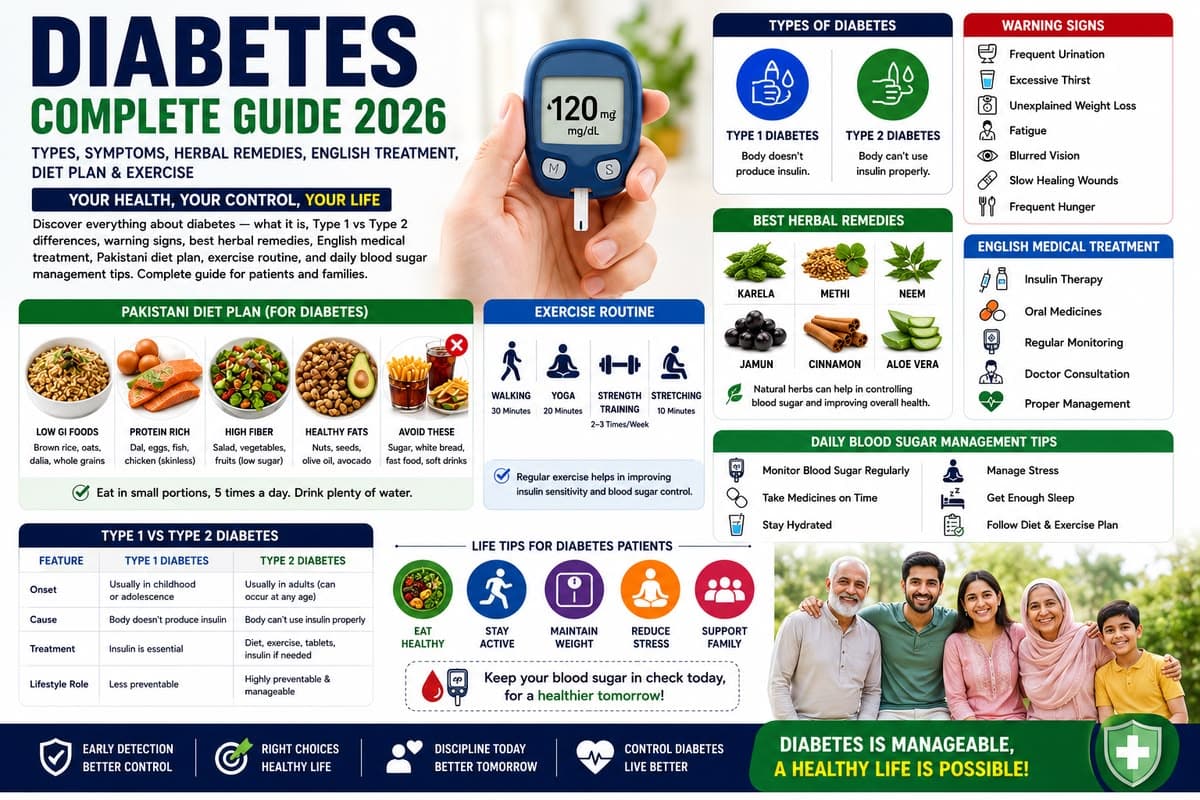
Diabetes Complete Guide 2026: Types, Symptoms, Herbal Remedies, Medical Treatment, Diet Plan and Exercise
Diabetes (Sugar) is one of the most common yet serious diseases of today's era. Millions of people in Pakistan are affected by it and many do not take it seriously until the condition worsens. In this complete guide, you will learn what diabetes is, its types, symptoms, herbal remedies, medical treatments, what the diet chart should look like, and how to exercise. All information is presented in practical and easy-to-understand language.
What Is Diabetes (Sugar)? — Complete Explanation
Diabetes is a chronic metabolic disease in which the amount of glucose (sugar) in the blood becomes higher than normal. When we eat food, our body breaks that food down into glucose, which then enters the bloodstream. To deliver this glucose to the cells, the pancreas produces a hormone called insulin. Insulin works like a key that opens the door of cells so that glucose can enter and produce energy.
In diabetes, this system breaks down. Either the pancreas does not produce enough insulin, or the body's cells do not recognize insulin properly — this is called insulin resistance. The result is that glucose keeps circulating in the blood, cells do not get energy, and over time, blood vessels, nerves, eyes, kidneys, and the heart are damaged.
According to the WHO, more than 400 million people worldwide are affected by diabetes. In Pakistan, this number is rising rapidly and many people are unaware of their condition because early symptoms are very mild.
| Process | In Normal Body | In Diabetic Body | Result |
|---|---|---|---|
| Eating food | Glucose enters the bloodstream | Glucose enters the bloodstream | Same in both |
| Insulin release | Pancreas produces required insulin | Less or no insulin produced, or resistance occurs | Difference starts here |
| Glucose into cells | Easily enters cells through insulin | No insulin or resistance — glucose stays out | High blood sugar |
| Energy production | Cells produce energy from glucose | Cells feel energy deficiency | Fatigue, hunger |
| Blood sugar level | 70 to 100 mg/dL (fasting) | 126 mg/dL or higher (fasting) | Diabetes diagnosis |
Types of Diabetes — Type 1, Type 2 and Gestational
Diabetes is not one disease but a group of different conditions. Understanding them is important because each type requires different treatment.
Type 1 Diabetes — Autoimmune Disease
In Type 1 diabetes, the body's own immune system attacks the insulin-producing cells (beta cells) in the pancreas and destroys them. The result is that the body produces little or no insulin. This mostly occurs in children, teenagers, and young adults but can happen at any age. It comes on suddenly — symptoms appear rapidly and the cause is a mixture of genetics and environment, not dietary mistakes. Type 1 patients need to take insulin injections for life — without it, they cannot survive.
Type 2 Diabetes — Most Common Type
Type 2 accounts for more than 90 percent of all diabetes cases worldwide. In this type, the body's cells become resistant to insulin — meaning the insulin key does not open the door properly. Initially, the pancreas produces extra insulin to compensate for this resistance but over time, the pancreas becomes exhausted and cannot produce enough insulin. In this type, genetics, obesity (especially belly fat), physical inactivity, and age play major roles. The good news is that Type 2 can be controlled or delayed significantly with lifestyle changes.
Gestational Diabetes — In Pregnant Women
This occurs in some women during pregnancy when hormonal changes cause insulin resistance. In most cases, it resolves after delivery but both mother and child have a higher risk of developing Type 2 diabetes later in life. Regular monitoring and healthy eating are essential during this period.
| Aspect | Type 1 Diabetes | Type 2 Diabetes |
|---|---|---|
| Cause | Autoimmune — immune system destroys beta cells | Insulin resistance + pancreatic weakness |
| Insulin Production | None or very little | Produced but resistance or deficiency occurs |
| Age of Onset | Mostly childhood or adolescence | Mostly after 35, but now also in children |
| Preventable? | No — cannot be prevented | Yes — can be delayed or prevented with lifestyle |
| Treatment | Daily insulin injections mandatory | Diet, exercise, medications, later insulin |
| Onset of Symptoms | Rapid — within weeks | Gradual — develops over years |
| Share of Total Cases | 5 to 10 percent | 90 to 95 percent |
Diabetes Symptoms — Warning Signs You Should Not Ignore
One major challenge with diabetes is that Type 2 symptoms develop very slowly and most people dismiss them as fatigue or old age. In Type 1, symptoms appear rapidly. Common symptoms in both types include:
Physical Symptoms
Excessive thirst is one of the first and most common symptoms. When blood sugar is high, it pulls water from body tissues, increasing thirst. Along with this, frequent urination occurs — even waking up at night. Blurred vision can occur because high sugar affects the eye's lens. Wounds and sores heal slowly because both blood vessels and the immune system are affected. Numbness, tingling, or burning sensations in hands and feet are signs of nerve damage (neuropathy). Unexplained weight loss is common in Type 1 — the body uses fat and muscle for energy when cells cannot take glucose.
When to See a Doctor
If you have 3 or more symptoms, getting a blood sugar test is essential. Fasting blood sugar of 126 mg/dL or higher, or random blood sugar of 200 mg/dL or higher, confirms diabetes. Prediabetes is between 100 to 125 mg/dL — at this stage, lifestyle changes can prevent the full disease.
| Symptom | Why It Happens | How Common | Seriousness |
|---|---|---|---|
| Excessive thirst (polydipsia) | High sugar pulls water from tissues | Very common | Early sign |
| Frequent urination (polyuria) | Kidneys try to excrete extra sugar | Very common | Early sign |
| Increased hunger | Cells are not getting energy | Common | Early-medium |
| Fatigue | Cells cannot produce energy from glucose | Very common | Early sign |
| Blurred vision | Sugar affects the eye's lens | Moderate | Medium — see a doctor |
| Slow wound healing | Poor circulation and immunity both affected | Moderate | Serious sign |
| Tingling in hands/feet | Nerve damage (neuropathy) starting | Common in Type 2 | Serious |
| Unexplained weight loss | Body is burning fat and muscle for energy | More in Type 1 | Urgent attention needed |
Herbal Remedies for Diabetes — Based on Scientific Research
There are many herbs and foods around us that have been used for blood sugar control for centuries. Modern research has also partially confirmed some of these. However, remember — these herbal treatments are not a complete replacement for medications. They are complementary therapies that work better when combined with doctor-prescribed medicines. Always consult your doctor before starting any supplement, as some herbs can interact with medications.
1. Cinnamon (Dar Cheeni)
Cinnamon — the aromatic spice commonly used in sweets — actually has significant benefits for blood sugar. Research shows that cinnamon contains certain compounds that improve insulin sensitivity and help cells absorb glucose. Taking half to one teaspoon of cinnamon powder daily in tea or warm water can produce measurable improvement in fasting blood sugar. The effect is not immediate — it becomes noticeable after 2 to 3 months of regular use.
2. Bitter Melon (Karela)
Bitter melon is very common in our subcontinental cuisine but many people avoid it because of its bitterness. However, for diabetes patients, it is a natural gift. Bitter melon contains compounds like charantin, vicine, and polypeptide-p that help lower blood sugar. Drinking 50 to 100 ml of bitter melon juice on an empty stomach in the morning has a measurable effect on blood glucose. Some research suggests it has an insulin-like effect.
3. Fenugreek Seeds (Methi Dana)
Fenugreek seeds are a commonly available spice in our kitchens that contain soluble fiber and certain amino acids. They slow down sugar absorption and improve insulin secretion. Soak one tablespoon of fenugreek seeds in water overnight, drink the water on an empty stomach in the morning, and chew the seeds as well. Studies show improvement in fasting glucose. This is a safe and accessible home remedy for Type 2 patients.
4. Turmeric (Haldi)
Turmeric contains an active compound called curcumin which has anti-inflammatory properties. Chronic inflammation increases insulin resistance — and turmeric helps reduce this inflammation. Drinking a cup of warm milk with half a teaspoon of turmeric and a pinch of black pepper (which increases curcumin absorption by up to 2000 percent) is a traditional and evidence-supported remedy.
5. Indian Gooseberry (Amla)
Amla is a powerful source of vitamin C and research on it is promising for blood sugar management. Amla protects pancreatic cells and improves insulin secretion. Eating one amla daily or drinking amla juice provides antioxidant support that helps slow down diabetic complications.
6. Indian Blackberry (Jamun)
Jamun seeds — which are usually thrown away — are actually very valuable. Jamun seed powder (due to compounds like jamboline and jambosine) slows down the rate at which starch converts to sugar. Dry the seeds properly, grind them, and take half to one teaspoon daily with water. This is a traditional Unani and Ayurvedic remedy that modern research has also partially supported.
7. Aloe Vera
Aloe vera gel is not just for skin — some studies have shown that taking one to two tablespoons of fresh aloe vera gel daily may help reduce fasting blood glucose. It supports pancreatic beta cell activity. However, it has a laxative effect and may cause stomach discomfort for some people — so start with a small amount.
| Herbal Remedy | How It Works | How to Use | Evidence Level | Precautions |
|---|---|---|---|---|
| Cinnamon | Improves insulin sensitivity | Half tsp in tea or water daily | Moderate research support | May interact with blood thinners |
| Bitter Melon | Insulin-like effect, slows sugar absorption | 50-100 ml juice on empty stomach | Good traditional + some clinical support | Avoid during pregnancy |
| Fenugreek Seeds | Fiber slows sugar absorption, improves insulin secretion | 1 tbsp soaked overnight, drink water + chew seeds | Moderate to good research | May interact with blood thinners |
| Turmeric | Curcumin reduces inflammation and insulin resistance | Half tsp in warm milk with black pepper | Good anti-inflammatory evidence | High doses may affect liver |
| Indian Gooseberry | Protects pancreatic cells, supports insulin | One amla daily or juice | Moderate research | Avoid with excessive lemon |
| Jamun Seeds | Slows starch to sugar conversion | Half tsp powder with water daily | Traditional + some modern support | May lower blood sugar too much in excess |
| Aloe Vera | Supports beta cells, lowers fasting glucose | 1-2 tbsp fresh gel daily | Preliminary research promising | Stop if stomach discomfort occurs |
Important Disclaimer
All these herbal remedies are supporting therapies — they are absolutely not a replacement for doctor-prescribed medications. Especially in Type 1 diabetes, no herbal remedy can replace insulin. In Type 2 as well, use these alongside medications, not instead of them. Always inform your doctor before starting any new supplement.
Medical Treatment for Diabetes — Medications and Therapy
Along with herbal remedies, modern medicine is the core of diabetes management. Doctor-prescribed medications should never be ignored. Here is an overview of common medications and therapies:
Type 2 Diabetes Medications
Metformin is the first and most prescribed medication for Type 2. It reduces glucose production in the liver and improves insulin sensitivity. Side effects may include initial stomach discomfort, which often resolves when taken with food. SGLT2 inhibitors (like Empagliflozin, Dapagliflozin) remove extra glucose through urine and also benefit the heart and kidneys. GLP-1 receptor agonists (like Semaglutide — Ozempic) improve both blood sugar and weight loss and have become very popular in 2026. DPP-4 inhibitors are mild and safe and increase insulin secretion during meals.
Insulin Therapy
Insulin is mandatory for Type 1. In Type 2, insulin is started when medications are no longer sufficient. Types of insulin include basal insulin which works for 24 hours, and bolus or mealtime insulin which is taken with food. Insulin pumps (Continuous Subcutaneous Insulin Infusion) are now a more comfortable option where a pump is attached and delivers insulin automatically.
Blood Sugar Monitoring
Diabetes management without regular monitoring is like aiming in the dark. Testing at home with a glucometer — fasting in the morning, 2 hours after meals — helps the doctor adjust treatment. Continuous Glucose Monitor (CGM) devices attach a small sensor that provides 24-hour real-time readings — this technology is becoming more affordable in 2026.
| Medication Name | Type | How It Works | Main Benefit | Possible Side Effects |
|---|---|---|---|---|
| Metformin | Oral tablet | Reduces liver glucose production | Cheap, safe, weight neutral | Stomach upset, nausea (initially) |
| SGLT2 Inhibitors (Empagliflozin) | Oral tablet | Removes extra glucose through urine | Also protects heart and kidneys | May slightly increase UTI risk |
| GLP-1 Agonists (Semaglutide) | Injection (weekly) | Improves insulin release, reduces appetite | Both weight loss and blood sugar | Nausea, vomiting initially |
| DPP-4 Inhibitors (Sitagliptin) | Oral tablet | Increases insulin secretion during meals | Mild, safe, no weight gain | Nasal congestion, throat infection |
| Sulfonylureas (Glibenclamide) | Oral tablet | Stimulates pancreas to release more insulin | Effective and cheap | Risk of low blood sugar (hypoglycemia) |
| Basal Insulin (Glargine/Degludec) | Injection (daily) | Maintains stable blood sugar for 24 hours | Mandatory in Type 1, as needed in Type 2 | Hypoglycemia, injection site swelling |
A1C Test — 3-Month Average
The A1C test shows the average blood sugar over 3 months. Normal is below 5.7 percent, prediabetes is 5.7 to 6.4 percent, and diabetes is 6.5 percent or higher. The target for most patients is to keep A1C below 7 percent. This test should be done every 3 to 6 months.
Diabetes Diet Plan — Pakistani and International Guidelines
Diet management is the biggest pillar of diabetes. No medication will be as effective as a proper diet. But "diabetes diet" does not mean boring or tasteless — it means making the right choices and watching portions.
Plate Method — The Easiest Way
Take a plate and divide it into three sections. Half the plate (50 percent) should contain non-starchy vegetables — spinach, cauliflower, eggplant, okra, cucumber, tomato, salad. One quarter (25 percent) should contain lean protein — grilled chicken, fish, eggs, moong dal, black beans, paneer. The remaining quarter (25 percent) should contain complex carbs — brown rice, whole wheat roti, oatmeal, sweet potato. With this simple method, you can eat a balanced meal without counting calories.
Adjustments in Pakistani Diet
Our traditional food can be made diabetes-friendly with a few adjustments. Replace white rice with brown rice or whole wheat oatmeal. Instead of maida roti, use whole wheat flour (chokkar wala atta) — even 2 thin rotis are fine. Lentils — masoor, moong, chana — are an excellent source of protein. Bitter melon, okra, spinach, bottle gourd — these are blood sugar friendly vegetables. In biryani, use brown rice instead of basmati and less oil.
What to Eat and What to Avoid
Sweets — barfi, gulab jamun, jalebi — contain concentrated sugar that spikes blood sugar rapidly. White bread, naan, puri, paratha — these are refined carbs. Cold drinks and packaged juices — liquid sugar goes directly into the bloodstream. Chips, biscuits, processed snacks — these are a mixture of refined carbs and trans fats. You do not need to eliminate them completely but they must be drastically reduced.
| Food Category | Foods to Eat | Foods to Avoid or Reduce | Reason |
|---|---|---|---|
| Roti / Bread | Whole wheat flour, multi-grain roti | Maida, naan, puri, paratha | Fiber slows sugar absorption |
| Rice | Brown rice, small portions basmati | White rice in large amounts | Brown rice has lower GI |
| Protein | Lentils, fish, chicken (grilled), eggs, paneer | Fried meat, processed meats | Lean protein does not raise blood sugar |
| Vegetables | Spinach, okra, cauliflower, bitter melon, eggplant, cucumber | Excess potatoes, corn, white potatoes in large amounts | Non-starchy veggies are low carb |
| Fruits | Jamun, amla, apple, pear, grapes (small amount), citrus | Mango, banana in large amounts, fruit juice | Low GI fruits raise blood sugar slowly |
| Beverages | Plain water, green tea, black coffee, unsweetened lassi | Cold drinks, packaged juice, tea with too much sugar | Liquid sugar is absorbed fastest |
| Snacks | Roasted chickpeas, walnuts, almonds, peanuts (unsalted) | Biscuits, chips, pakoras, samosas | Nuts provide healthy fat and protein |
7-Day Pakistani Diabetes Meal Plan
This is a sample plan — adjust quantities according to your needs and doctor's advice.
| Day | Breakfast | Lunch | Evening Snack | Dinner |
|---|---|---|---|---|
| Day 1 (Monday) | Oatmeal without sugar, one boiled egg, green tea | Whole wheat roti, moong dal, salad | Handful of almonds, green tea | Grilled chicken, spinach, cucumber raita |
| Day 2 (Tuesday) | Egg bhurji (less oil), multi-grain toast | Chana dal, whole wheat roti, tomato cucumber | One apple or pear | Grilled fish, black beans, boiled vegetables |
| Day 3 (Wednesday) | Plain yogurt with walnuts, black coffee | Masoor dal, brown rice (small), cauliflower sabzi | Roasted chickpeas, water | Chicken karahi (less oil), 2 thin rotis |
| Day 4 (Thursday) | Oats with milk (semi-skimmed), amla | Mixed vegetables, whole wheat roti, plain lassi | Citrus fruit or berries | Dal mash, spinach, 1 roti, salad |
| Day 5 (Friday) | Scrambled eggs, whole wheat toast, green tea | Biryani (brown rice, less oil) or pulao in small portion | Handful of walnuts or peanuts | Grilled chicken or fish, okra, cucumber |
| Day 6 (Saturday) | Oatmeal with vegetables, green tea | Kidney beans (rajma), roti, salad | Yogurt, half apple | Meat curry (less potato, more meat), 1 roti |
| Day 7 (Sunday) | Paneer bhurji, dry whole wheat paratha | Mixed dal, brown rice, raita | Citrus fruit or amla | Grilled fish or chicken, spinach, salad |
Exercise in Diabetes — The Most Powerful Tool for Blood Sugar Control
Exercise may be the most powerful and cheapest way to control blood sugar. When muscles work, they directly absorb glucose from the blood — even with less insulin needed. Regular exercise increases insulin sensitivity, controls weight, strengthens the heart, and improves mood.
Aerobic Exercise — For Heart and Blood Sugar
Brisk walking — 30 to 45 minutes daily — is the most accessible and effective exercise in Pakistan. Morning or evening walks are both fine. Cycling, swimming, or aerobics are also good options. Aim for at least 150 minutes of moderate aerobic activity per week — that is 30 minutes, 5 days a week.
Strength Training — Muscles Use Glucose
The more muscles you have, the more glucose your body will use. Pushups, squats, lunges, and light weight lifting — 2 to 3 times a week is beneficial. This specifically helps reduce insulin resistance.
Walk After Meals — Prevent Blood Sugar Spikes
Walking for just 10 to 15 minutes, 30 to 60 minutes after a meal, can reduce the post-meal blood sugar spike by 20 to 30 percent. This happens because walking muscles directly take glucose from the blood. This is a simple habit that anyone can adopt without any gym.
| Day | Exercise Type | Duration | Time | Blood Sugar Benefit |
|---|---|---|---|---|
| Monday | Brisk walk | 30-40 minutes | Morning or evening | Improves fasting glucose |
| Tuesday | Strength training (home bodyweight) | 25-30 minutes | Any time | Increases insulin sensitivity |
| Wednesday | Brisk walk + yoga | 30 min walk + 15 min yoga | Morning or evening | Stress hormones reduce, blood sugar stable |
| Thursday | Rest or light stretching | 15-20 minutes | Any time | Recovery |
| Friday | Brisk walk or cycling | 35-45 minutes | Morning or evening | Weekly A1C improvement |
| Saturday | Strength training | 25-30 minutes | Any time | Increases muscle glucose uptake |
| Sunday | Leisure walk or family activity | 30 minutes | Any time | Consistent active lifestyle |
Exercise Precautions
Check blood sugar before and after exercise — especially if taking insulin or sulfonylureas. In case of low blood sugar (hypoglycemia — below 70 mg/dL), keep fast-acting carbs available — glucose tablets, juice, or something sweet. Avoid vigorous exercise if blood sugar is very high (above 300 mg/dL). Drink plenty of water before, during, and after exercise.
Diabetes Prevention — Strategies
Type 2 diabetes can be prevented if you are in the prediabetes stage or in a high-risk group. Research shows that just 5 to 7 percent weight loss and moderate exercise can reduce the risk of diabetes by up to 58 percent. This is even more effective than medication.
Take Action in the Prediabetes Stage
Fasting blood sugar between 100 to 125 mg/dL indicates prediabetes — this is a warning sign. If the right steps are taken at this stage, full diabetes can be prevented. Diet and exercise changes can produce dramatic results at this stage.
Weight Management
Belly fat (visceral fat) is the most dangerous because it directly causes insulin resistance. Waist circumference should be below 90 cm for men and below 80 cm for women.
| Category | Risk Factors (Increase Diabetes Risk) | Protective Factors (Prevent Diabetes) |
|---|---|---|
| Diet | Processed food, sugary drinks, white carbs | Vegetables, whole grains, lean protein, nuts |
| Activity | Sedentary lifestyle, desk job without breaks | 150 min/week moderate exercise, post-meal walks |
| Weight | Obesity especially belly fat | Healthy weight, 5-7% weight loss if overweight |
| Sleep | Less than 7 hours or irregular sleep | 7 to 9 hours quality sleep daily |
| Stress | Chronic stress increases cortisol | Meditation, yoga, hobbies, social support |
| Family History | Genetics — cannot change | Lifestyle can reduce this risk |
Blood Sugar Targets — What Numbers Are Good?
Understanding numbers is essential in diabetes management. Knowing that "sugar is high" is not enough — you need specific targets.
| Test | Normal (Non-Diabetic) | Prediabetes | Diabetes | Diabetic Patient Target |
|---|---|---|---|---|
| Fasting Blood Sugar | 70 to 99 mg/dL | 100 to 125 mg/dL | 126 mg/dL or higher | 80 to 130 mg/dL (confirm with doctor) |
| 2-Hour Post Meal | Below 140 mg/dL | 140 to 199 mg/dL | 200 mg/dL or higher | Below 180 mg/dL |
| A1C Test | Below 5.7% | 5.7 to 6.4% | 6.5% or higher | Below 7% (for most patients) |
| Bedtime Sugar | — | — | — | 100 to 140 mg/dL |
Diabetes Complications — How to Avoid Long-Term Damage
If blood sugar is not controlled, serious complications develop over time. Knowing them is important so you can be proactive in preventing them.
In diabetic retinopathy, blood vessels in the eyes are damaged and blindness can occur — this is a major cause of blindness in Pakistan. Diabetic nephropathy damages the kidneys, potentially leading to dialysis. Diabetic neuropathy damages nerves — numbness, tingling in feet — and when foot wounds do not heal, some people end up with amputations. Cardiovascular disease — heart attacks and strokes — is very common in diabetic patients. There is only one way to avoid these complications — keep blood sugar, blood pressure, and cholesterol under control.
Routine Checkups You Need
Get an A1C test every 3 months. Get a complete eye exam once a year. Get kidney tests (Urine Microalbumin, Creatinine) once a year. Check your feet daily — look for blisters, wounds, color changes. Check blood pressure daily or weekly — try to keep it below 130/80.
Conclusion — A Good Life with Diabetes Is Possible
Diabetes is a lifelong condition but this does not mean life is over. Millions of people around the world live full, active, and happy lives with diabetes — because of proper management.
Herbal remedies like cinnamon, fenugreek, bitter melon, and jamun seeds play a supporting role. Doctor-prescribed medications — Metformin, SGLT2 inhibitors, insulin — are the main treatment. Making adjustments in the Pakistani diet is not difficult — it just requires some thought. Walking daily, walking a bit after meals, and eating more vegetables — these are simple actions that have a big impact.
The most important thing — do not fear your disease. Understand it, see your doctor regularly, keep checking your blood sugar, and focus on your lifestyle. These small daily choices add up to better health.
Important note: This article is for general educational information only. Diabetes is a serious medical condition. Before making any changes to your treatment, medications, or diet, always consult your qualified doctor or endocrinologist. Self-treatment can be dangerous.