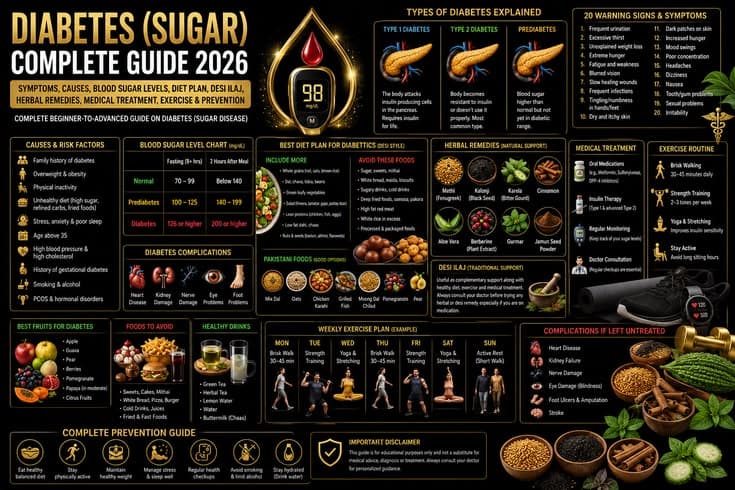
Diabetes (Sugar) Complete Guide 2026 — Symptoms, Causes, Blood Sugar Levels, Diet Plan, Desi Ilaj, Herbal Remedies, Medical Treatment, Exercise & Prevention
⚠️ Medical Disclaimer: This article is for educational and informational purposes only. Diabetes is a serious chronic medical condition that requires professional medical care. All herbal remedies and natural treatments mentioned in this guide are supportive strategies only and cannot replace prescribed medications, insulin therapy, or your doctor's advice. Always consult a qualified healthcare provider before making any changes to your diabetes treatment plan. Mixing herbal supplements with diabetes medications without medical supervision can cause dangerous blood sugar drops (hypoglycemia).
Diabetes — commonly called "sugar" in South Asia — is one of the most widespread chronic health conditions of our time. Worldwide, over 537 million adults live with diabetes, and the numbers are rising fast. Pakistan and India are among the top ten countries with the highest diabetes burden. Yet despite being so common, millions of people are diagnosed too late — or not at all — because the early symptoms are subtle, easily overlooked, or mistaken for simple tiredness.
This complete guide covers everything you need to know: what diabetes actually is and how it works inside your body, the difference between Type 1, Type 2, and prediabetes, all 20 warning signs, what causes it, normal blood sugar ranges, the best diet plan for Pakistani and Indian patients, herbal and desi remedies with honest information about what research says, medical treatments, the best exercise plan, what happens if diabetes goes untreated, and a complete prevention strategy.
Part 1: What is Diabetes? — Understanding the Disease from Its Roots
What is diabetes. Diabetes meaning. Diabetes explained. Blood sugar. Glucose level. Insulin. Insulin resistance. Sugar disease. How diabetes starts in body. Diabetes mellitus definition.
Diabetes mellitus is a chronic metabolic disease in which the body either cannot produce enough of the hormone insulin, or cannot use the insulin it produces effectively. The result is that glucose — the body's primary fuel source — builds up in the bloodstream instead of entering cells where it is needed for energy.
Here is how the process should work in a healthy person: When you eat food, your digestive system breaks carbohydrates down into glucose. This glucose enters the bloodstream, raising blood sugar levels. The pancreas detects this rise and releases insulin — a hormone that acts like a "key" that unlocks cells throughout the body, allowing glucose to enter and be used for energy. Blood sugar levels drop back to normal, and the pancreas reduces insulin production.
In diabetes, this system breaks down. Either the pancreas produces little or no insulin (Type 1), or the cells become resistant to insulin's "key" and the pancreas cannot keep up with the demand (Type 2). Either way, glucose stays trapped in the blood. Over weeks, months, and years, this chronic high blood sugar — called hyperglycemia — damages blood vessels, nerves, eyes, kidneys, and the heart.
The term "sugar disease" in South Asian culture is accurate in the sense that blood sugar is the central problem — but the root cause is always about insulin function, not just how much sugar you eat. Understanding this difference is critical for proper management.
Part 2: Type 1, Type 2, Prediabetes & Gestational Diabetes — Complete Comparison
Type 1 diabetes. Type 2 diabetes. Prediabetes. Gestational diabetes. Difference between type 1 and type 2 diabetes explained. Which is more serious diabetes 1 or 2. What are the 4 types of diabetes. Type 1 vs type 2 diabetes symptoms. Can type 2 diabetes be reversed naturally. Is diabetes type 2 curable.
Complete Comparison: Type 1 vs Type 2 vs Prediabetes vs Gestational Diabetes
| Feature | Type 1 Diabetes | Type 2 Diabetes | Prediabetes | Gestational Diabetes |
|---|---|---|---|---|
| Root Cause | Autoimmune attack destroys insulin-producing beta cells in pancreas | Insulin resistance; body cannot use insulin effectively | Insulin resistance developing — blood sugar higher than normal but not diabetic range | Hormonal changes during pregnancy cause insulin resistance |
| Insulin Production | Little to none — must inject insulin to survive | Produced but insufficient or not used properly | Slightly impaired insulin response | Insufficient during pregnancy period |
| Who It Affects | Often children, teens, young adults — but any age | Most common in adults 35+, increasingly in younger people | Anyone; often adults 40+, overweight individuals | Pregnant women; usually 2nd or 3rd trimester |
| Symptom Onset | Sudden and severe — develops over days to weeks | Slow and silent — can be undetected for years | Usually NO symptoms — discovered through testing | Often no symptoms; detected through screening |
| Can Be Prevented? | No — cannot be prevented | Yes — lifestyle changes can prevent or delay it | Yes — can be reversed completely | Partially — healthy lifestyle reduces risk |
| Can Be Cured? | No permanent cure currently | No permanent cure; can achieve remission | Can be fully reversed to normal range | Usually resolves after delivery |
| Primary Treatment | Lifelong insulin injections or insulin pump | Lifestyle changes + oral medications + insulin if needed | Lifestyle changes (diet, exercise, weight loss) | Diet control, exercise, sometimes insulin |
| Prevalence | 5–10% of all diabetes cases | 90–95% of all diabetes cases | 300+ million worldwide (many unaware) | Affects 2–10% of pregnancies |
Type 2 diabetes is by far the most common and is the one most strongly linked to lifestyle factors such as poor diet, physical inactivity, excess weight, and stress. This is also the type where lifestyle changes and herbal support can have the most meaningful impact — alongside, not instead of, proper medical treatment.
Part 3: 20 Warning Signs and Symptoms of Diabetes — Complete List
Diabetes symptoms. Early signs of diabetes. Warning signs of diabetes. What are 20 warning signs of diabetes. Diabetes symptoms that appear suddenly. Silent signs of diabetes. Early signs of type 2 diabetes in adults. What are the first symptoms of diabetes in women. How to know if you are diabetic without test. Signs of high blood sugar in women. Complete list of diabetes symptoms. Unusual symptoms of diabetes.
One of the most dangerous things about Type 2 diabetes is that it often develops silently over years without obvious symptoms. Many people only discover they have diabetes during a routine blood test. However, knowing the full range of warning signs — both classic and subtle — gives you the best chance of early detection and treatment.
20 Warning Signs of Diabetes — Complete Symptom Reference
| # | Symptom | Why It Happens | Type 1 or Type 2? | Severity |
|---|---|---|---|---|
| 1 | Frequent Urination (Polyuria) | Kidneys filter excess glucose by pulling water into urine | Both — worse in Type 1 | High |
| 2 | Excessive Thirst (Polydipsia) | Fluid loss from urination causes constant dehydration | Both | High |
| 3 | Extreme Hunger (Polyphagia) | Cells starved of glucose signal constant hunger despite eating | Both | High |
| 4 | Unexplained Weight Loss | Body burns fat and muscle for energy when glucose unavailable | Mainly Type 1 | High |
| 5 | Extreme Fatigue | Cells cannot access glucose energy; chronic exhaustion results | Both | High |
| 6 | Blurred Vision | High blood sugar pulls fluid into eye lenses, changing shape | Both | Medium-High |
| 7 | Slow-Healing Wounds/Cuts | Poor circulation and nerve damage impair healing process | Both — more Type 2 | High |
| 8 | Numbness or Tingling in Hands/Feet | Diabetic neuropathy — high sugar damages peripheral nerves | Both — more Type 2 | High |
| 9 | Frequent Infections (Skin, UTI, Yeast) | High sugar fuels bacterial and fungal growth; immune system weakened | Both | Medium-High |
| 10 | Darkened Skin Patches (Acanthosis Nigricans) | Insulin resistance causes dark velvety skin in neck, armpits, groin | Type 2, Prediabetes | Medium |
| 11 | Dry or Itchy Skin | Dehydration and poor circulation cause skin dryness and itching | Both | Medium |
| 12 | Fruity-Smelling Breath | Sign of diabetic ketoacidosis (DKA) — a medical emergency | Mainly Type 1 | CRITICAL |
| 13 | Irritability and Mood Swings | Unstable blood sugar causes brain chemistry disruption | Both | Medium |
| 14 | Dry Mouth and Bad Breath | Dehydration and glucose in saliva reduce mouth moisture | Both | Low-Medium |
| 15 | Frequent UTIs or Yeast Infections | Glucose-rich urine creates perfect bacterial breeding environment | Both — more common in women | Medium |
| 16 | Nausea or Vomiting | Very high blood sugar can cause digestive distress; DKA symptom | Mainly Type 1 | High (emergency) |
| 17 | Sudden Weight Gain | Insulin resistance causes fat storage, especially abdominal fat | Type 2, Prediabetes | Medium |
| 18 | Headaches | Blood sugar fluctuations cause brain circulation changes | Both | Low-Medium |
| 19 | Menstrual Irregularities (Women) | Blood sugar imbalance disrupts hormonal cycles | Both — mainly women | Medium |
| 20 | Erectile Dysfunction (Men) | Diabetes damages blood vessels and nerves controlling sexual function | Type 2 — mainly men | Medium |
Important note for women: Women with diabetes often experience additional symptoms that can be mistaken for other conditions, including frequent yeast infections (thrush), UTIs, and hormonal imbalances. Women over 40 or those with PCOS (polycystic ovary syndrome) have a significantly higher risk of developing Type 2 diabetes and should be screened regularly.
Part 4: Normal Blood Sugar Level Chart — Understanding Your Numbers
Blood sugar test. Glucose monitor. Fasting blood sugar. Post meal sugar test. HbA1c test. Diabetes checkup. Sugar level chart. What is normal blood sugar level chart. HbA1c test meaning and normal range. How often should diabetics check sugar level. Fasting vs random blood sugar test explained.
Blood Sugar Level Chart — Complete Reference (Fasting, Post-Meal & HbA1c)
| Test Type | Normal Range | Prediabetes Range | Diabetes Range | When to Test |
|---|---|---|---|---|
| Fasting Blood Sugar (FBS) | 70–99 mg/dL (3.9–5.5 mmol/L) | 100–125 mg/dL (5.6–6.9 mmol/L) | 126 mg/dL or higher (7.0+ mmol/L) | After 8 hours of fasting (no food/drink) |
| Post-Meal (2 hours after eating) | Less than 140 mg/dL (<7.8 mmol/L) | 140–199 mg/dL (7.8–11.0 mmol/L) | 200 mg/dL or higher (11.1+ mmol/L) | 2 hours after starting a meal |
| Random Blood Sugar | Less than 140 mg/dL | 140–199 mg/dL | 200 mg/dL or higher (with symptoms) | Any time, regardless of last meal |
| HbA1c (3-month average) | Below 5.7% | 5.7%–6.4% | 6.5% or higher | Every 3–6 months for diabetics; annually for at-risk |
| Target for Diabetics (managed) | 70–130 mg/dL (fasting); <180 mg/dL (post-meal) | — | HbA1c target: under 7% | Daily home monitoring recommended |
Part 5: What Causes Diabetes? — Causes, Risk Factors & Triggers
Diabetes causes. What causes diabetes. Sugar intake diabetes. Obesity diabetes link. Family history diabetes. Lifestyle diabetes cause. Junk food diabetes. Insulin resistance causes. Stress diabetes. Sedentary lifestyle diabetes. Diabetes risk factors.
Diabetes Causes & Risk Factors — Type 1 vs Type 2
| Risk Factor | Type 1 Risk | Type 2 Risk | Can You Control It? |
|---|---|---|---|
| Genetics / Family History | Moderate — gene variants increase risk | High — strong hereditary component | ❌ Cannot change |
| Obesity / Excess Weight | No link | Primary risk — especially belly fat | ✅ Controllable |
| Physical Inactivity | Minor | Strong link — increases insulin resistance | ✅ Controllable |
| Poor Diet (High Sugar, Processed Foods) | No direct link | Major contributor to insulin resistance | ✅ Controllable |
| Age | More common under 40 | Risk increases after age 35-40 | ❌ Cannot change |
| Autoimmune Dysfunction | Direct cause | No link | ❌ Cannot change |
| Chronic Stress | May trigger autoimmune response | Raises cortisol which raises blood sugar | ✅ Manageable |
| High Blood Pressure / Cholesterol | No direct link | Strong link — metabolic syndrome cluster | ✅ Manageable |
| Ethnicity | More in Caucasians | Higher in South Asians, Black, Hispanic, Arab populations | ❌ Cannot change |
| Smoking | Some evidence of increased risk | Increases insulin resistance significantly | ✅ Controllable |
| PCOS (Women) | No link | Significantly increased risk | ✅ Manageable |
| Poor Sleep | Minor | Disrupts insulin sensitivity | ✅ Controllable |
Part 6: Best Diet Plan for Diabetes Patients — Complete Pakistani & Indian Food Guide
Diabetes diet plan. Diabetic food list. Foods to avoid diabetes. Sugar free diet. Low glycemic foods. High fiber foods diabetes. Best foods for diabetes. Fruits for diabetes. Vegetables for diabetes. Diabetic breakfast ideas. Diabetic dinner plan. Healthy eating diabetes. Best diabetic diet plan for weight loss. Foods that lower blood sugar quickly naturally. What fruits are safe for diabetes patients. Indian and Pakistani diabetic diet plan. Diabetic meal plan. Diabetes parheiz chart.
Diabetic Food Guide — Best Foods to Eat vs Foods to Avoid
| Category | ✅ Best Foods (Khao) | ❌ Foods to Avoid (Parheiz) | Why the Difference? |
|---|---|---|---|
| Grains & Carbs | Whole wheat atta chapati, brown rice, oats, jowar, barley (jau) | White bread, maida, white rice, packaged biscuits, instant noodles | Whole grains digest slowly; white/refined carbs spike blood sugar fast |
| Protein | Chicken (no skin), fish, eggs, daal (all lentils), chickpeas, kidney beans | Processed meats, red meat (in excess), fried chicken | Lean protein slows digestion and prevents sugar spikes |
| Vegetables | Bhindi (okra), spinach, broccoli, kheera (cucumber), methi, karela, lauki | White potatoes, corn in large amounts, canned vegetables with added salt | Non-starchy vegetables have minimal blood sugar impact |
| Fruits | Amrood (guava), apple, berries, pear, orange, grapefruit, peach | Mango in excess, banana in excess, dates in excess, fruit juices, canned fruit | Low-GI fruits release sugar slowly; juices remove fiber and spike sugar |
| Fats & Oils | Olive oil, mustard oil, avocado, almonds, walnuts, chia seeds, flaxseeds | Desi ghee in excess, dalda (hydrogenated oil), deep frying oil, butter in excess | Healthy fats improve insulin sensitivity; trans fats worsen insulin resistance |
| Dairy | Low-fat or skimmed milk, plain yogurt (dahi), chaas (buttermilk) | Full-fat cream, malai, sweetened yogurt, flavored milks | Low-fat dairy provides protein and calcium without excess saturated fat |
| Drinks | Water, green tea, herbal teas (without sugar), chaas, lemon water | Soft drinks, cola, sugary chai with full sugar, packaged juices, energy drinks | Sugary drinks are liquid carbohydrates that cause immediate blood sugar spikes |
| Sweets | Very small amounts of dark chocolate (70%+), stevia-sweetened options occasionally | Mithai (all types), barfi, gulab jamun, halwa, regular sugar, honey in excess | Traditional sweets are extremely high in refined sugar and fat |
7-Day Pakistani Diabetic Meal Plan — Blood Sugar Friendly
| Day | Breakfast | Lunch | Dinner | Snack |
|---|---|---|---|---|
| Day 1 | Oat daliya (without sugar) + 1 boiled egg + green tea | 1 whole wheat chapati + moong dal + salad (kheera, tamatar) | Grilled chicken + sauteed bhindi + salad | Handful of almonds + 1 guava |
| Day 2 | 2 boiled eggs + 1 whole wheat toast + chaas | Brown rice (small portion) + masoor dal + mixed vegetables | Baked fish + steamed palak + salad | Plain dahi + walnuts |
| Day 3 | Methi paratha (thin, less oil) + 1 cup plain dahi | 1 chapati + chana dal + kheere ka raita | Grilled chicken tikka + stir-fried vegetables + salad | 1 apple + green tea |
| Day 4 | Egg bhurji (no butter) + green tea + 1 orange | Barley soup + 1 chapati + seasonal sabzi | Lentil soup (sabut masoor) + lauki salan + salad | Bhuna chana (roasted chickpeas) |
| Day 5 | Smoothie (spinach + apple + flaxseed + low-fat milk) | Rajma (small serving) + brown rice + cucumber salad | Machli (fish curry, less oil) + 1 chapati + salad | Handful of mixed nuts + pear |
| Day 6 | Oats with chia seeds + plain dahi | Karahi (chicken, less oil) + 1 chapati + kachumber salad | Grilled fish + stir-fried palak + salad | Green tea + 1 guava |
| Day 7 | Anda (egg) paratha (thin, less oil) + chaas without sugar | Dal mash + 1 chapati + tamatar onion salad | Chicken soup with vegetables (no cream) + 1 chapati | Plain almonds + 1 orange |
Best Fruits for Diabetes — Glycemic Index Guide
Not all fruits are equal for diabetics. The key is the Glycemic Index (GI) — a measure of how fast a food raises blood sugar. Choose low to medium GI fruits, eat them whole (never as juice), and pair with protein or fat to slow absorption.
Best & Worst Fruits for Diabetes — Glycemic Index Reference
| Fruit | Local Name | Glycemic Index (GI) | Status for Diabetics | Recommended Portion |
|---|---|---|---|---|
| Guava | Amrood | 12 (Very Low) | ⭐⭐⭐⭐⭐ Excellent | 1 medium guava |
| Apple | Seb | 39 (Low) | ⭐⭐⭐⭐⭐ Excellent | 1 small-medium apple |
| Berries (Strawberry, Blueberry) | Toot (Mulberry) | 40–53 (Low) | ⭐⭐⭐⭐⭐ Excellent | ½ cup |
| Pear | Naashpati | 30 (Low) | ⭐⭐⭐⭐⭐ Excellent | 1 small pear |
| Orange | Narangi / Santra | 35 (Low) | ⭐⭐⭐⭐ Very Good | 1 medium orange |
| Peach | Aroo | 42 (Low) | ⭐⭐⭐⭐ Very Good | 1 medium peach |
| Jamun (Black Plum) | Jamun | 25 (Very Low) | ⭐⭐⭐⭐⭐ Excellent (also has anti-diabetic properties) | ½ cup |
| Papaya | Papita | 60 (Medium) | ⭐⭐⭐ Moderate — in small amounts | Small slice only |
| Banana | Kela | 55–70 (Medium-High) | ⚠️ Use caution — small unripe banana only | ½ small green banana max |
| Mango | Aam | 51–60 (Medium) | ⚠️ Limit — very small portion occasionally | 2-3 small slices maximum |
| Grapes | Angoor | 59–65 (Medium-High) | ⚠️ Limit — high sugar concentration | 10–12 grapes maximum |
| Dates | Khajoor | 42–70 (varies) | ⚠️ Limit — 1–2 dates only with meal | 1–2 dates maximum with food |
Part 7: Herbal Remedies & Desi Ilaj for Diabetes — What Research Says
Home remedies for diabetes. Natural remedies diabetes. Fenugreek diabetes. Bitter gourd diabetes. Cinnamon diabetes. Herbal treatment diabetes. Sugar ka desi ilaj. Methi dana for diabetes. Kalonji for diabetes. Karela for diabetes. Aloe vera diabetes. Berberine diabetes. Apple cider vinegar diabetes. Desi ilaj in urdu. Best natural way to cure diabetes permanently.
⚠️ Important Disclaimer Before Reading: The herbal remedies listed below are supportive dietary strategies that some clinical studies suggest may help with blood sugar management in Type 2 diabetes. They are NOT cures. They CANNOT replace prescribed medications or insulin. NEVER stop your doctor-prescribed medicine to use these alone. Mixing herbs with diabetes medications without supervision can cause dangerous hypoglycemia (blood sugar dropping too low). Always inform your doctor before starting any herbal supplement. The claim that any herb can "permanently cure" diabetes is FALSE — as confirmed by fact-checking by Medical Dialogues and other medical authorities.
Herbal Remedies & Desi Ilaj for Diabetes — What Research Actually Shows
| Remedy | Local Name | How to Use | What Research Shows | Evidence Level | Precautions |
|---|---|---|---|---|---|
| Fenugreek Seeds | Methi Dana | Soak 1 tsp seeds overnight in water. Drink water and chew seeds on empty stomach morning. | Contains amino acid 4-Hydroxyisoleucine which may stimulate insulin release. Studies show it may reduce post-meal blood sugar and HbA1c in Type 2 diabetes. | ⭐⭐⭐⭐ Good (Moderate Evidence) | Can cause hypoglycemia if combined with diabetes medication. Start with small amounts. May cause stomach bloating. |
| Black Seed / Nigella | Kalonji | ½ tsp kalonji oil or seeds daily with honey or water. | Studies suggest it may improve insulin sensitivity and lower fasting blood glucose in Type 2 diabetes patients. | ⭐⭐⭐ Moderate Evidence | Avoid in pregnancy. May interact with blood thinners. Do not exceed recommended amounts. |
| Bitter Gourd | Karela | 100-200ml fresh karela juice on empty stomach, or cooked karela as vegetable. | Contains compounds (charantin, polypeptide-p) that mimic insulin action. Traditional use supported by some animal studies; limited human clinical data. | ⭐⭐⭐ Moderate (more animal studies) | Excessive consumption can cause hypoglycemia. Avoid in pregnancy. Not recommended as juice for diabetics on insulin. |
| Cinnamon | Darchini | ½ tsp cinnamon powder in warm water or tea daily. | Some studies show it may modestly lower fasting blood glucose and cholesterol. Not a cure but may be a helpful dietary addition. | ⭐⭐⭐ Moderate Evidence | Ceylon cinnamon is preferred over Cassia cinnamon (which contains coumarin — harmful in large doses). Safe in food amounts. |
| Jamun Seeds | Jamun Gutli | Dry jamun seeds, make powder, take ½ tsp with water twice daily. | Traditionally used in Ayurveda. Contains jamboline which may reduce blood sugar conversion. Limited clinical evidence. | ⭐⭐ Limited Human Evidence | Consult doctor before use. Do not replace medication. |
| Aloe Vera Gel | Gheekwar Gel | 1-2 tbsp fresh aloe vera gel (inner leaf only) daily. NOT the sap/latex. | Some studies show aloe vera gel may reduce fasting blood sugar and HbA1c. Important: Only use the clear gel, not the yellow sap which is a harsh laxative. | ⭐⭐⭐ Moderate Evidence | Must use gel ONLY (not latex/sap). Can cause hypoglycemia. Avoid in pregnancy. Inform doctor. |
| Apple Cider Vinegar | Seb ka Sirka | 1-2 tsp diluted in large glass of water before meals. | Studies show it may slow digestion and improve insulin sensitivity, reducing post-meal blood sugar spikes when taken with meals. | ⭐⭐⭐ Moderate Evidence | Always dilute — undiluted ACV damages tooth enamel and esophagus. Avoid if you have digestive issues or are on blood pressure medication. |
| Berberine | Berberine (found in barberry plant) | Supplement form: 500mg 2-3 times daily with meals (under medical supervision only). | One of the most researched herbal compounds for blood sugar. Multiple studies show it can lower blood glucose and HbA1c comparably to metformin in some cases. | ⭐⭐⭐⭐⭐ Strong Evidence | Strong interactions with diabetes medications — can cause dangerous hypoglycemia. MUST use under doctor supervision. Not for pregnant women. Can interfere with many medications. |
The bottom line on desi ilaj: These remedies have varying levels of scientific support and can serve as helpful additions to a healthy diet and lifestyle. However, none of them can substitute for proper medical treatment. The most effective "natural" interventions for Type 2 diabetes remain: sustained weight loss, daily exercise, fiber-rich diet, and adequate sleep — all supported by strong clinical evidence.
Part 8: Diabetes Medical Treatment — Medications, Insulin & Doctor Guidance
Diabetes treatment. Diabetes cure. Diabetes control. Insulin therapy. Metformin use. Diabetes medication. Diabetes doctor treatment. Blood sugar medicine. Glucose management. Diabetes monitoring. Can diabetes be cured permanently. Can a diabetic go back to normal. How to treat type 2 diabetes without insulin.
Diabetes Medications — Common Types, How They Work & When Used
| Medication Type | Examples | How It Works | Used For | Key Notes |
|---|---|---|---|---|
| Metformin (Biguanides) | Glucophage, Metformin | Reduces glucose production in liver; improves insulin sensitivity | First-line treatment for Type 2 diabetes | Usually the first medication prescribed. Generally well-tolerated. Take with food to reduce nausea. |
| Sulfonylureas | Glipizide, Glibenclamide, Gliclazide | Stimulates pancreas to produce more insulin | Type 2 diabetes when metformin alone insufficient | Risk of hypoglycemia. Must eat regularly when on these medications. |
| SGLT2 Inhibitors | Empagliflozin, Dapagliflozin | Makes kidneys excrete excess glucose through urine | Type 2 diabetes + heart/kidney protection | Also benefits the heart and kidneys. Can cause UTIs. Drink plenty of water. |
| GLP-1 Receptor Agonists | Semaglutide (Ozempic), Liraglutide | Slows digestion, reduces appetite, stimulates insulin release | Type 2 diabetes + weight management | Also supports weight loss. Injectable. May cause nausea initially. |
| Rapid-Acting Insulin | Humalog, Novolog, Novorapid | Mimics natural insulin surge after meals | Type 1 and advanced Type 2 diabetes | Works in 15 minutes. Must eat immediately after injection. |
| Long-Acting Insulin (Basal) | Lantus (Glargine), Tresiba, Levemir | Provides steady background insulin all day | Type 1 diabetes; some Type 2 patients | Once daily injection. No peak effect. Controls fasting blood sugar. |
Can diabetes be permanently cured? Currently, no. Type 1 diabetes has no cure and requires lifelong insulin. Type 2 diabetes cannot be permanently eliminated, but it can achieve remission — meaning blood sugar returns to normal range without medication through significant lifestyle changes (weight loss of 10-15 kg, diet changes, exercise). However, remission requires maintaining those lifestyle changes permanently. If old habits return, blood sugar will rise again. Prediabetes is the one condition that can be fully reversed through lifestyle changes before it becomes Type 2 diabetes.
Part 9: Exercise Plan for Diabetes — Walking, Strength Training & Yoga
Exercise for diabetes. Walking for diabetes. Diabetes workout. Weight loss diabetes. Cardio for diabetes. Diabetes fitness. Daily activity diabetes. Home exercises diabetes. Yoga for diabetes. Diabetes lifestyle. Exercise routine for diabetes patients. Best exercises to prevent diabetes naturally.
Complete Exercise Plan for Diabetes Patients — By Type & Frequency
| Exercise Type | Examples | Frequency | Duration | Blood Sugar Effect | Beginner Tip |
|---|---|---|---|---|---|
| Aerobic / Cardio | Brisk walking, cycling, swimming, light jogging | 5 days per week | 30–45 minutes | Muscles use glucose directly — lowers blood sugar during and after exercise | Start with 10 minutes walking after each meal. Build up gradually. |
| Strength / Resistance Training | Bodyweight squats, lunges, push-ups, resistance bands, light weights | 2–3 times per week (non-consecutive days) | 20–30 minutes | Builds muscle mass — muscle absorbs more glucose than fat tissue | Start with chair squats and wall push-ups. No gym needed. |
| Yoga & Stretching | Surya Namaskar, gentle yoga, Tai Chi, simple stretching | 2–3 times per week | 20–30 minutes | Reduces cortisol (stress hormone) which raises blood sugar; improves flexibility | YouTube has free beginner yoga for diabetes patients. Start gently. |
| Post-Meal Walking | Light walking 15–30 minutes after eating | After every main meal | 10–20 minutes minimum | Can reduce post-meal blood sugar spike by 20–30% | This single habit alone can make a significant difference. Start immediately. |
| Avoid Prolonged Sitting | Standing up every 30 minutes, light movement breaks | Throughout the day | 5 minute break every 30 mins | Reduces the metabolic harm of sedentary time | Set phone reminders every 30 minutes to stand and move. |
Safety precautions before exercising with diabetes: Always check blood sugar before exercise. Carry glucose tablets or a small snack in case blood sugar drops. Drink water before, during, and after. If blood sugar is above 250 mg/dL or below 100 mg/dL, do not exercise until sugar is corrected. Inspect feet before and after exercise for any blisters or injuries. Always inform your doctor before starting a new exercise program.
Part 10: What Happens If Diabetes Goes Untreated? — Serious Complications
Diabetes complications. Kidney damage diabetes. Diabetic neuropathy. Diabetic retinopathy. Heart disease diabetes. Foot problems diabetes. Eye damage diabetes. Nerve damage diabetes. Diabetes long term effects. What happens if diabetes is left untreated. How dangerous is uncontrolled diabetes. Signs that diabetes is killing you.
Diabetes Complications — What Uncontrolled Blood Sugar Does to Your Body
| Organ/System | Complication | What Happens | Timeline | Prevention |
|---|---|---|---|---|
| Heart & Blood Vessels | Heart disease, stroke, atherosclerosis | High blood sugar damages artery walls, accelerates plaque buildup — 2-4x higher risk of heart attack and stroke | Long-term (5–20 years uncontrolled) | Blood sugar control + BP control + cholesterol management |
| Kidneys | Diabetic nephropathy, kidney failure | High blood sugar damages tiny kidney blood vessels — leading to protein in urine, then kidney failure requiring dialysis | 10–20 years uncontrolled | Blood sugar + blood pressure control; annual kidney function tests |
| Eyes | Diabetic retinopathy, cataracts, glaucoma, blindness | Damaged blood vessels in retina leak or grow abnormally — leading to vision loss and blindness | 5–15 years uncontrolled | Blood sugar control; annual dilated eye exams |
| Nerves | Diabetic neuropathy (nerve damage) | High sugar damages nerve fibers causing tingling, numbness, burning pain — starting in feet and hands | 5–10 years uncontrolled | Blood sugar control; foot care; regular nerve checks |
| Feet | Diabetic foot ulcers, infections, amputation | Nerve damage + poor circulation = wounds don't heal + infections spread — can require amputation | Long-term | Daily foot inspection; proper footwear; immediate wound care |
| Brain | Dementia, cognitive decline, Alzheimer's risk | Poorly controlled blood sugar increases risk of memory problems and dementia | Long-term (20+ years) | Blood sugar control; active lifestyle; mental exercise |
| Immune System | Frequent infections, slow healing | High glucose suppresses immune cells — bacteria and fungi thrive, wounds don't heal | Ongoing with uncontrolled diabetes | Blood sugar control; hygiene; prompt treatment of wounds |
| Emergency Conditions | DKA (Type 1), HHS (Type 2) | Extremely high blood sugar + ketones (DKA) or extreme dehydration (HHS) — LIFE THREATENING emergencies | Can develop in hours (DKA) or days (HHS) | Regular monitoring; never skip insulin; seek emergency care if blood sugar is very high with symptoms |
Part 11: How to Prevent Diabetes — Complete Prevention Guide
How to prevent diabetes. Diabetes prevention tips. Avoid diabetes naturally. Healthy lifestyle prevention. Weight control prevention diabetes. Early prevention diabetes. Lifestyle changes to avoid type 2 diabetes. Healthy habits to reduce diabetes risk. How to stop prediabetes from becoming diabetes. Best diet to prevent high blood sugar.
Complete Diabetes Prevention Checklist — Action Plan
| Prevention Strategy | Action Required | Scientific Evidence | Impact Level |
|---|---|---|---|
| Achieve and Maintain Healthy Weight | Lose 5–10% of body weight if overweight; focus on belly fat reduction | Losing 7% body weight reduces Type 2 diabetes risk by 58% (DPP Study) | ⭐⭐⭐⭐⭐ Highest Impact |
| Daily Physical Activity | 150 minutes moderate activity per week (30 min/day × 5 days) | Exercise alone can prevent Type 2 diabetes by improving insulin sensitivity | ⭐⭐⭐⭐⭐ Highest Impact |
| Eat a High-Fiber, Low-Glycemic Diet | Whole grains, vegetables, legumes; avoid refined carbs and sugar | High fiber diet significantly reduces blood sugar and insulin resistance | ⭐⭐⭐⭐⭐ Highest Impact |
| Eliminate Sugary Drinks | Replace all soft drinks, juices, sweetened chai with water, green tea, chaas | One sugary drink per day increases diabetes risk by 18-26% | ⭐⭐⭐⭐⭐ High Impact |
| Quit Smoking | Seek medical help to quit if needed | Smoking increases Type 2 diabetes risk by 30–40% | ⭐⭐⭐⭐ High Impact |
| Manage Stress | Daily relaxation: prayer, meditation, deep breathing, hobbies | Chronic stress raises cortisol which directly increases blood glucose | ⭐⭐⭐⭐ High Impact |
| Prioritize Quality Sleep | 7–8 hours consistent sleep every night | Less than 6 hours sleep per night significantly increases diabetes risk | ⭐⭐⭐⭐ High Impact |
| Regular Blood Sugar Screening | Annual fasting blood sugar test if at risk; HbA1c if family history | Early detection of prediabetes allows complete reversal before Type 2 develops | ⭐⭐⭐⭐ High Impact |
| Reduce Processed Food Consumption | Cook at home; avoid packaged foods, fast food, ready-made meals | Ultra-processed foods strongly linked to higher Type 2 diabetes rates | ⭐⭐⭐⭐ High Impact |
| Reduce Sedentary Time | Stand up and move every 30 minutes throughout the day | Extended sitting increases diabetes risk even in people who exercise regularly | ⭐⭐⭐ Moderate Impact |
Frequently Asked Questions — Diabetes
Can type 2 diabetes be reversed naturally?
Type 2 diabetes can achieve remission — meaning blood sugar returns to normal, non-diabetic range without medication — through significant and sustained lifestyle changes. The most effective approach involves losing 10–15% of body weight (especially reducing belly fat), following a low-calorie or low-carbohydrate diet, exercising regularly (150+ minutes per week), and eliminating sugary drinks and processed foods. However, this is remission, not a permanent cure. If the healthy lifestyle habits stop, blood sugar typically rises again. Prediabetes is the one condition that can be fully and permanently reversed through lifestyle changes before it becomes Type 2 diabetes.
What is the fastest way to lower blood sugar immediately?
The fastest way to lower high blood sugar depends on your situation. If you are a diabetic with prescribed fast-acting insulin (Type 1 patients especially), taking the prescribed dose per your doctor's instructions is the most effective immediate method. For non-emergency high blood sugar: a 10-15 minute brisk walk (muscles absorb glucose directly), drinking 2-3 large glasses of water (helps kidneys excrete excess glucose), and avoiding carbohydrates in your next meal can all help. Never exercise if your blood sugar is above 250 mg/dL and ketones are present (Type 1 diabetics). If blood sugar is extremely high with symptoms like fruity breath, vomiting, or confusion, go to emergency care immediately — this may be diabetic ketoacidosis (DKA).
How do I know if I have diabetes without a test?
You cannot definitively diagnose diabetes without a blood test — and this is critically important to understand. Many people with early Type 2 diabetes have no symptoms at all. However, warning signs that strongly suggest getting tested include: frequent urination (especially at night), unusual thirst that drinking does not satisfy, unexplained fatigue, blurred vision, slow-healing cuts or wounds, darkened skin patches on the neck or armpits (acanthosis nigricans), tingling or numbness in hands or feet, and frequent infections. If you experience multiple of these symptoms, or have risk factors (overweight, family history, South Asian ethnicity, age 35+), you should get a fasting blood sugar test from a laboratory immediately. A home glucometer can provide a quick initial reading but should be confirmed with a lab test.
Is methi (fenugreek) effective for controlling diabetes?
Fenugreek (methi dana) does have research support as a supportive dietary supplement for Type 2 diabetes management. Studies published in NIH and reviewed in 2023 show that fenugreek seeds contain an amino acid called 4-Hydroxyisoleucine that may stimulate insulin release from the pancreas. The high soluble fiber (galactomannan) in fenugreek also slows carbohydrate digestion and reduces post-meal blood sugar spikes. The traditional method of soaking 1 teaspoon in water overnight and drinking the water with seeds in the morning is a reasonable supportive dietary strategy. However, methi dana is NOT a cure for diabetes, CANNOT replace prescribed medications, and can cause hypoglycemia (dangerously low blood sugar) when combined with diabetes medications without doctor supervision. Always inform your doctor before adding methi to your routine if you are on diabetes medication.
What happens if diabetes is left untreated?
Untreated or poorly controlled diabetes causes progressive damage to virtually every major organ in the body. The consequences include: kidney damage leading to eventual kidney failure (requiring dialysis); diabetic retinopathy causing vision loss and blindness; peripheral neuropathy causing permanent nerve damage with numbness, burning pain, and eventually limb amputation if foot wounds go unnoticed; cardiovascular disease significantly increasing risk of heart attacks and stroke; increased susceptibility to infections including serious skin infections; cognitive decline and increased dementia risk; and life-threatening emergencies including diabetic ketoacidosis (DKA) in Type 1 patients. Type 2 diabetes left undetected for 10 years can have already caused significant organ damage before diagnosis. Early detection and treatment dramatically reduces all these risks.
Conclusion: Managing Diabetes — A Lifelong Commitment with Real Hope
Diabetes is serious, widespread, and lifelong — but it is also one of the most manageable chronic diseases when approached correctly. The evidence is clear: the combination of a healthy whole-food diet, daily physical activity (especially walking), proper sleep, stress management, and prescribed medical treatment gives people with diabetes the best possible quality of life with minimal complications.
Herbal remedies and desi traditions have a place in supporting overall health — but only alongside, never instead of, modern medical care. The internet is full of misleading claims promising permanent cures from herbs or juices. Trust your doctor, use supplements wisely and transparently, and focus on the lifestyle changes that evidence consistently shows to be the most powerful tools you have.
Whether you are newly diagnosed, have had diabetes for years, or are concerned about prediabetes — start with one small change today. Replace one sugary drink with water. Walk 15 minutes after dinner. Swap white rice for a smaller portion of brown rice. These small steps, compounded over weeks and months, make a profound difference.
Consult your doctor before starting any new supplement, herbal remedy, diet plan, or exercise program — especially if you are on diabetes medications.
🌿 Herbal Diabetes Support — Contact Us for Natural Supplements
If you or a family member has diabetes (sugar) and you are looking for natural support through herbal supplements, please contact us.
We provide evidence-based herbal supplements that can play a supportive role in blood sugar management. These supplements can be used alongside your doctor-prescribed medications — but always consult your doctor before starting any new supplement.
📱 Contact Us on WhatsApp
What information to provide:
• Your current sugar level (fasting and random)
• Any medication you are already taking (Metformin, Insulin, etc.)
• Any other medical condition (blood pressure, kidney, heart, etc.)
• Whether you have tried any herbal remedy before
⚠️ Important: We only provide supportive herbal supplements. These CANNOT replace any doctor-prescribed medication or insulin. Always consult your doctor before making any changes to your medications.
Timing: You can contact us on WhatsApp from 9:00 AM to 9:00 PM (Pakistan Time). We will respond as soon as possible.
📌 Note: This service is only for herbal supplements. In case of any medical emergency, contact your doctor immediately. Diabetes is a serious condition — always prioritize professional medical advice.