Cholesterol and Triglycerides Explained: Why Your Lipid Profile Matters Even When Cholesterol Looks Normal
Walk out of a routine checkup with a lipid profile in hand, and most people zero in on one word: cholesterol. Is it high? Is it normal? What almost nobody asks about, until it's already a problem, is the other number sitting right next to it — triglycerides. It's entirely possible to have textbook-normal cholesterol and still be walking around with triglycerides at 500 or 600, quietly raising your risk for heart disease and, at high enough levels, a genuinely dangerous inflammation of the pancreas.
This guide covers the full picture: what cholesterol and triglycerides actually are, why they're measured together but mean very different things, what your numbers should actually look like, the silent way high cholesterol tends to build up without symptoms, a genetic condition that catches people off guard even when they're otherwise healthy, and the real, evidence-based ways to bring your numbers down — through diet and lifestyle first, medication when it's actually needed, not before.
1. What Is a Lipid Profile?
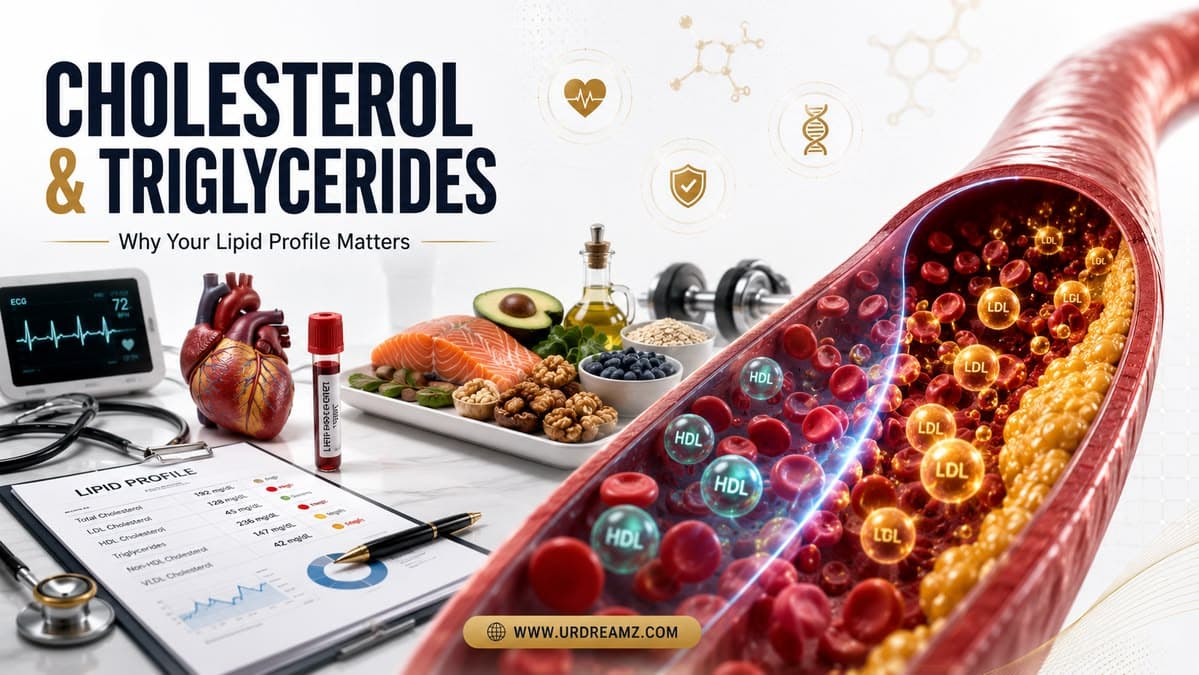
A lipid profile is a blood test that measures the different types of fat circulating in your bloodstream, primarily total cholesterol, LDL, HDL, and triglycerides. It's one of the standard tests doctors order when assessing cardiovascular risk, and it's often checked routinely in anyone dealing with high blood pressure, diabetes, or existing heart concerns.
2. What Is Cholesterol, Really?
Cholesterol is a waxy, fat-like substance found in every cell of the body, essential for building cell membranes, producing hormones, and generating vitamin D. Despite its reputation, cholesterol itself isn't inherently harmful — the body genuinely needs it to function.
3. Where Cholesterol Actually Comes From
The majority of the cholesterol in your body — roughly 75% — is produced internally by the liver, with the remaining portion coming from dietary sources like egg yolks, meat, and dairy products. This is an important detail, since it means cholesterol levels aren't purely a reflection of diet.
4. Why the Body Needs Cholesterol at All
Cholesterol plays several essential roles: maintaining the structure and flexibility of cell membranes, serving as the building block for steroid hormones like cortisol and sex hormones, and supporting digestion through bile acid production. Problems arise not from cholesterol's existence, but from having too much of the wrong type circulating in the blood.
5. Lipoproteins Explained
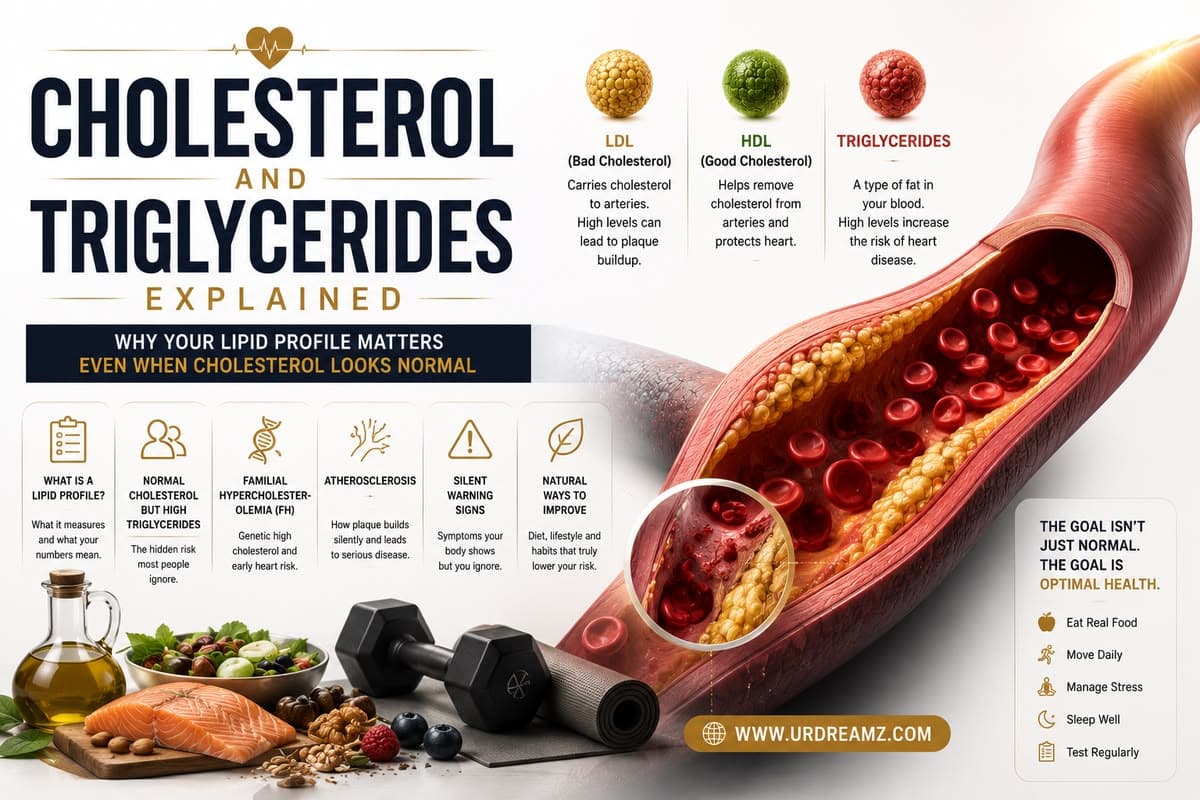
Because cholesterol and fat can't dissolve directly in blood, which is largely water-based, they need to be packaged and transported by specialized carrier particles called lipoproteins. The two most relevant lipoproteins for a standard lipid profile are LDL and HDL.
6. LDL Explained: The "Bad" Cholesterol
LDL, or low-density lipoprotein, carries cholesterol from the liver out to tissues throughout the body. When LDL levels are too high, excess cholesterol can deposit directly into artery walls rather than being used or cleared efficiently, which is exactly why it's earned the nickname "bad" cholesterol.
7. How LDL Actually Damages Arteries
Excess LDL cholesterol can penetrate the inner lining of artery walls, where it triggers an inflammatory response and gradually accumulates alongside other substances, including calcium, forming a hardened deposit called plaque. Over time, this plaque buildup narrows and stiffens the artery, physically restricting blood flow.
8. HDL Explained: The "Good" Cholesterol
HDL, or high-density lipoprotein, works in the opposite direction, picking up excess cholesterol from the bloodstream and arteries and carrying it back to the liver, where it can be broken down and eliminated from the body.
9. How HDL Actually Protects You
By continuously clearing excess cholesterol away from artery walls, HDL helps prevent the plaque buildup responsible for artery narrowing, which is why higher HDL levels are generally associated with a lower cardiovascular risk, unlike LDL, where higher levels are the concerning direction.
10. What Is Atherosclerosis?
Atherosclerosis is the medical term for the progressive hardening and narrowing of arteries caused by plaque buildup, primarily driven by excess LDL cholesterol depositing in artery walls over years, often without any noticeable symptoms during its earlier stages.
11. From Plaque to Heart Attack and Stroke
As atherosclerosis progresses, narrowed arteries restrict blood flow to vital organs, and in some cases, plaque can rupture and trigger a blood clot that suddenly blocks an artery entirely. Depending on where this happens, the result can be a heart attack, a stroke, or peripheral artery disease affecting blood flow to the limbs.
12. Now, What Are Triglycerides?
Triglycerides are the body's main form of stored fat, made up of a glycerol molecule bonded to three fatty acids, and serving primarily as an energy reserve — essentially fat set aside for later use, similar to a battery storing energy for when it's needed.
13. Where Triglycerides Actually Come From
Triglycerides come from two main sources: fats and oils consumed directly through diet, and excess calories from any source — including sugar and refined carbohydrates — that the liver converts into triglycerides when intake exceeds what the body needs for immediate energy.
14. How Triglycerides Are Carried in the Blood
Triglycerides are transported through the bloodstream primarily by two types of lipoprotein carriers: chylomicrons, which carry triglycerides absorbed directly from a recent meal, and VLDL (very-low-density lipoprotein), which carries triglycerides produced by the liver.
15. The Genuinely Common Mix-Up: Normal Cholesterol, High Triglycerides
Here's something worth understanding clearly: cholesterol and triglycerides are measured on the same lipid profile, but they respond to different dietary and metabolic triggers. It's entirely possible, and genuinely common, for someone to have a completely normal total cholesterol and LDL reading while their triglycerides sit at 400, 500, or even 600 — a pattern strongly linked to sugar, refined carbohydrate, and alcohol intake rather than dietary fat or cholesterol specifically.
16. Why This Combination Gets Overlooked
Because public health messaging has historically focused so heavily on "cholesterol" as the headline concern, triglycerides often get treated as a secondary footnote on a lab report, even when significantly elevated. Over time, ignoring persistently high triglycerides can itself contribute to rising cholesterol, weight gain, and increased blood pressure and blood sugar risk, making early attention to this number just as important as watching cholesterol itself.
17. Ideal Cholesterol and Triglyceride Numbers
| Marker | Healthy Target |
|---|---|
| Total Cholesterol | Under 200 mg/dL |
| LDL ("Bad" Cholesterol) | Under 100 mg/dL |
| HDL ("Good" Cholesterol) | Above 40 mg/dL (men), above 50 mg/dL (women) |
| Triglycerides | Under 150 mg/dL |
18. Why "Normal" Isn't Always the Full Picture
Some people can have a technically "normal" lipid profile and still live a fully active life without complications for years, while others with a seemingly modest abnormality can be at meaningfully higher risk due to other factors — genetics, family history, or other existing conditions like diabetes or high blood pressure. This is exactly why lipid results are meant to be interpreted in the context of a person's overall health picture, not read in isolation.
19. The Danger of Self-Medicating a Lipid Profile
Starting cholesterol or triglyceride medication without proper medical evaluation — or continuing it indefinitely without reassessment — can do more harm than good. Medication needs shift over time based on diet, weight, other health conditions, and how someone's numbers actually respond, which is why ongoing monitoring matters just as much as the initial treatment decision.
20. Why a Verified Doctor Should Always Interpret These Numbers
A qualified doctor doesn't just look at whether a number is technically in range — they weigh it against family history, existing conditions, age, and overall cardiovascular risk before deciding whether lifestyle changes alone are sufficient or whether medication is genuinely warranted. This kind of individualized judgment isn't something a lab report alone can provide.
21. Is Obesity the Real Cause of High Cholesterol?
Excess body weight is a well-established contributing factor to unhealthy lipid levels, and higher body fat is genuinely associated with higher cholesterol and triglycerides in a large share of cases. That said, this relationship isn't absolute — weight is one contributing factor among several, not the sole determining cause for everyone.
22. Why Thin People Can Have High Cholesterol Too
Genetics, diet composition, thyroid function, and other underlying metabolic factors can all drive up cholesterol independently of body weight, which is why a lean, seemingly healthy-looking person can still test with a significantly abnormal lipid profile — and exactly why testing shouldn't be reserved only for people who appear overweight.
23. Familial Hypercholesterolemia Explained
Familial hypercholesterolemia is an inherited genetic condition that causes significantly elevated cholesterol from a young age, independent of diet, weight, or lifestyle. It's caused by a genetic mutation affecting how the body clears LDL cholesterol from the blood, resulting in persistently high levels even in people who eat and exercise reasonably well.
24. How Familial Hypercholesterolemia Is Identified
This condition is typically suspected when someone has significantly elevated cholesterol without other obvious lifestyle risk factors, especially alongside a family history of high cholesterol or early heart disease. Genetic testing and specialist evaluation can confirm the diagnosis.
25. Why This Genetic Form Needs Closer Monitoring
Because familial hypercholesterolemia carries a meaningfully increased risk of early cardiovascular disease compared to lifestyle-driven high cholesterol, people diagnosed with it typically require closer monitoring and, often, medication from an earlier age than someone whose high cholesterol is primarily diet-related.
26. General Causes of High Cholesterol
| Cause | How It Contributes |
|---|---|
| High saturated and trans fat intake | Directly raises LDL cholesterol |
| Sedentary lifestyle | Associated with lower HDL and higher LDL |
| Smoking | Damages blood vessels and lowers HDL |
| Genetics / family history | Can independently drive high cholesterol regardless of lifestyle |
| Hypothyroidism | An underactive thyroid can raise cholesterol levels |
| Age | Cholesterol tends to rise naturally with age up to a certain point |
27. General Causes of High Triglycerides
| Cause | How It Contributes |
|---|---|
| High sugar and refined carbohydrate intake | Excess calories are converted into triglycerides by the liver |
| Alcohol consumption | Strongly linked to elevated triglyceride levels |
| Obesity | Associated with higher triglyceride production |
| Diabetes / insulin resistance | Impairs normal triglyceride metabolism |
| Sedentary lifestyle | Reduces the body's ability to clear triglycerides efficiently |
28. Why High Cholesterol Is Usually a "Silent" Problem
One of the most important things to understand about high cholesterol is that it typically produces no noticeable symptoms at all in its earlier stages. Plaque can be building up quietly inside arteries for years before any warning sign appears, which is exactly why routine testing matters more than waiting to "feel" something is wrong.
29. Visible Warning Signs: Xanthelasma Explained
Xanthelasma refers to soft, yellowish, fatty deposits that can appear on or around the eyelids, sometimes seen in people with significantly elevated cholesterol, particularly in cases involving a genetic component. While not everyone with high cholesterol develops this sign, its presence is often enough to prompt a lipid profile check.
30. Visible Warning Signs: Corneal Arcus Explained
Corneal arcus is a whitish or grayish ring that can develop around the edge of the iris, sometimes associated with high cholesterol, particularly when it appears in younger individuals, since some degree of this ring can also occur naturally with older age alone.
31. Visible Warning Signs: Tendon Xanthomas Explained
Tendon xanthomas are firm, fatty deposits that can form on tendons, notably the Achilles tendon, and are more specifically associated with significantly elevated cholesterol, including familial hypercholesterolemia.
32. Symptoms That Show Up Only After Damage Has Begun
Once atherosclerosis has progressed significantly, symptoms can include chest pain, leg cramping during walking due to reduced circulation, fatigue, and shortness of breath — but by the time these symptoms appear, meaningful arterial narrowing has typically already occurred, reinforcing why early testing matters more than waiting for symptoms.
33. Pancreatitis: The Specific Danger of Very High Triglycerides
When triglycerides climb above roughly 500 mg/dL, the risk of acute pancreatitis — a painful, potentially serious inflammation of the pancreas — rises significantly. This is a distinct risk specific to triglycerides, separate from the cardiovascular risks more commonly associated with high cholesterol.
34. Metabolic Syndrome Explained
Metabolic syndrome refers to a cluster of conditions occurring together — including elevated triglycerides, high blood pressure, excess abdominal fat, and insulin resistance — that collectively raise the risk of heart disease, stroke, and type 2 diabetes significantly more than any single factor alone.
35. How Cholesterol and Triglycerides Connect to Blood Pressure and Diabetes
Abnormal lipid levels rarely exist in isolation — they frequently travel alongside high blood pressure and blood sugar issues, often driven by overlapping causes like poor diet, inactivity, and excess weight. This is exactly why doctors treating blood pressure or diabetes patients routinely check a lipid profile as part of a complete cardiovascular risk assessment.
36. Lifestyle Modification: Where Treatment Actually Starts
For most people with mild to moderately abnormal lipid levels, doctors recommend starting with lifestyle modification — dietary changes, increased physical activity, and weight management — before considering medication, since these changes can produce meaningful improvement on their own in many cases.
37. Foods to Cut Back On
| Food Category | Why It's a Concern |
|---|---|
| Saturated fats (red meat, butter, full-fat dairy) | Raises LDL cholesterol |
| Trans fats (fried foods, baked goods) | Raises LDL and lowers HDL |
| Added sugars | Raises triglycerides and can lower HDL |
| Excess salt | Contributes to high blood pressure alongside cardiovascular risk |
| Processed meats | High in saturated fat and sodium |
38. Best Foods for Lowering Cholesterol
| Food | Why It Helps |
|---|---|
| Oats and whole grains | Rich in soluble fiber (beta-glucan) that helps reduce LDL |
| Beans and lentils | High in soluble fiber and plant protein |
| Nuts (almonds, walnuts, pistachios) | Contain healthy fats, fiber, and plant sterols |
| Avocado and olive oil | Rich in heart-healthy monounsaturated fats |
| Leafy greens | Contain plant sterols that help block cholesterol absorption |
| Green tea | Contains catechins that may support healthier LDL levels |
39. Best Foods for Lowering Triglycerides
| Food | Why It Helps |
|---|---|
| Fatty fish (salmon, mackerel, sardines) | Rich in omega-3 fatty acids that specifically reduce triglycerides |
| Chia and flaxseeds | High in omega-3s and soluble fiber |
| Berries and fruit | Provide fiber and antioxidants that support overall lipid health |
| Reduced sugar and alcohol intake | Directly limits the raw material the liver converts into triglycerides |
40. The Role of Fiber Specifically
Soluble fiber, found in oats, beans, fruits, and vegetables, binds to cholesterol in the digestive tract and helps carry it out of the body before it can be absorbed into the bloodstream, making fiber intake one of the most consistently effective dietary tools for improving a lipid profile naturally.
41. Why Exercise Makes Such a Measurable Difference
Regular physical activity helps burn stored fat for energy, directly reducing triglyceride levels, while also raising HDL and supporting the body's ability to clear LDL more efficiently. Roughly 30 minutes of activity most days is a commonly recommended, achievable target for meaningful improvement over time.
42. When Medication Actually Becomes Necessary
Medication is typically considered when lifestyle changes alone haven't produced sufficient improvement, when someone's overall cardiovascular risk is high enough to warrant more aggressive treatment, or in cases like familial hypercholesterolemia, where genetics alone can keep levels dangerously high regardless of lifestyle.
43. Statins Explained
Statins are the most commonly prescribed first-line medication for lowering LDL cholesterol, working by reducing the liver's own cholesterol production. They're often used alongside other lipid-lowering medications depending on a patient's specific risk profile and how their numbers respond over time.
44. Retesting and Monitoring Over Time
Whether managing lipid levels through lifestyle changes, medication, or both, periodic retesting is essential to confirm that an approach is actually working, and to adjust treatment if numbers aren't improving as expected — a lipid profile isn't a one-time test but an ongoing part of ongoing cardiovascular health monitoring.
45. Myths vs Facts
| Myth | Fact |
|---|---|
| Normal cholesterol means your lipid profile is completely fine | Triglycerides can be significantly elevated even when cholesterol looks normal, and both matter |
| Only overweight people get high cholesterol | Genetics, thyroid conditions, and diet composition can raise cholesterol regardless of body weight |
| High cholesterol always causes noticeable symptoms | It's typically silent until significant arterial damage has already occurred |
| Cholesterol medication should be started or stopped without medical guidance | Both starting and adjusting treatment should be based on a doctor's evaluation of overall risk, not self-directed decisions |
| Triglycerides and cholesterol are basically the same thing | Cholesterol is a structural lipid used to build cells and hormones; triglycerides are the body's main stored energy fat |
46. Quick Glossary
| Term | Meaning |
|---|---|
| Lipid Profile | A blood test measuring total cholesterol, LDL, HDL, and triglycerides |
| LDL | Low-density lipoprotein; carries cholesterol to tissues and can deposit it in artery walls |
| HDL | High-density lipoprotein; clears excess cholesterol and carries it back to the liver |
| Atherosclerosis | Hardening and narrowing of arteries caused by plaque buildup |
| Familial Hypercholesterolemia | An inherited genetic condition causing significantly elevated cholesterol independent of lifestyle |
| Statins | The most commonly prescribed medication class for lowering LDL cholesterol |
47. Frequently Asked Questions
What is the difference between cholesterol and triglycerides?
Cholesterol is a waxy, structural substance used to build cell membranes and produce hormones, while triglycerides are the body's main form of stored fat, used primarily as an energy reserve. Both are measured together in a lipid profile but serve very different functions.
Can triglycerides be high even if cholesterol is normal?
Yes, this is a genuinely common pattern. A person can have a normal total cholesterol and LDL level while still having significantly elevated triglycerides, since the two are influenced by different dietary and metabolic factors, particularly sugar and refined carbohydrate intake.
What are normal triglyceride levels?
Normal triglycerides are generally considered under 150 mg/dL, borderline high is 150 to 199 mg/dL, high is 200 mg/dL and above, and very high, carrying a risk of pancreatitis, is generally considered 500 mg/dL or higher.
What is familial hypercholesterolemia?
Familial hypercholesterolemia is an inherited genetic condition that causes significantly elevated cholesterol levels from a young age, independent of diet or lifestyle, and carries a meaningfully increased risk of early heart disease if left undiagnosed and untreated.
What are the natural ways to lower triglycerides?
Reducing added sugar and refined carbohydrates, limiting alcohol, losing excess weight, increasing physical activity, and eating more fiber and omega-3-rich foods like fish, chia seeds, and flaxseeds are among the most effective natural ways to lower triglycerides.
Does high cholesterol have symptoms?
High cholesterol is usually silent, causing no noticeable symptoms until it leads to a serious event like a heart attack or stroke. In some cases, visible signs like yellowish deposits around the eyelids (xanthelasma) or fatty deposits on tendons can appear, particularly with very high or genetic forms.
Is obesity the only cause of high cholesterol?
No, while excess weight is a common contributing factor, high cholesterol can also occur in people who are not overweight, due to genetics, diet composition, thyroid conditions, or other underlying factors, which is why testing matters regardless of body weight.
What foods help lower cholesterol naturally?
Oats and whole grains, beans and lentils, nuts, avocado, olive oil, fatty fish, leafy greens, and foods rich in soluble fiber all support healthier cholesterol levels when eaten regularly as part of a balanced diet.
Are statins always necessary for high cholesterol?
Not always. Doctors typically recommend lifestyle changes first for many patients, reserving statins or other lipid-lowering medication for cases where lifestyle changes alone aren't enough, or where a person's overall cardiovascular risk is high enough to warrant medication.
Can high triglycerides cause pancreatitis?
Yes, very high triglyceride levels, generally above 500 mg/dL, are a recognized risk factor for acute pancreatitis, a painful and potentially serious inflammation of the pancreas.
48. Conclusion
The real lesson buried inside a lipid profile isn't just "watch your cholesterol" — it's that cholesterol and triglycerides are two genuinely different substances, driven by different habits, carrying different specific risks, and deserving of separate attention rather than being lumped into one vague "fat in the blood" concern. Someone can walk out of a clinic with picture-perfect cholesterol and still be sitting on triglycerides high enough to raise real concern, simply because nobody thought to look past the headline number.
None of this needs to be frightening. Both cholesterol and triglycerides respond genuinely well to the same core set of changes — better food choices, regular movement, less sugar and alcohol, and a healthy weight — often before medication ever needs to enter the conversation. What it does need is attention: routine testing rather than waiting for symptoms that, for most people, simply won't show up until real damage has already been done, and a proper conversation with a doctor who can look at the full picture, not just one number in isolation.