The Navjot Sidhu Cancer Story: What Actually Happened, and What the Science Really Says About Diet and Cancer
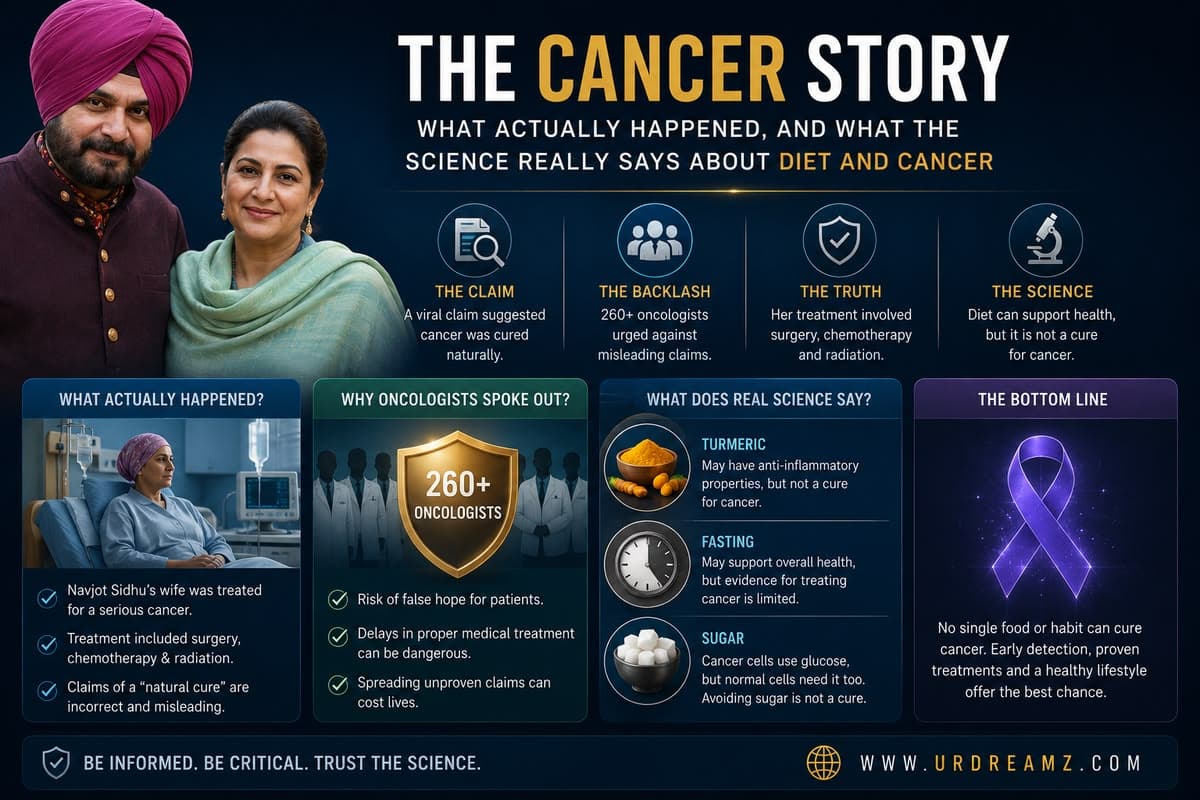
A story has been circulating widely about former Indian cricketer and television personality Navjot Singh Sidhu, claiming that his wife's stage 4 cancer was "completely cured" in just 40 days using only a home remedy of neem leaves, raw turmeric, apple cider vinegar, and cloves boiled in water. It's an emotionally powerful story, and it's easy to understand why it spreads so fast: cancer is one of the most feared diagnoses in the world, and a story suggesting it can be defeated with a few kitchen ingredients offers enormous hope to people who feel powerless in the face of a devastating diagnosis, whether for themselves or someone they love.
But before this story goes any further, it deserves a careful, honest, fact-based look, because the full picture, the one Sidhu himself eventually confirmed publicly, is meaningfully different from the viral version, and the difference matters enormously for anyone currently facing a cancer diagnosis. This article walks through exactly what happened, what doctors said, what the actual scientific research shows about the ingredients involved, and how to think about diet's real, legitimate role in a cancer journey, without gambling with a life-threatening disease.
Table of Contents
- What Actually Happened: The Real Timeline
- The Viral Claim vs. What Sidhu Later Confirmed Himself
- Why 260-Plus Oncologists Publicly Pushed Back
- What "Clinically Cancer-Free" Actually Means
- The Real Science on Turmeric and Curcumin
- What About Neem, Apple Cider Vinegar, and Cloves?
- Intermittent Fasting, Autophagy, and the Nobel Prize Connection
- Does Sugar Really "Feed" Cancer?
- The Jain Fasting Tradition and Personal Recovery Stories
- Why Stories Like This Spread So Fast
- Fatty Liver Disease: Where Diet Actually Does Work Wonders
- What a Responsible, Supportive Diet Approach Actually Looks Like
- What to Say to Someone Who Believes a Cure-All Story
- A Message for Anyone Currently Facing a Cancer Diagnosis
- Frequently Asked Questions
1. What Actually Happened: The Real Timeline
Navjot Kaur Sidhu, wife of the well-known former cricketer and current television personality Navjot Singh Sidhu, was diagnosed with stage 4 invasive breast cancer that had already metastasized, meaning it had spread beyond the original site. Reports at the time described her survival odds as extremely low, with figures ranging from three to five percent depending on the source. This was, by any measure, an extraordinarily serious, life-threatening diagnosis.
She was treated at Rajindra Hospital in Patiala and later at Dr Waryam Singh Hospital in Yamunanagar. Her actual medical treatment included breast surgery described as addressing a "rarest of rare" metastasis, painful chemotherapy sessions, hormonal therapy, and targeted therapy, the standard, evidence-based tools used against advanced breast cancer today. Alongside this medical treatment, the family also made significant changes to her diet and daily routine, cutting out dairy, refined sugar, refined flour, and processed oils, and incorporating things like lemon water, raw turmeric, neem leaves, garlic, and intermittent fasting. Around 40 to 45 days after this combined approach began, she underwent a follow-up surgery, and a subsequent PET scan did not detect cancer.
2. The Viral Claim vs. What Sidhu Later Confirmed Himself
When Sidhu first spoke publicly about his wife's recovery at a press conference in Amritsar, the way he framed it left a very different impression than what had actually happened. He described her treatment as "starving cancer by not eating dairy products and sugar," and said that consuming turmeric and neem "helped cure her incurable cancer." This framing, understandably, is what took off online: a stage 4 cancer, cured entirely through diet, no chemotherapy or surgery mentioned at all in the viral clips.
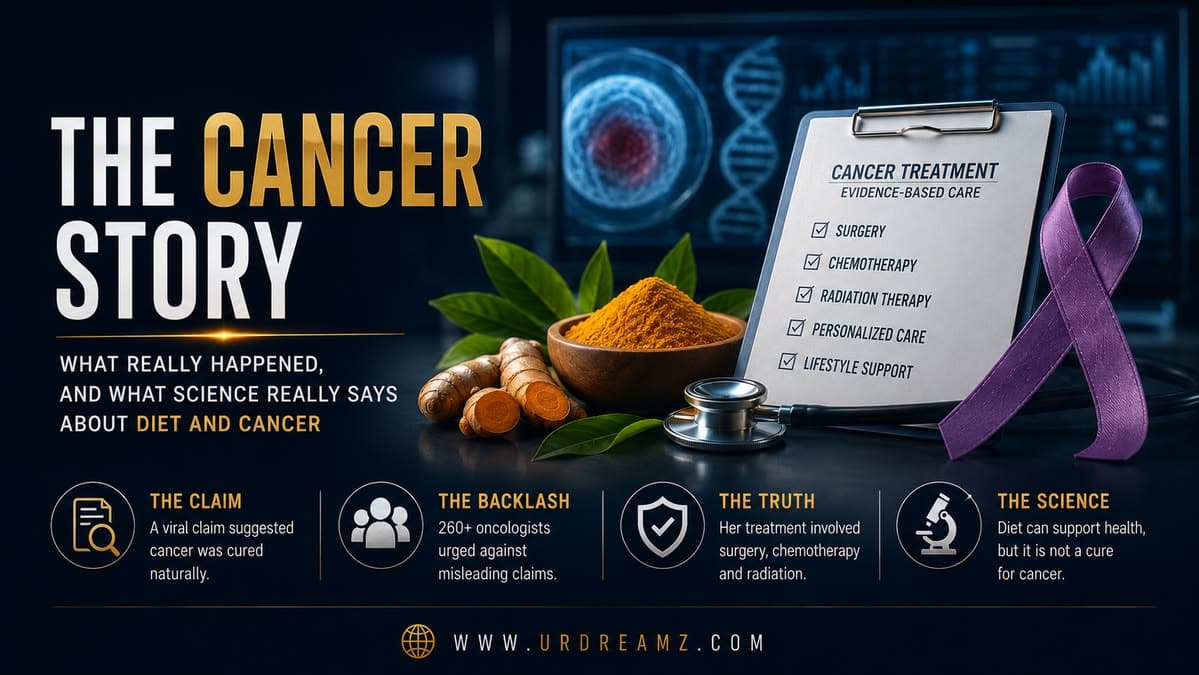
This is precisely where the story that circulates today, including the version being shared now, departs from reality. After facing significant public pushback, Sidhu released a follow-up statement clarifying the full picture. He explicitly stated that his wife's "cancer journey involved surgeries, chemotherapy, hormonal and targeted therapy," and that this was "facilitated by a strict diet plan" alongside "positivity and determination to fight cancer." In other words, even according to Sidhu himself, in his own corrected account, the diet was a supporting factor alongside, not a replacement for, standard medical cancer treatment.
3. Why 260-Plus Oncologists Publicly Pushed Back
The initial version of Sidhu's claim did not go unnoticed by the medical community, and the response was fast and serious. Tata Memorial Hospital in Mumbai, one of India's largest and most respected cancer treatment and research centers, issued an official public statement signed by 260 oncologists, directly addressing the viral video. The statement said plainly: "Parts of the video imply that starving the cancer by not eating dairy products and sugar, consuming haldi and neem helped cure the 'incurable' cancer. These statements have no high-quality evidence to support them."
The hospital's director, Dr. C.S. Pramesh, specifically warned the public not to delay treatment by following unproven remedies, and urged anyone with cancer symptoms to consult a cancer specialist rather than rely on dietary claims circulating on social media. Other senior oncologists echoed the same concern. Dr. Harit Chaturvedi, chairman of Max Institute of Cancer Care, explained that cancer treatment strategy depends on the cancer's subtype, its specific genetic mutations, the organ where it originated, and how far it has spread, factors that a single dietary approach cannot address. Dr. Pritam Kataria of Sir HN Reliance Foundation Hospital stated it even more directly: "The treatment of cancer is because of either chemotherapy, surgery, or radiation. This forms the backbone of the treatment. The other adjuncts, like the diet control... cannot replace the treatment."
This wasn't a small, dismissive reaction from a couple of skeptical doctors. It was a coordinated, unusually large, and unusually public response from one of the most respected oncology institutions in the country, precisely because doctors were worried, with good reason, that patients might see the viral version of this story and delay or abandon life-saving treatment as a result.
4. What "Clinically Cancer-Free" Actually Means
Part of the confusion in this story comes from a mismatch between medical terminology and everyday language. When Sidhu described his wife as "cancer-free," oncologists clarified what this term actually means in a clinical setting: no detectable signs of cancer during medical evaluation, typically through imaging like a PET scan and blood work. This is a genuinely meaningful, positive outcome, and it does not diminish how remarkable her recovery is, especially starting from a three to five percent survival estimate.
However, "clinically cancer-free" is not the same as saying a specific home remedy caused that outcome. Her actual path to that result included surgery to remove the tumor, chemotherapy to kill remaining cancer cells throughout her body, hormonal therapy to block hormones that were fueling the cancer's growth, and targeted therapy designed to attack specific molecular features of her particular cancer. These are the treatments with decades of clinical trial evidence behind them for exactly this kind of diagnosis. The diet and lifestyle changes may well have supported her overall strength, resilience, and quality of life during an extraordinarily difficult treatment process, which is valuable and worth taking seriously, but crediting them as the primary cause of her cancer clearing is not what the full medical record actually supports.
5. The Real Science on Turmeric and Curcumin
Turmeric contains a compound called curcumin, which has genuinely been studied extensively by cancer researchers, more than almost any other natural compound investigated for cancer-related purposes. It's worth being accurate about what this research actually shows, because the honest picture is more interesting, and more nuanced, than either "it's magic" or "it's useless."
In laboratory studies, using isolated cancer cells and animal models, curcumin has shown genuine anti-inflammatory and anti-proliferative properties, meaning it can slow the growth of certain cancer cells under controlled lab conditions. This has made it a serious subject of ongoing clinical research. A systematic review of 34 randomized controlled trials involving over 2,500 cancer patients found that curcumin, when used alongside standard treatment, showed meaningful benefits for specific side effects, particularly oral mucositis, a painful mouth inflammation common during chemotherapy and radiation, and helped some patients maintain healthier body weight during treatment. Other trials found curcumin reduced skin irritation from radiation therapy and eased certain chemotherapy side effects like nerve pain and heart strain in specific patient groups.
However, when researchers specifically looked at whether curcumin actually shrinks tumors, extends survival, or replaces the need for standard treatment, the evidence tells a very different story. A separate systematic review of seven high-quality randomized controlled trials covering prostate, colorectal, and breast cancers found that curcumin was ineffective at improving overall survival or progression-free survival when compared to standard care. Cancer Research UK, summarizing the broader body of evidence, states plainly: "At the moment there is no clear evidence in humans to show that turmeric or curcumin can prevent or treat cancer." One major, persistent scientific problem is that curcumin is very poorly absorbed by the human body when eaten normally, which limits how much of it actually reaches cancer-affected tissue in meaningful concentrations, regardless of how much turmeric someone consumes in food or water.
So the honest, evidence-based summary is this: turmeric and curcumin appear genuinely useful as a complementary support during cancer treatment, particularly for managing certain side effects, and remain an active, legitimate area of ongoing research. But there is currently no reliable clinical evidence that turmeric alone treats or cures cancer, and no cancer research institution in the world currently recommends it as a replacement for chemotherapy, surgery, or radiation.
6. What About Neem, Apple Cider Vinegar, and Cloves?
The remaining ingredients in the viral remedy have considerably less clinical research behind them than turmeric, and it's important to be direct about that gap rather than assume equal evidence exists for all four ingredients simply because they were mentioned together.
Neem has a long history in traditional Ayurvedic medicine, primarily for skin conditions, oral health, and as an antimicrobial agent. Some laboratory studies have examined compounds in neem for potential anti-cancer properties in isolated cell studies, but this research remains almost entirely preclinical, meaning it has not been confirmed in human clinical trials at meaningful scale. One area where neem does have somewhat more support, worth mentioning honestly, involves supportive use for oral health during chemotherapy and some limited research into effects on white blood cell counts, though this remains far from settled, high-quality evidence and should not be confused with treating the cancer itself.
Apple cider vinegar has essentially no credible clinical research supporting any specific anti-cancer effect in humans. It has been studied in small ways for blood sugar management and digestive comfort, but claims about it fighting cancer cells remain unsupported by clinical evidence. Cloves contain a compound called eugenol, which has shown some antioxidant properties in laboratory settings, but again, this is preclinical research, far removed from evidence that drinking clove-infused water affects an existing tumor in a person's body.
None of this means these ingredients are harmful in normal culinary amounts, and there's nothing wrong with including them as part of a generally healthy diet. The concern arises specifically when they are presented as a proven, standalone cancer treatment capable of replacing chemotherapy, surgery, or other evidence-based care, a claim the current scientific record simply does not support for any of these four ingredients.
7. Intermittent Fasting, Autophagy, and the Nobel Prize Connection
In his follow-up clarification, Sidhu specifically referenced the Nobel Prize-winning research of Yoshinori Ohsumi on autophagy as part of the scientific basis for his wife's diet plan. This deserves careful unpacking, because it's a real scientific discovery being applied here in a way that goes well beyond what that research actually demonstrated.
Autophagy is a genuine, well-documented biological process in which cells break down and recycle their own damaged components, essentially a cellular cleanup and renewal system. Ohsumi won the 2016 Nobel Prize in Physiology or Medicine specifically for identifying the genes and mechanisms controlling this process, research conducted primarily using yeast cells. This was a genuinely important discovery for understanding basic cell biology, aging, and certain diseases. However, Ohsumi's prize-winning research was not a study of fasting curing cancer in humans, and autophagy's relationship with cancer is actually scientifically complex and, in some contexts, contradictory: autophagy can help remove damaged cells in ways that may reduce cancer risk in healthy tissue, but in already-established tumors, autophagy can sometimes help cancer cells survive stress from chemotherapy and radiation, meaning its effects are not simply, uniformly "anti-cancer" in every context.
Intermittent fasting itself has real, growing scientific interest as a complementary approach in oncology, with some early clinical trials exploring whether short-term fasting before chemotherapy sessions might reduce certain side effects or improve treatment tolerance in specific patient groups. This is a legitimate, active area of research. But it remains investigational, meaning it is being studied as a possible complement to standard treatment under medical supervision, not as a standalone cure, and applying Ohsumi's basic cell biology research to claim fasting alone defeats stage 4 cancer significantly overstates what that Nobel Prize actually established.
8. Does Sugar Really "Feed" Cancer?
This is one of the most persistent and widely repeated claims in cancer diet folklore, and it deserves a careful, precise answer, because it contains a kernel of real science wrapped in a significant oversimplification. The scientific observation behind this claim is real: it's called the Warburg effect, named after biochemist Otto Warburg, who observed in the 1920s that cancer cells tend to consume glucose at a much higher rate than normal cells and process it differently, even when oxygen is available. This observation is well established and is actually the basis for a real diagnostic tool used in oncology today, the PET scan, which works by tracking glucose uptake in the body, since tumors typically light up brighter due to their higher glucose consumption.
However, the leap from "cancer cells consume a lot of glucose" to "if you stop eating sugar, cancer cells will starve and die" does not hold up scientifically, for a fairly straightforward biological reason: the human body does not depend entirely on dietary sugar for its glucose supply. Through a process called gluconeogenesis, the liver can manufacture glucose from other sources, including protein and fat, specifically to maintain stable blood sugar levels for organs, including tumors, that need it. This means that simply cutting sugar and carbohydrates from the diet does not meaningfully "starve" an existing tumor of glucose, because the body will produce glucose internally regardless. Major cancer research institutions, including the American Cancer Society and Cancer Research UK, have specifically and repeatedly addressed this myth, confirming there is no reliable clinical evidence that avoiding sugar shrinks tumors or that sugar consumption itself causes existing cancer to grow faster in a way that dietary restriction alone can reverse.
This doesn't mean diet is irrelevant to cancer risk or overall health during treatment. Maintaining a healthy weight, avoiding excessive processed sugar as part of a generally balanced diet, and managing blood sugar are genuinely associated with lower cancer risk at a population level and better overall health during treatment. But that is a meaningfully different, more modest claim than "cutting sugar kills existing cancer cells," which is the version that tends to circulate in viral health content.
9. The Jain Fasting Tradition and Personal Recovery Stories
It's worth addressing directly the story shared alongside this topic about intermittent fasting rooted in Jain philosophy, and the account of a grandmother who survived stage 2 breast cancer at 88 years old following a Jain diet and fasting practice. This deserves genuine respect rather than dismissal. Jain dietary and fasting traditions are thousands of years old, generally involve eating within daylight hours, avoiding root vegetables and certain foods believed to cause harm to living organisms, and are practiced by millions of people as a spiritual and health discipline, entirely independent of any cancer claim.
The specific story of the 88-year-old grandmother surviving cancer and living to 99 is genuinely wonderful news, and there is no reason to doubt the family's account of it. But it's worth noting an important detail already present in that very account: she was operated on successfully, meaning she received surgery, one of the three core pillars of evidence-based cancer treatment, alongside her Jain diet and fasting practice. This mirrors exactly the pattern seen in the Sidhu case: a genuinely inspiring recovery story that involved both a disciplined, healthy lifestyle and standard medical treatment together, not diet or fasting as a replacement for that treatment. An individual story like this also can't establish, on its own, that the diet caused the recovery, since we don't have a way to know what would have happened with surgery alone, without also drawing the same wrong conclusion the medical community warned about in Sidhu's case.
None of this is meant to dismiss the genuine value many people find in fasting traditions for discipline, digestive health, and general wellbeing, benefits that have some real supporting research in areas like metabolic health. It's simply meant to keep the specific claim, that this fasting tradition alone defeated a cancer diagnosis, appropriately separated from the parts of the story that involved standard medical care.
10. Why Stories Like This Spread So Fast
It's worth understanding why a story like this travels so quickly and so widely, because the reasons say a lot about human psychology, not just about misinformation mechanics. Cancer remains one of the most feared diagnoses in the world, and the standard treatments, chemotherapy, radiation, surgery, are physically brutal, expensive, and don't guarantee success even when followed perfectly. A story suggesting an escape route through a few affordable kitchen ingredients offers something incredibly powerful: hope without the suffering, and control over an situation that otherwise feels terrifyingly uncontrollable, especially for families who may not have easy access to expensive, specialized cancer care.
There's also a real, understandable distrust of expensive, complicated modern medical systems that this kind of story taps into, alongside genuine cultural pride in traditional remedies passed down through generations. When a well-known public figure shares a personal story with this much emotional weight, it carries far more persuasive power than a cautious, hedge-filled statement from an oncologist explaining nuanced clinical trial data. This is precisely why the correction, even when it comes from 260 respected doctors at one of the most trusted cancer hospitals in the country, rarely spreads as far or as fast as the original viral claim. Understanding this pattern doesn't mean dismissing people's hope or their genuine belief in what helped a loved one. It simply means being extra careful before repackaging an emotionally powerful but medically incomplete story as universal advice for the whole world.
11. Fatty Liver Disease: Where Diet Actually Does Work Wonders
It's worth pausing here to highlight something genuinely accurate and encouraging, because not everything in this broader conversation is overstated. The claim that diet and weight loss can significantly improve or even reverse fatty liver disease is, unlike the cancer-cure claim, strongly supported by real clinical evidence. Non-alcoholic fatty liver disease, now more commonly referred to as metabolic dysfunction-associated steatotic liver disease, responds very well to sustained weight loss, particularly losing around seven to ten percent of body weight through a combination of reduced sugar and refined carbohydrate intake, increased physical activity, and sustainable dietary changes.
Multiple clinical studies have shown that meaningful weight loss can reduce liver fat, improve liver enzyme levels, and in earlier stages of the disease, even reverse existing liver damage entirely. This is genuinely one of the clearest, best-documented examples of lifestyle change producing dramatic, measurable improvement in a real medical condition, and it's a completely different evidence category from cancer treatment. If someone in this story lost twenty-five kilograms through sustained dietary discipline and saw their fatty liver condition resolve as a result, that is entirely consistent with, and strongly supported by, real clinical research on liver disease specifically. The important distinction is simply this: fatty liver disease and stage 4 metastatic cancer are fundamentally different conditions, with completely different underlying biology, and evidence that diet strongly helps one condition does not transfer automatically to the other, however similar the lifestyle interventions might look on the surface.
12. What a Responsible, Supportive Diet Approach Actually Looks Like
None of this fact-checking should be read as diet being irrelevant to a cancer journey, because that would be its own kind of oversimplification. Major cancer centers around the world, including places like Memorial Sloan Kettering and MD Anderson, maintain dedicated integrative medicine and nutrition departments specifically because diet, physical activity, sleep, and stress management genuinely do affect treatment tolerance, recovery speed, quality of life, and in some cases, measurable outcomes, when used to support, not replace, standard treatment.
A responsible, evidence-based approach generally looks like this: maintaining adequate protein and calorie intake to help the body withstand the physical demands of chemotherapy or radiation, since unintentional weight loss during treatment is associated with worse outcomes; managing nausea and appetite changes with guidance from an oncology dietitian rather than guesswork; staying appropriately hydrated; incorporating anti-inflammatory whole foods like vegetables, fruits, and whole grains as part of overall nutritional support; and discussing any specific supplement or herbal addition, including turmeric, with the treating oncology team first, since some natural compounds can actually interfere with how chemotherapy drugs are metabolized in the body. This kind of integrative approach, diet and lifestyle working alongside medicine rather than instead of it, is where the genuinely supportive value of nutrition in cancer care actually lives, and it is a very different message from "diet alone defeated stage 4 cancer.
13. What to Say to Someone Who Believes a Cure-All Story
If someone close to you shares a story like this with real excitement and hope, it's worth responding with care rather than blunt dismissal, since the underlying hope and love behind sharing it is completely genuine. A useful approach is acknowledging what's actually true and admirable in the story, the discipline, the willpower, the genuinely inspiring recovery, while gently adding the fuller context: that the same family, in their own later statements, confirmed that surgery, chemotherapy, hormonal therapy, and targeted therapy were the core treatments, with diet playing a supportive role alongside them.
It can also help to point toward what actual oncologists, including 260 of them at one of the country's leading cancer hospitals, said directly in response to this exact story: that diet can support, but should never replace, evidence-based cancer treatment, and that anyone facing a cancer diagnosis should discuss any dietary changes with their treating doctor rather than substituting them for recommended treatment. Framing this as "both things can be true at once", the diet may have genuinely helped her overall strength and recovery, and the medical treatment was the primary, essential reason the cancer became undetectable, tends to land better than framing it as the family being wrong, since neither framing actually contradicts what the family itself eventually confirmed.
14. A Message for Anyone Currently Facing a Cancer Diagnosis
If you or someone you love is currently facing a cancer diagnosis, the most important thing this entire story can offer isn't a recipe. It's this: even a three to five percent survival estimate is not automatically a death sentence, and modern oncology, chemotherapy, targeted therapy, hormonal therapy, and surgery together, has advanced enormously and produces genuinely remarkable outcomes for patients who might have had no realistic hope of survival even a decade or two ago. Navjot Kaur Sidhu's story, told accurately and completely, is actually a story about the power of combining disciplined lifestyle changes with aggressive, modern medical treatment and genuine willpower, not a story about medicine being unnecessary.
Diet, fasting practices, and traditional remedies can be part of a supportive, complementary approach worth discussing with your medical team, particularly for managing treatment side effects and supporting overall strength and wellbeing during an extraordinarily difficult period. But delaying or replacing chemotherapy, surgery, or other recommended treatment based on a viral claim, however well-intentioned, is exactly the outcome that 260 oncologists at one of the world's most respected cancer hospitals felt urgently compelled to warn the public against. Hope and discipline matter enormously in a cancer journey. So does evidence, and the responsible path forward holds onto both at the same time, rather than being forced to choose between them.
It is worth remembering, too, that every cancer diagnosis is different. What worked, or appeared to work, for one family, with one specific cancer subtype, treated at specific hospitals, under specific medical supervision, cannot be assumed to translate directly to a different person's diagnosis. This is exactly why oncologists emphasize individualized treatment plans rather than universal remedies, and it's exactly why a story this emotionally powerful still needs to be paired with a conversation with your own treating doctor before any part of it is applied to your own situation or a loved one's.
15. Frequently Asked Questions
Did Navjot Sidhu's wife's cancer really get cured just by diet in 40 days? No. While dietary and lifestyle changes were part of her recovery, her actual treatment included surgery, chemotherapy, hormonal therapy, and targeted therapy, which Sidhu himself confirmed publicly after his initial diet-only framing drew criticism from oncologists.
Did doctors really criticize Sidhu's claims? Yes, 260 oncologists at Tata Memorial Hospital, one of India's leading cancer institutions, issued a public statement calling the diet-cures-cancer framing unscientific and warning the public not to delay treatment based on unproven remedies.
Is there any real scientific evidence for turmeric and cancer? Curcumin, the active compound in turmeric, has shown some benefit in clinical trials for managing specific cancer treatment side effects, like oral mucositis and radiation-related skin irritation, but there is no reliable clinical evidence that it treats, shrinks, or cures cancer on its own.
Does cutting sugar out of your diet starve cancer cells? No, this is a common myth. While cancer cells do consume glucose at a higher rate than normal cells, the human body produces glucose internally from other sources like protein and fat, so avoiding dietary sugar does not meaningfully deprive an existing tumor of the glucose it needs.
Can diet actually reverse fatty liver disease? Yes, this claim is strongly supported by clinical evidence. Sustained weight loss of around seven to ten percent of body weight through dietary changes has been shown to significantly reduce liver fat and can reverse early-stage fatty liver disease, making it a genuinely different, more evidence-backed claim than diet curing cancer.
Should cancer patients avoid all dietary changes and complementary approaches? No, but they should be discussed with the treating oncology team first. Many major cancer centers support integrative nutrition approaches to help manage treatment side effects and support overall wellbeing, as a complement to, never a replacement for, evidence-based medical treatment, always under proper medical guidance.