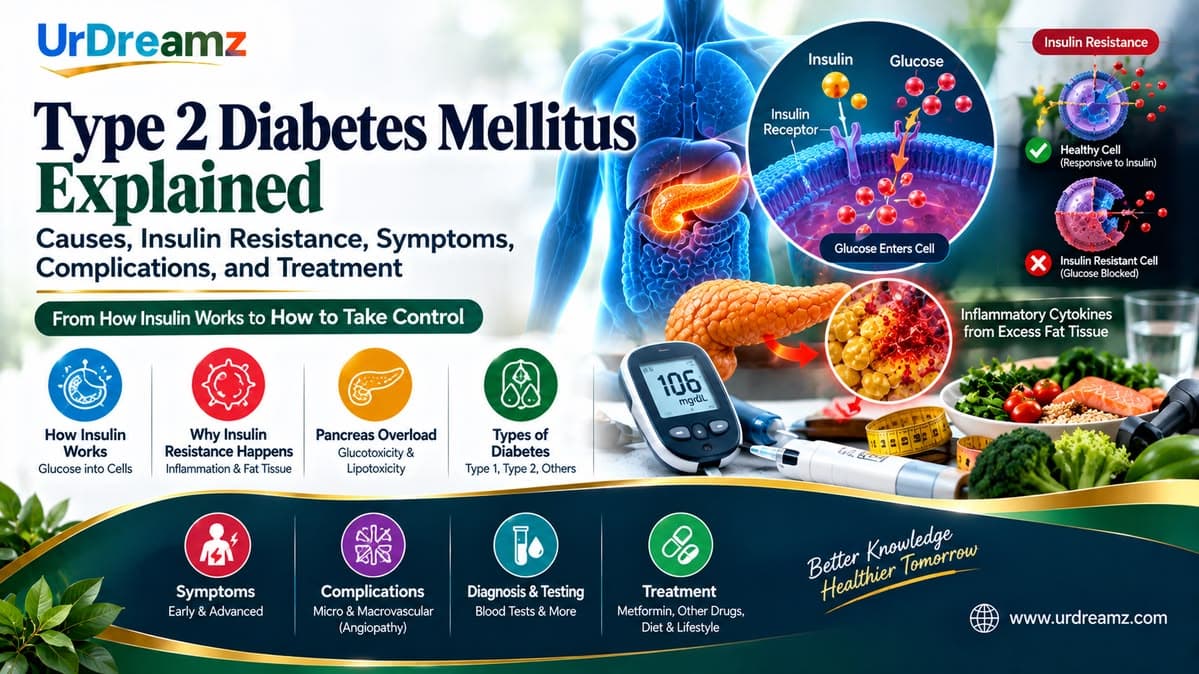
Type 2 Diabetes Mellitus Explained: Causes, Insulin Resistance, Symptoms, and Treatment
Type 2 Diabetes is often described simply as "high blood sugar," but that description skips over an entire biological cascade — from how insulin normally works at the cellular level, to how inflammation from excess fat tissue quietly blocks that process, to how the pancreas compensates and eventually burns out. This guide walks through the complete picture, from root cause to modern treatment, in clear, step-by-step language.
Introduction
Type 2 Diabetes Mellitus (T2DM) is often called a "silent" disease, and for good reason — the biological process behind it can begin quietly, years before a diagnosis is ever made, with no obvious symptoms at all. Yet underneath that silence is a genuinely fascinating and important cascade of events happening at the cellular level: a breakdown in how the body's cells respond to insulin, a slow-building role played by inflammation, and eventually, the gradual exhaustion of the very organ responsible for producing insulin in the first place.
This guide is built to explain Type 2 Diabetes the way it actually unfolds in the body — starting from the normal, healthy process of how insulin lets glucose into cells, moving through exactly what breaks down and why, and continuing all the way through to diagnosis, complications, and modern treatment, including how a medication as familiar as metformin actually works at the molecular level. Whether the goal is understanding a personal or family diagnosis, or simply satisfying genuine curiosity about one of the most common chronic diseases in the world, this guide aims to leave nothing important out.
What Is Type 2 Diabetes Mellitus
Type 2 Diabetes Mellitus is a chronic metabolic condition in which the body's cells become progressively less responsive to insulin — a state called insulin resistance — and, over time, the pancreas becomes less able to produce enough insulin to overcome that resistance. The combined result is chronically elevated blood glucose (blood sugar), which, left unmanaged, damages blood vessels and organs throughout the body over months and years.
Unlike Type 1 Diabetes, which involves the immune system directly destroying the insulin-producing cells of the pancreas, Type 2 Diabetes develops gradually, usually over many years, as a consequence of the body's cells progressively resisting insulin's signal — a process closely tied to excess body fat, chronic low-grade inflammation, and genetic predisposition working together. Understanding this distinction, and the full biological cascade behind it, is the foundation for understanding everything else covered in this guide.
Normal Insulin Signaling: How Glucose Enters Cells
To understand what goes wrong in Type 2 Diabetes, it helps to first understand, step by step, how the process is supposed to work in a healthy body. Glucose — sugar circulating in the blood after a meal — cannot simply drift into most cells on its own; it needs a specific, insulin-triggered signaling cascade to open the door.
| Step | What Happens |
|---|---|
| 1. Insulin binds its receptor | Insulin, released by the pancreas, binds to the insulin receptor (IR) on the surface of a cell, such as a muscle or fat cell |
| 2. IRS-1 is activated | This binding activates a docking protein inside the cell called Insulin Receptor Substrate-1 (IRS-1) |
| 3. PI3K is recruited | Activated IRS-1 recruits and activates an enzyme called PI3K (phosphoinositide 3-kinase) |
| 4. PIP2 becomes PIP3 | PI3K converts a membrane lipid called PIP2 into PIP3, a key signaling molecule |
| 5. AKT is activated | PIP3 activates a central signaling protein called AKT (also known as Protein Kinase B) |
| 6. GLUT4 moves to the surface | Activated AKT signals glucose transporter proteins called GLUT4 to move from storage inside the cell to the cell's outer membrane |
| 7. Glucose enters the cell | Once GLUT4 is sitting in the membrane, glucose can finally flow into the cell, lowering blood glucose levels |
This entire sequence — insulin receptor, IRS-1, PI3K, PIP2 to PIP3, AKT, and finally GLUT4 — is often referred to as the insulin signaling cascade, and it's worth appreciating just how precise and multi-step this process is. Each link in this chain depends on the one before it working correctly, which is exactly why Type 2 Diabetes can develop even when insulin itself is present in completely normal amounts — because, as the next section explains, the problem isn't a lack of insulin at all, but a breakdown somewhere along this internal chain of command.
What Goes Wrong: Insulin Resistance
Insulin resistance is the central problem in Type 2 Diabetes, and it means exactly what it sounds like: the body's cells stop responding properly to insulin's signal, even though insulin is still being produced and is still binding to its receptor on the cell surface. Rather than a locked door with no key, insulin resistance is more like a key that still fits the lock but no longer turns it smoothly — the signal gets partially stuck somewhere along the cascade described in the previous section.
In most cases of Type 2 Diabetes, the interruption happens specifically at the level of IRS-1, the docking protein just inside the cell that's supposed to relay insulin's signal onward to PI3K and the rest of the cascade. When IRS-1 is not functioning properly — a disruption closely tied to chronic inflammation, discussed in detail in the next section — the entire downstream chain weakens: less PI3K activation, less PIP3, less AKT activity, and ultimately, far less GLUT4 reaching the cell surface. The practical result is that glucose has a much harder time entering muscle and fat cells, even though plenty of insulin is circulating in the blood trying to deliver that exact signal.
Inflammatory Cytokines: The Hidden Trigger
One of the most important and often underappreciated pieces of the Type 2 Diabetes puzzle is the role played by chronic, low-grade inflammation — and specifically, by signaling molecules called inflammatory cytokines. Excess body fat, particularly visceral fat stored around the abdominal organs, isn't simply inert storage tissue; it's biologically active and releases inflammatory cytokines, most notably IL-6 (interleukin-6) and TNF-alpha (tumor necrosis factor-alpha), into the bloodstream on an ongoing basis.
These inflammatory cytokines interfere directly with the insulin signaling cascade described earlier, primarily by altering IRS-1 in a way that blocks it from properly relaying insulin's signal — a process involving what's known as inappropriate serine phosphorylation of IRS-1, which essentially jams that critical link in the chain. The result is that even when insulin is present and binding normally to its receptor, the signal simply doesn't get through effectively, producing exactly the insulin resistance described in the previous section.
This is precisely why excess body fat, particularly around the abdomen, is so strongly and consistently linked to Type 2 Diabetes risk — it isn't simply about extra weight in a generic sense, it's about this specific fat tissue actively generating a chronic inflammatory signal that directly interferes with cellular insulin signaling, day after day, for years, long before blood sugar levels rise high enough to be noticed or diagnosed.
The Pancreas's Compensation
In the earlier stages of developing insulin resistance, the body doesn't simply give up — the pancreas, specifically the insulin-producing beta cells within clusters of tissue called the islets, responds by working harder, producing and releasing more insulin than usual to try to overcome the resistance happening at the cellular level. For a period that can last years, this compensation actually works reasonably well: blood glucose levels may remain in a completely normal or only mildly elevated range, even though insulin resistance is already well underway beneath the surface.
This compensatory phase is exactly why Type 2 Diabetes can go undetected for so long. Standard blood sugar readings can look essentially normal during this period, even while the underlying insulin resistance and elevated compensatory insulin levels — a state sometimes identified through more specific testing — are already present. This is also why some of the most meaningful, effective prevention opportunities exist during this exact window, before the pancreas begins to show signs of the strain covered in the next section.
Beta Cell Burnout: Glucotoxicity and Lipotoxicity
The pancreas's compensatory effort, however, cannot continue indefinitely. Over months and years of working overtime to produce extra insulin, the insulin-producing beta cells begin to suffer damage from two related, mutually reinforcing processes: glucotoxicity and lipotoxicity.
| Process | What It Means |
|---|---|
| Glucotoxicity | Chronically elevated blood glucose itself becomes directly toxic to beta cells over time, impairing their ability to sense glucose and release insulin appropriately |
| Lipotoxicity | Elevated levels of circulating fatty acids, common in the context of excess body fat, similarly damage beta cell function and contribute to their gradual decline |
Together, these two processes create a genuinely vicious cycle: rising blood glucose and elevated fatty acids damage the very cells responsible for producing the insulin needed to bring glucose levels back down, which allows glucose levels to climb even further, which in turn causes more glucotoxic and lipotoxic damage to the beta cells. Over time, this progressive beta cell exhaustion and dysfunction is what marks the transition from early, compensated insulin resistance into full, clinically diagnosable Type 2 Diabetes.
The Tipping Point: Rising Blood Glucose
Once beta cell compensation can no longer keep pace with the degree of insulin resistance present, blood glucose levels begin to rise in a way that's detectable on standard testing — the point at which Type 2 Diabetes typically becomes an official diagnosis rather than a silent, underlying process. From this point forward, persistently elevated blood glucose itself becomes the primary driver of the long-term complications discussed later in this guide, since excess glucose circulating in the blood gradually damages blood vessels and nerves throughout the body when it isn't properly managed.
It's worth emphasizing that this entire process — from early insulin resistance, through inflammatory disruption of cellular signaling, through pancreatic compensation, to eventual beta cell exhaustion and rising blood glucose — typically unfolds over many years, often a decade or more, before a formal diagnosis is made. This extended, largely silent timeline is exactly why Type 2 Diabetes is so often described as a silent disease, and exactly why understanding early risk factors and getting appropriate testing, covered later in this guide, matters so much.
Types of Diabetes
While this guide focuses specifically on Type 2 Diabetes, understanding how it differs from other forms of diabetes helps clarify exactly what makes it distinct.
| Type | Key Characteristic |
|---|---|
| Type 1 Diabetes | An autoimmune condition where the immune system directly destroys insulin-producing beta cells, typically diagnosed in childhood or young adulthood, requiring insulin treatment from diagnosis |
| Type 2 Diabetes | Develops from progressive insulin resistance and eventual beta cell exhaustion, as described throughout this guide, typically in adulthood though increasingly seen in younger people as well |
| Gestational Diabetes | Develops during pregnancy due to hormonal changes affecting insulin sensitivity, usually resolving after delivery but raising future Type 2 Diabetes risk |
| Prediabetes | An intermediate state of elevated blood glucose that doesn't yet meet the threshold for full diabetes diagnosis, representing an important window for prevention |
Causes and Risk Factors
| Risk Factor | Why It Matters |
|---|---|
| Excess body weight, particularly abdominal fat | Drives the inflammatory cytokine release described earlier that directly interferes with insulin signaling |
| Sedentary lifestyle | Physical inactivity reduces muscle cells' baseline insulin sensitivity and glucose uptake capacity |
| Family history and genetics | A strong, well-documented independent risk factor, though it interacts closely with lifestyle factors |
| Age | Risk generally increases with age, partly due to cumulative lifestyle factors and gradually declining beta cell reserve |
| Diet high in refined carbohydrates and sugar | Contributes to weight gain and repeated glucose spikes that place ongoing demand on insulin production |
| History of gestational diabetes | Significantly raises future Type 2 Diabetes risk |
| Certain ethnic backgrounds | Some populations carry a genetically higher baseline risk, independent of lifestyle factors |
Early Symptoms
| Symptom | Why It Happens |
|---|---|
| Increased thirst | The body attempts to dilute excess blood glucose |
| Frequent urination | The kidneys work to excrete excess glucose, pulling extra water along with it |
| Increased hunger | Cells aren't receiving glucose effectively despite plenty being available in the blood, triggering hunger signals |
| Fatigue | Cells are effectively "starved" of usable glucose energy despite high blood levels |
| Blurred vision | Elevated glucose can temporarily affect fluid balance within the eye's lens |
| Slow-healing cuts or wounds | Elevated glucose impairs normal circulation and immune function needed for healing |
| Frequent infections | Elevated glucose creates a more favorable environment for certain infections, including skin and urinary infections |
Because these symptoms often develop gradually and mildly, particularly in the earlier stages, many people live with undiagnosed Type 2 Diabetes for a significant period before symptoms become noticeable enough to prompt a doctor's visit — another reflection of the extended, silent progression described earlier in this guide.
Advanced and Late-Stage Symptoms
When Type 2 Diabetes goes unmanaged over a longer period, symptoms tend to reflect the cumulative damage caused by prolonged high blood glucose, particularly to nerves and blood vessels.
| Late-Stage Symptom | Underlying Cause |
|---|---|
| Numbness or tingling in hands and feet | Nerve damage (diabetic neuropathy) from prolonged high glucose exposure |
| Vision changes or vision loss | Damage to the small blood vessels of the retina (diabetic retinopathy) |
| Kidney function decline | Damage to the small blood vessels within the kidneys (diabetic nephropathy) |
| Non-healing foot ulcers | A combination of nerve damage, reduced circulation, and impaired healing |
| Chest pain or signs of heart disease | Long-term damage to larger blood vessels supplying the heart |
These advanced symptoms reflect exactly the kind of vascular damage described in detail in the next section on angiopathy, and they represent precisely why consistent, long-term blood glucose management matters so much — not simply to avoid short-term discomfort, but to prevent this kind of serious, often irreversible organ damage.
Angiopathy: Micro and Macrovascular Complications
Angiopathy — damage to blood vessels — is the central mechanism behind nearly all of the serious long-term complications of Type 2 Diabetes. Chronically elevated blood glucose gradually damages blood vessel walls throughout the body, and this damage is generally categorized into two types based on the size of vessel affected.
| Category | Vessels Affected | Resulting Complications |
|---|---|---|
| Microangiopathy (microvascular) | Small blood vessels | Diabetic retinopathy (eyes), diabetic nephropathy (kidneys), diabetic neuropathy (nerves) |
| Macroangiopathy (macrovascular) | Larger blood vessels | Coronary artery disease and heart attack, stroke, peripheral artery disease (reduced circulation to the limbs) |
This distinction matters clinically because it explains the wide range of organs Type 2 Diabetes can ultimately affect — eyes, kidneys, nerves, heart, brain, and circulation to the limbs — despite the disease originating from a single underlying process of insulin resistance and elevated blood glucose. It's also, once again, the strongest possible argument for consistent long-term management: every one of these complications develops gradually over years of elevated glucose exposure, and every one of them is, to varying degrees, preventable or delayable through effective blood glucose control.
Diagnosis and Testing
| Test | What It Measures | Diagnostic Threshold (General Reference) |
|---|---|---|
| Fasting Plasma Glucose | Blood glucose after at least 8 hours without food | 126 mg/dL or higher on two separate occasions generally indicates diabetes |
| HbA1c (Glycated Hemoglobin) | Average blood glucose over the preceding 2-3 months | 6.5% or higher generally indicates diabetes |
| Oral Glucose Tolerance Test (OGTT) | Blood glucose response two hours after drinking a standardized glucose solution | 200 mg/dL or higher at two hours generally indicates diabetes |
| Random Plasma Glucose | Blood glucose at any time of day, regardless of last meal | 200 mg/dL or higher, combined with classic symptoms, generally indicates diabetes |
In practice, doctors typically confirm a diabetes diagnosis using at least two abnormal results, either from the same test repeated on a different day or from two different tests, rather than relying on a single reading — since blood glucose can fluctuate based on recent food intake, stress, illness, and other temporary factors. HbA1c has become an especially valuable and widely used test precisely because it reflects average glucose control over a period of months rather than a single moment in time, making it far less vulnerable to short-term fluctuation than a single fasting glucose reading.
Treatment: Lifestyle as the Foundation
For most people newly diagnosed with Type 2 Diabetes, or identified with prediabetes, lifestyle modification is the first and most foundational line of treatment — not because medication isn't effective, but because addressing the root causes of insulin resistance directly, through weight management, diet, and physical activity, can meaningfully improve or even reverse early insulin resistance in many cases, reducing or delaying the need for medication.
This isn't simply general "eat healthy, exercise more" advice detached from the biology described earlier in this guide — it connects directly back to the mechanisms already covered. Reducing excess body fat, particularly visceral fat, directly reduces the release of the inflammatory cytokines responsible for disrupting the insulin signaling cascade, which can meaningfully restore cellular insulin sensitivity over time. This is precisely why lifestyle changes, when genuinely sustained, can produce such significant improvements in blood glucose control, sometimes allowing people to reduce or discontinue medication under a doctor's guidance.
Metformin: How It Actually Works
Metformin is typically the first medication prescribed for Type 2 Diabetes, and understanding its mechanism connects directly back to the cellular biology covered earlier in this guide. Metformin's primary action involves activating an enzyme called AMPK (AMP-activated protein kinase) within liver cells.
AMPK acts as a kind of cellular energy sensor, and when activated by metformin, it produces two main beneficial effects relevant to Type 2 Diabetes. First, and most significantly, it reduces hepatic gluconeogenesis — the liver's own production of new glucose — which is often abnormally elevated in Type 2 Diabetes and contributes substantially to overall blood glucose levels, particularly the elevated glucose commonly seen upon waking in the morning. Second, activated AMPK also modestly improves insulin sensitivity in peripheral tissues such as muscle, helping support the same GLUT4-mediated glucose uptake process described earlier in this guide.
This mechanism is exactly why metformin is such a well-suited first-line treatment: rather than forcing the pancreas to produce even more insulin — which, as covered earlier, is already a source of long-term strain on already-compensating beta cells — metformin works by reducing the liver's excess glucose output and modestly improving how effectively existing insulin is used, addressing the underlying problem rather than simply pushing harder on an already-strained system.
Other Medication Classes
| Medication Class | General Mechanism |
|---|---|
| Sulfonylureas | Stimulate the pancreas to release more insulin |
| SGLT2 Inhibitors | Cause the kidneys to excrete excess glucose directly through urine |
| GLP-1 Receptor Agonists | Enhance insulin release, slow digestion, and reduce appetite, often supporting weight loss alongside glucose control |
| DPP-4 Inhibitors | Help the body sustain its own natural insulin-boosting hormone signals for longer after eating |
| Insulin therapy | Directly supplies the insulin the body can no longer produce in sufficient quantity, used when other treatments aren't providing adequate control |
The specific choice and combination of medication depends on individual factors including blood glucose levels, other existing health conditions, weight goals, and personal response, and should always be determined by a treating doctor rather than chosen independently, since interactions, side effects, and appropriate dosing vary considerably between these different medication classes.
Diet and Nutrition
Dietary management for Type 2 Diabetes centers on reducing the frequency and severity of blood glucose spikes while supporting gradual, sustainable weight management where relevant. This generally means favoring whole, minimally processed foods, complex carbohydrates with a lower glycemic impact, adequate fiber, and lean protein, while reducing refined sugar, refined carbohydrates, and heavily processed foods. Consistent meal timing, rather than large, infrequent meals or frequent skipped meals, also helps support more stable blood glucose throughout the day. Given how individual nutritional needs and preferences can be, working with a doctor or a registered dietitian to build a personalized eating plan generally produces better, more sustainable results than following generic dietary rules alone.
Exercise and Physical Activity
Regular physical activity directly supports the biology described throughout this guide in a very concrete way: muscle contraction itself can trigger GLUT4 to move to the cell surface through a pathway that's partly independent of insulin signaling, meaning exercise can help glucose enter muscle cells even in the presence of significant insulin resistance. This is part of why regular movement is considered such a powerful, evidence-based tool for managing Type 2 Diabetes — it works through a genuinely different, complementary mechanism to insulin and medication, rather than simply supporting weight management alone.
Monitoring and Long-Term Care
Ongoing management of Type 2 Diabetes typically involves regular blood glucose monitoring, periodic HbA1c testing to track longer-term control, and routine screening for the complications discussed earlier — including regular eye exams to check for retinopathy, kidney function testing to check for nephropathy, and foot examinations to check for early signs of neuropathy or poor circulation. This kind of proactive, routine monitoring allows complications to be caught and addressed at their earliest, most manageable stage, rather than only becoming apparent once significant damage has already occurred.
Prevention
Given everything this guide has covered about the years-long, largely silent progression from early insulin resistance to diagnosable diabetes, prevention efforts are most powerful when they begin early — ideally well before any symptoms or abnormal test results appear — particularly for anyone with known risk factors such as family history, excess body weight, or a sedentary lifestyle.
Frequently Asked Questions
What causes Type 2 Diabetes?
Type 2 Diabetes develops from a combination of insulin resistance, often driven by inflammatory cytokines released from excess body fat, and eventual pancreatic beta cell exhaustion, influenced by genetics, diet, and lifestyle.
What is the pathophysiology of Type 2 Diabetes?
It begins with insulin resistance disrupting the normal insulin signaling cascade at the level of IRS-1, followed by compensatory increased insulin production from the pancreas, and eventually beta cell dysfunction from glucotoxicity and lipotoxicity, resulting in chronically elevated blood glucose.
What are the symptoms of Type 2 Diabetes?
Early symptoms include increased thirst, frequent urination, increased hunger, fatigue, and blurred vision; advanced symptoms can include numbness, vision loss, slow-healing wounds, and signs of kidney or heart involvement.
How is Type 2 Diabetes treated?
Treatment typically starts with lifestyle changes including diet and exercise, and may include medications such as metformin, SGLT2 inhibitors, GLP-1 receptor agonists, or insulin depending on individual needs.
What is insulin resistance and what are its symptoms?
Insulin resistance is a state where cells don't respond properly to insulin's signal; it often has no distinct symptoms of its own in early stages but can eventually contribute to fatigue, weight gain, and the symptoms of developing Type 2 Diabetes.
What medications treat Type 2 Diabetes?
Common medications include metformin, sulfonylureas, SGLT2 inhibitors, GLP-1 receptor agonists, DPP-4 inhibitors, and insulin, chosen based on individual patient factors.
What is the mechanism of action of metformin?
Metformin activates AMPK in liver cells, reducing the liver's own glucose production and modestly improving insulin sensitivity in muscle tissue.
What is the best diet for Type 2 Diabetes?
A diet emphasizing whole, minimally processed foods, complex carbohydrates, fiber, and lean protein, with reduced refined sugar and processed food, generally supports better blood glucose control.
Can Type 2 Diabetes be cured?
There is no guaranteed cure, but significant, sustained lifestyle changes, particularly weight loss, can meaningfully improve or in some cases put Type 2 Diabetes into remission for certain individuals.
What is Type 2 Diabetes in simple terms?
It's a condition where the body's cells stop responding well to insulin, and over time the pancreas can't keep up with producing enough extra insulin to compensate, leading to persistently high blood sugar.
What tests are used to diagnose Type 2 Diabetes?
Common tests include fasting plasma glucose, HbA1c, the oral glucose tolerance test, and random plasma glucose, generally confirmed with two abnormal results.
What are the best fruits for Type 2 Diabetes?
Lower glycemic-impact fruits such as berries, apples, and citrus fruits, eaten in reasonable portions as part of a balanced diet, are generally better tolerated than very high-sugar fruits, though individual response can vary.
What is angiopathy in diabetes?
Angiopathy refers to blood vessel damage caused by chronically elevated blood glucose, divided into microvascular complications (eyes, kidneys, nerves) and macrovascular complications (heart, brain, circulation to the limbs).
Does exercise help Type 2 Diabetes?
Yes, exercise helps glucose enter muscle cells through a pathway partly independent of insulin, making it a powerful complementary tool alongside diet and medication for blood glucose management.
What is the difference between Type 1 and Type 2 diabetes pathophysiology?
Type 1 involves autoimmune destruction of insulin-producing cells and an absolute insulin deficiency, while Type 2 involves progressive insulin resistance followed by relative insulin deficiency as beta cells become exhausted over time.
Conclusion
Type 2 Diabetes Mellitus is far more than "high blood sugar" — it's the visible endpoint of a long, largely silent biological process involving disrupted cellular signaling, chronic inflammation, a heroically compensating pancreas, and eventual beta cell exhaustion. Understanding this full cascade, from the insulin receptor down to GLUT4, and from inflammatory cytokines to glucotoxicity, transforms Type 2 Diabetes from a vague diagnosis into a genuinely understandable condition with clear, evidence-based points of intervention at nearly every stage.
Whether through early lifestyle changes that directly reduce the inflammatory signals driving insulin resistance, or through modern medications like metformin that work with a precise, well-understood cellular mechanism, Type 2 Diabetes today is more manageable than ever before — provided it's recognized, tested for, and treated with the same seriousness as the complex, multi-organ process it actually represents.