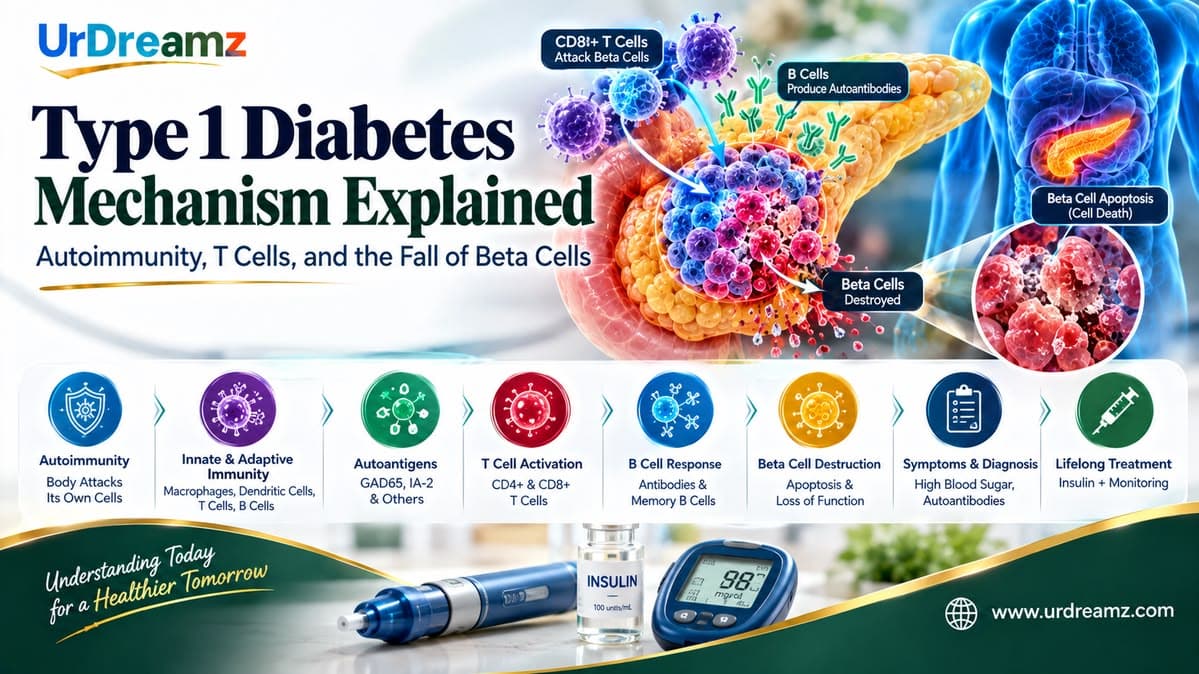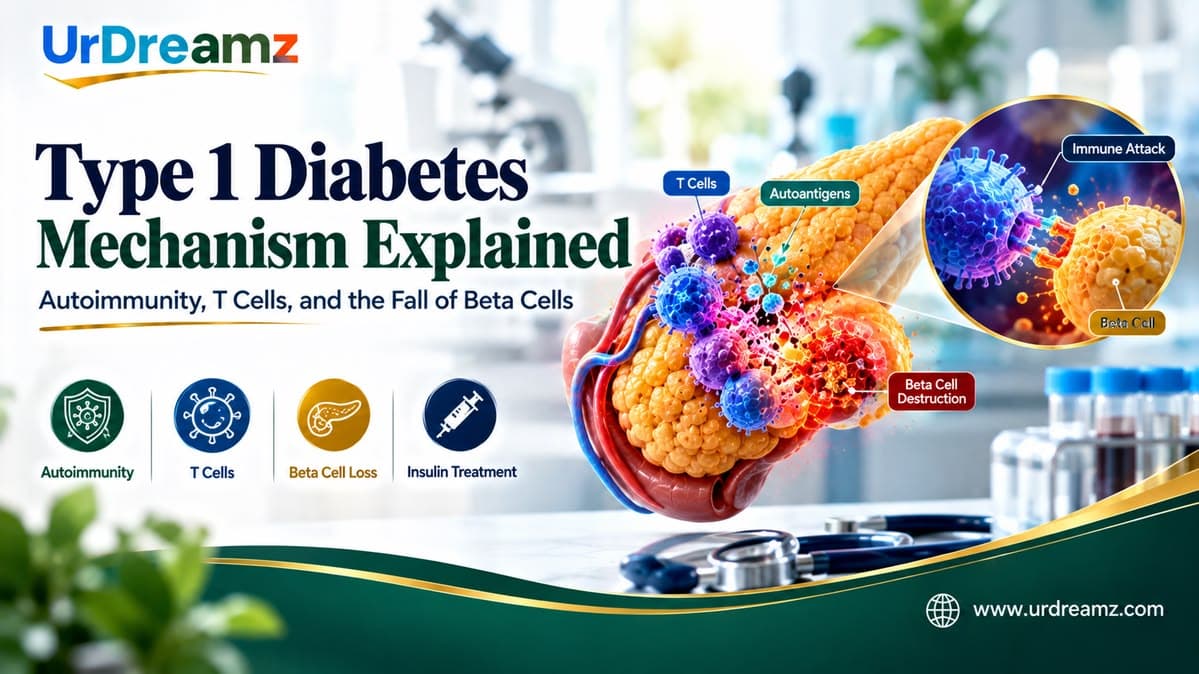
Type 1 Diabetes Mechanism Explained: Autoimmunity, T Cells, and the Fall of Beta Cells
Type 1 Diabetes isn't caused by diet, weight, or lifestyle — it's the result of the body's own immune system mistakenly identifying insulin-producing cells as a threat and gradually destroying them. This guide walks through exactly how that happens, step by step: from the basic idea of autoimmunity, through the immune cells involved, how the attack is triggered and carried out, and what the resulting loss of beta cells means for symptoms, diagnosis, and treatment.
Introduction to Diabetes
Diabetes, broadly speaking, refers to a group of conditions in which the body struggles to regulate blood glucose properly. But the specific reasons behind that struggle can be fundamentally different depending on the type. Type 2 Diabetes, the more commonly discussed form, generally develops gradually through insulin resistance, often connected to lifestyle and metabolic factors. Type 1 Diabetes is an entirely different story — it's an autoimmune condition, meaning the immune system itself, which is supposed to protect the body from external threats like viruses and bacteria, mistakenly turns against the body's own tissue.
Specifically, in Type 1 Diabetes, the immune system targets and destroys the insulin-producing beta cells located within clusters of pancreatic tissue called the islets of Langerhans. Because these cells are irreplaceable and central to producing the insulin the body needs to survive, their destruction leads to an absolute insulin deficiency, requiring lifelong insulin replacement. This guide walks through exactly how this immune attack unfolds — the same sequence covered step by step in the video this guide is based on: the autoimmune mechanism itself, the immune system components involved, how the attack is triggered through antigen presentation, how immune cells become activated, how beta cells are ultimately destroyed through apoptosis, and what all of this means for treatment.
It's worth clarifying a common point of confusion right at the outset, since it matters both medically and personally for anyone affected by this condition: Type 1 Diabetes has nothing to do with diet, body weight, or lifestyle choices. Unlike Type 2 Diabetes, where modifiable factors play a substantial role in both development and management, Type 1 Diabetes arises from an immune process that a person has essentially no ability to prevent or cause through their own behavior. This distinction matters not just scientifically but socially, since misunderstanding this difference can lead to unfair assumptions about people living with Type 1 Diabetes, and correcting it is one of the quieter but genuinely important goals of a guide like this one.
Autoimmune Mechanisms: What Actually Goes Wrong
To understand Type 1 Diabetes, it's essential to understand what autoimmunity actually means at a basic level. Under normal circumstances, the immune system is remarkably good at distinguishing "self" — the body's own healthy cells and tissues — from "non-self," meaning foreign invaders like viruses, bacteria, or other pathogens. This distinction is maintained through a careful, ongoing process of immune cell training and regulation.
In autoimmune conditions like Type 1 Diabetes, this distinction breaks down for a specific target — in this case, the insulin-producing beta cells of the pancreas. The immune system begins treating proteins normally found on or within beta cells as if they were foreign threats, triggering the same kind of coordinated immune response that would normally be reserved for fighting off an infection. The exact combination of genetic susceptibility and environmental triggers (sometimes including certain viral infections) that sets this misidentification in motion is still an active area of research, but the resulting immune cascade — the actual mechanism of attack — is well understood and forms the core of this guide.
It's worth briefly touching on genetic susceptibility, since it's often the first question people ask about autoimmune conditions. Certain gene variants, particularly within a group of genes involved in how the immune system distinguishes self from non-self, are known to raise the likelihood of developing Type 1 Diabetes. However, having these genetic risk factors doesn't guarantee the condition will develop — many people carry increased genetic risk without ever developing Type 1 Diabetes, which points to the important role environmental triggers likely play in actually setting the autoimmune process in motion in genetically susceptible individuals. This combination of genetic predisposition plus an environmental trigger is a pattern seen across many autoimmune conditions, not just Type 1 Diabetes specifically.
Immune System Components Involved
The immune system is generally divided into two broad, interconnected branches, and Type 1 Diabetes involves components from both.
| Immune Branch | Key Cells Involved | General Role |
|---|---|---|
| Innate immunity | Neutrophils, macrophages, basophils, natural killer (NK) cells | The body's fast-acting, non-specific first responders, which also help trigger and shape the more targeted adaptive response |
| Adaptive immunity | T cells, B cells | A slower-acting but highly specific and targeted response, capable of "remembering" a specific target for future encounters |
In Type 1 Diabetes, innate immune cells such as macrophages are often present early around the pancreatic islets, contributing to local inflammation and helping present material from damaged or stressed beta cells to the adaptive immune system. But it's the adaptive immune system — specifically T cells and B cells — that carries out the sustained, targeted, and ultimately destructive attack on beta cells that defines the disease. Understanding both branches, and how they interact, is essential to understanding the full mechanism covered in the rest of this guide.
It's worth expanding briefly on each of the specific innate immune cell types mentioned above, since they each play a somewhat different supporting role in the broader process. Neutrophils are typically the first responders to any site of tissue stress or damage, and while their role in Type 1 Diabetes is less central than in an acute infection, their presence can contribute to the early inflammatory environment around stressed islets. Macrophages serve a dual role, both consuming and clearing cellular debris and, critically, acting as antigen-presenting cells capable of displaying beta cell-derived material to T cells, directly linking the innate and adaptive branches together. Natural killer (NK) cells, while best known for detecting and destroying virally infected or cancerous cells, have also been implicated in some models of early islet inflammation, potentially contributing to the initial disruption that exposes beta cell antigens to the wider immune system. Basophils, though less studied in this specific context compared to the other cell types, are part of the broader innate immune landscape recruited during this early inflammatory phase. Together, this innate immune activity essentially sets the stage — creating both the inflammatory environment and the antigen exposure — for the much more targeted, sustained adaptive immune attack described in the following sections.
Meet the Beta Cell: The Target of the Attack
Beta cells are specialized cells found within the islets of Langerhans, small clusters of hormone-producing tissue scattered throughout the pancreas. Their job is to produce, store, and release insulin in response to rising blood glucose, making them essential to the body's entire glucose regulation system. Alongside beta cells, the islets also contain alpha cells, which produce a different hormone called glucagon that raises blood glucose when needed — the counterbalancing partner to insulin's glucose-lowering effect.
In Type 1 Diabetes, the immune attack described throughout this guide is remarkably specific: it targets beta cells almost exclusively, while alpha cells and the glucagon-producing function of the pancreas are generally spared. This selectivity is part of what makes Type 1 Diabetes such a distinctive autoimmune condition — the immune system isn't attacking the pancreas broadly, it's targeting one very specific cell type within it, based on specific proteins those cells display that become the focus of the immune response described in the next section.
This selective targeting is genuinely one of the more remarkable aspects of the disease from an immunological standpoint, and it raises a question worth addressing directly: why beta cells specifically, and not the other, closely neighboring cell types within the same islets? The answer lies in the particular proteins beta cells express, including GAD65 and IA-2 described in detail in the next section, which are either unique to beta cells or expressed in a way that makes them the specific focus of the misdirected immune response. Alpha cells, despite sitting immediately adjacent to beta cells within the same small cluster of tissue, simply don't display these same specific target proteins in the same way, which is why they largely escape the immune attack that beta cells cannot. This is a clear, concrete example of just how specific and targeted adaptive immunity actually is — it isn't a broad, general assault on an area of tissue, but a precise response built around recognizing particular molecular targets.
Antigen Presentation: How the Attack Begins
The immune attack on beta cells begins with a process called antigen presentation. An antigen is simply any molecule the immune system can recognize and respond to — in the case of Type 1 Diabetes, certain proteins associated with beta cells become the specific antigens the immune system mistakenly targets. Two of the most well-studied of these autoantigens are GAD65 (glutamic acid decarboxylase 65) and IA-2 (islet antigen 2), both of which are normally present within or on beta cells as part of their ordinary function.
| Autoantigen | Relevance |
|---|---|
| GAD65 | An enzyme found within beta cells; one of the most clinically important targets of autoantibodies in Type 1 Diabetes |
| IA-2 | A protein associated with insulin-containing granules within beta cells, also a major target of the autoimmune response |
For the adaptive immune system to respond to these antigens, they first need to be captured and displayed by specialized cells called antigen-presenting cells, such as macrophages and dendritic cells. These cells process fragments of beta cell proteins, including GAD65 and IA-2, and display them on their surface in a way that T cells can recognize. This presentation step is essentially the moment the adaptive immune system is "introduced" to these beta cell proteins as if they were a genuine threat — setting the entire subsequent immune cascade in motion.
It's worth understanding a bit more precisely how this "display" mechanism actually works, since it's a genuinely elegant piece of cellular machinery. Antigen-presenting cells use specialized surface molecules called MHC (major histocompatibility complex) molecules to hold and display these processed antigen fragments, essentially acting like a display case that presents a small piece of the antigen where a passing T cell can inspect it. Only T cells whose specific receptors happen to match that particular displayed fragment will respond and become activated — every other T cell will simply pass by without reacting. This matching requirement is part of why the immune response, once triggered, is so specific to beta cell antigens rather than a broad, indiscriminate attack on the pancreas or surrounding tissue.
This presentation step also helps explain why certain genetic variants, particularly variants in the genes encoding these same MHC molecules, are so strongly associated with Type 1 Diabetes risk. Certain versions of these genes may present beta cell fragments like GAD65 and IA-2 in a way that's more likely to trigger a strong T cell response, essentially making the "introduction" between the immune system and these self-proteins more likely to go wrong in the first place. This genetic connection is one of the clearest, most well-established links between inherited risk and the actual cellular mechanism described throughout this guide.
Immune Cell Activation: T Cells, B Cells, and Antibodies
Once an antigen-presenting cell displays a beta cell-derived antigen, nearby T cells capable of recognizing that specific antigen become activated. This activation triggers a cascade of immune cell coordination that's central to understanding Type 1 Diabetes.
Activated T cells multiply and differentiate into different functional subtypes. Some become cytotoxic T cells, directly capable of killing beta cells through the apoptosis mechanism described in a later section. Others become helper T cells, which coordinate and amplify the broader immune response, including activating B cells. When a helper T cell interacts with and activates a B cell that recognizes the same beta cell antigen, that B cell can differentiate into a plasma cell — a specialized cell whose job is to produce large quantities of antibodies specifically targeting that antigen.
It's worth briefly explaining how a single activated T cell becomes capable of mounting such a substantial, coordinated response, since the scale of this expansion is genuinely significant. Once a T cell receptor successfully recognizes its matching antigen displayed by an antigen-presenting cell, that specific T cell undergoes rapid, repeated cell division, a process called clonal expansion, producing a large population of identical T cells all capable of recognizing that same beta cell antigen. This expanded population then differentiates into the cytotoxic and helper subtypes described above, meaning what began as a single T cell encountering a single antigen-presenting cell can, within a relatively short period, become a substantial, coordinated force capable of mounting the sustained attack on beta cells described throughout the rest of this guide.
| Cell Type | Role in Type 1 Diabetes |
|---|---|
| Cytotoxic T cells | Directly kill beta cells identified as displaying the targeted autoantigens |
| Helper T cells | Coordinate and amplify the immune response, including activating B cells |
| B cells | Recognize beta cell antigens and, once activated, differentiate into antibody-producing plasma cells |
| Plasma cells | Produce large quantities of antibodies against beta cell proteins such as GAD65 and IA-2 |
| Antibodies | Circulating proteins that bind specifically to beta cell antigens; also serve as key diagnostic markers, discussed later in this guide |
It's worth clarifying an important nuance here: while these antibodies are extremely useful as diagnostic markers, since their presence in the blood indicates that this autoimmune process is underway, the primary, direct damage to beta cells is generally understood to come from cytotoxic T cells rather than from the antibodies themselves. The antibodies are best understood as a reliable signal that the broader immune cascade has been activated, rather than the main destructive weapon in this specific disease.
It's also worth walking through the T cell and B cell interaction itself in a bit more detail, since it's a genuinely central part of how the adaptive immune system coordinates such a targeted response. When a helper T cell that recognizes a beta cell antigen encounters a B cell that has captured and is displaying that same antigen, the two cells engage in a direct, close physical interaction, during which the helper T cell provides specific activating signals to the B cell. This interaction is what licenses the B cell to fully activate, proliferate, and differentiate — some becoming antibody-producing plasma cells, and others, as covered in the next section, becoming long-lived memory B cells. This T cell-B cell partnership is a fundamental feature of adaptive immunity generally, not unique to Type 1 Diabetes, but in this specific disease, it's being carried out against beta cell antigens that should never have been treated as a genuine threat in the first place.
Memory Formation: Why the Attack Doesn't Stop
One of the most important, and most concerning, features of the adaptive immune response is its ability to form memory. When T cells and B cells are activated and interact with each other during this immune cascade, some of the resulting cells don't simply carry out their immediate function and then disappear — they differentiate into long-lived memory T cells and memory B cells, which persist in the body for years, ready to mount an even faster, stronger response if they encounter the same antigen again.
In the context of Type 1 Diabetes, this memory formation is a major reason the autoimmune attack on beta cells tends to be sustained and progressive rather than a single, self-limiting event. Once memory cells specific to beta cell antigens like GAD65 and IA-2 have formed, they continue to patrol the body, ready to reactivate and renew the attack on any remaining or regenerating beta cells. This is part of why Type 1 Diabetes, once established, doesn't simply resolve on its own the way a typical infection-fighting immune response eventually winds down — the immune system has effectively been trained to recognize beta cells as an ongoing, persistent threat.
This persistent memory is also exactly why simply replacing lost beta cells, whether through transplantation or future regenerative approaches, isn't on its own a complete solution to Type 1 Diabetes, unless the underlying immune memory is also addressed. Newly introduced or regenerated beta cells would still display the same GAD65 and IA-2 antigens that the immune system has already been trained, through memory cell formation, to recognize and attack. This is precisely why much of the cutting-edge research discussed later in this guide focuses not just on replacing beta cells, but on simultaneously calming or resetting this underlying immune memory — since without addressing the memory response, any replaced beta cells would likely face the same fate as the original ones.
Apoptosis: How Beta Cells Are Actually Destroyed
The actual destruction of beta cells happens through a process called apoptosis — a form of programmed cell death, distinct from the more chaotic, damage-associated cell death seen in an injury. Apoptosis is, in a sense, an orderly, controlled process, but in the context of Type 1 Diabetes, it's being deliberately triggered by the immune system against cells that shouldn't be targeted at all.
Cytotoxic T cells, once activated and recognizing a beta cell displaying the targeted autoantigens, carry out this destruction primarily through two mechanisms. The first involves releasing specialized proteins called perforin and granzymes directly onto the target beta cell; perforin creates small pores in the beta cell's membrane, and granzymes enter through these pores to trigger the internal apoptosis pathway within the cell. The second mechanism involves a molecular interaction called Fas-FasL signaling, where a protein on the T cell's surface (FasL) binds to a receptor on the beta cell (Fas), directly triggering the beta cell's own internal apoptosis machinery. Both mechanisms achieve the same outcome: the targeted beta cell is systematically dismantled from within and removed, exactly as it would be if it were a genuinely infected or cancerous cell rather than a healthy, functioning part of the pancreas.
It's worth noting that both of these killing mechanisms are the exact same tools cytotoxic T cells normally use against genuinely infected or cancerous cells elsewhere in the body — nothing about the killing mechanism itself is unusual or defective. What's wrong is purely the targeting: a perfectly functional, well-honed cellular weapon is simply being aimed at the wrong target. This framing is genuinely useful for understanding why broadly suppressing the entire immune system isn't considered a good long-term treatment strategy for Type 1 Diabetes, despite technically being capable of halting the attack — doing so would also disable the exact same tools the body needs to fight off genuine infections, which is precisely why current research, discussed later in this guide, focuses on more selectively interrupting just this specific misdirected response rather than immune function as a whole.
Beyond this direct T cell-mediated killing, ongoing local inflammation — driven partly by cytokines released from innate immune cells and helper T cells in the area — also contributes to a hostile environment around the islets that further stresses and damages beta cells over time, compounding the direct cytotoxic T cell attack with additional, cumulative cellular stress.
It's worth taking a moment to appreciate why the body uses apoptosis rather than a messier form of cell death for this process, since it's a detail that actually has real clinical relevance. Apoptosis is a contained, controlled process — the dying cell is broken down into small, neatly packaged fragments that surrounding cells can cleanly clear away, without spilling cellular contents that would otherwise trigger a much larger, more damaging inflammatory response in the surrounding tissue. In a strange way, this means the immune system, even while carrying out an inappropriate attack on beta cells, is still using one of its most controlled, "clean" methods of cell destruction rather than a more chaotic, tissue-damaging alternative. This doesn't make the underlying process any less serious or destructive to the beta cells themselves, but it does help explain why the surrounding pancreatic tissue and its other cell types are relatively preserved even as beta cells are being progressively eliminated over months and years.
Beta Cell Destruction: The Progressive Timeline
Beta cell destruction in Type 1 Diabetes is not a sudden, all-at-once event — it's a gradual process that can unfold over months or, in many cases, years before enough beta cell mass is lost to produce clinically noticeable symptoms.
This extended timeline is exactly why autoantibody testing, discussed in the diagnosis section of this guide, has become such a valuable tool — it can detect this underlying autoimmune process well before enough beta cells have been destroyed to cause the classic symptoms of diabetes, opening a window for monitoring and, increasingly, for early intervention research aimed at slowing this progressive destruction before it reaches the point of full insulin dependence.
This staged progression is often described in research and clinical settings using a formal staging system, which helps make the abstract idea of "gradual beta cell loss" more concrete. In this framework, an early stage is marked by the presence of two or more autoantibodies with completely normal blood glucose — essentially the immune attack has begun, but enough beta cell function remains that blood glucose regulation is entirely unaffected. A later stage involves the same multiple autoantibodies alongside early, subtle abnormalities in glucose regulation detectable only through more sensitive testing, even though the person still has no symptoms at all. Only in the final stage, once beta cell loss has progressed far enough, do the classic symptoms described in the next section actually appear, and clinical diagnosis is typically made. Recognizing that Type 1 Diabetes exists on this kind of staged continuum, rather than appearing suddenly and without warning, is exactly why researchers are increasingly interested in identifying and monitoring people in these earlier stages, particularly close relatives of people already diagnosed, who carry a meaningfully higher risk of also developing the condition.
Symptoms of Type 1 Diabetes
| Symptom | Why It Happens |
|---|---|
| Excessive thirst | The body attempts to dilute rising blood glucose that can no longer be properly regulated |
| Frequent urination | The kidneys work to excrete excess glucose, drawing extra water along with it |
| Unexplained weight loss | Without sufficient insulin, cells can't access glucose for energy, so the body begins breaking down fat and muscle instead |
| Extreme fatigue | Cells are effectively energy-starved despite high blood glucose levels |
| Increased hunger | The body signals hunger in an attempt to compensate for cells not receiving usable glucose |
| Blurred vision | Elevated glucose affects fluid balance within the eye's lens |
| Fruity-smelling breath, nausea, confusion (diabetic ketoacidosis) | A serious, potentially life-threatening complication that can occur when insulin deficiency becomes severe enough that the body relies heavily on fat breakdown, producing ketones |
Because Type 1 Diabetes often progresses more rapidly than Type 2 once beta cell loss reaches a critical threshold, symptoms frequently appear over a period of just days to weeks, sometimes escalating quickly enough that diabetic ketoacidosis is the event that leads to diagnosis — a genuine medical emergency requiring immediate treatment.
It's worth explaining diabetic ketoacidosis a bit further, since it represents one of the more serious and genuinely urgent aspects of an undiagnosed or poorly managed Type 1 Diabetes case. When insulin is severely deficient, cells can't access glucose for energy despite high blood glucose levels, so the body shifts to breaking down fat for fuel instead. This process produces byproducts called ketones, and when they accumulate faster than the body can clear them, blood becomes increasingly acidic, a dangerous state that can affect breathing, heart rhythm, and consciousness if not treated promptly with intravenous fluids, insulin, and careful electrolyte management in a hospital setting. Recognizing the early symptoms listed earlier in this guide, well before this point is reached, is precisely why public health messaging around Type 1 Diabetes places such heavy emphasis on prompt medical evaluation for excessive thirst, frequent urination, and unexplained weight loss, particularly in children, rather than waiting to see if symptoms resolve on their own.
Diagnosis and Autoantibody Testing
Diagnosing Type 1 Diabetes typically involves a combination of blood glucose testing, similar to that used for any form of diabetes, alongside specific autoantibody tests that help confirm the autoimmune nature of the condition and distinguish it from Type 2 Diabetes.
| Test | What It Detects |
|---|---|
| GAD65 autoantibodies | Antibodies against the GAD65 enzyme, one of the most common and clinically useful markers |
| IA-2 autoantibodies | Antibodies against the IA-2 protein associated with insulin granules |
| Insulin autoantibodies (IAA) | Antibodies directed against insulin itself, often among the earliest detectable markers, particularly in children |
| ZnT8 autoantibodies | Antibodies against a zinc transporter protein involved in insulin storage, used alongside the other markers for a fuller diagnostic picture |
| C-peptide testing | Measures the body's own remaining insulin production capacity, helping assess how much functional beta cell mass remains |
The presence of multiple autoantibodies, rather than just one, is generally associated with a higher likelihood of progression to clinical Type 1 Diabetes, which is part of why these markers have become valuable not just for confirming an existing diagnosis, but for identifying at-risk individuals, including close relatives of people with Type 1 Diabetes, well before symptoms appear.
It's worth explaining C-peptide testing in a bit more detail, since its role is somewhat different from the autoantibody tests and easy to misunderstand. When the pancreas produces insulin, it does so as part of a larger precursor molecule that is cleaved into two pieces: insulin itself, and a separate fragment called C-peptide, released into the blood in roughly equal amounts. Because C-peptide is released alongside a person's own naturally produced insulin, but isn't affected by injected insulin used as treatment, measuring C-peptide gives doctors a clean, reliable way to assess how much of a person's own natural insulin production remains, even in someone already being treated with insulin therapy. Low or absent C-peptide, combined with positive autoantibodies, provides strong confirmatory evidence of Type 1 Diabetes and helps distinguish it from Type 2 Diabetes or other, rarer forms of diabetes that can sometimes present with a similar initial picture.
Treatment: Insulin Therapy
Because Type 1 Diabetes results in an absolute, essentially permanent loss of the body's own insulin-producing capacity, treatment centers on lifelong insulin replacement — there is currently no way to reverse the autoimmune destruction of beta cells or restore natural insulin production once it has occurred to a significant degree. Insulin is typically administered through multiple daily injections or a continuous insulin pump, carefully calibrated to match food intake, activity level, and individual needs, often guided by regular blood glucose monitoring or continuous glucose monitoring technology.
Modern insulin therapy has advanced considerably, with various insulin formulations designed to act over different timeframes — some working quickly to manage the glucose rise after a meal, others providing a steady, background level of insulin throughout the day, closely mimicking the way a healthy pancreas would naturally release insulin. Getting this balance right, with appropriate medical guidance, is central to both short-term wellbeing and long-term prevention of the same kinds of vascular complications that can occur with poorly managed diabetes of any type.
It's worth explaining briefly why this combination of fast-acting and longer-acting insulin is needed, rather than a single insulin type covering everything. A healthy pancreas doesn't release insulin at a single, constant rate — it maintains a low, steady baseline level between meals and while sleeping, then releases a rapid surge in response to the glucose entering the bloodstream after eating. Modern insulin regimens are designed to replicate this same two-part pattern: a longer-acting, "basal" insulin covering the steady background need, and a faster-acting, "bolus" insulin taken around mealtimes to cover the anticipated glucose rise from food. Technology has increasingly narrowed the gap between this manual approach and the body's own natural responsiveness, particularly through insulin pumps paired with continuous glucose monitors, some of which can now automatically adjust insulin delivery in near real time based on current glucose trends — a genuinely significant advance from the fixed-dose insulin regimens used in earlier decades of Type 1 Diabetes treatment.
Type 1 vs. Type 2 Diabetes
| Feature | Type 1 Diabetes | Type 2 Diabetes |
|---|---|---|
| Underlying cause | Autoimmune destruction of beta cells | Insulin resistance followed by progressive beta cell exhaustion |
| Typical onset | Often childhood or young adulthood, though can occur at any age | Typically adulthood, though increasingly seen in younger people |
| Insulin production | Little to none once the disease is established | Present, often even elevated in earlier stages, but ineffective due to resistance |
| Key diagnostic markers | Autoantibodies (GAD65, IA-2, IAA, ZnT8) | Elevated fasting glucose, HbA1c, generally without these specific autoantibodies |
| Treatment | Insulin therapy from diagnosis, essentially always required | Often begins with lifestyle changes and oral medication, may progress to insulin over time |
Understanding this distinction matters clinically, since the two conditions, despite sharing the name "diabetes" and the shared outcome of elevated blood glucose, arise from fundamentally different biological processes and require correspondingly different management approaches from the point of diagnosis onward.
It's worth mentioning that this distinction isn't always immediately obvious at first presentation, which is exactly why the autoantibody and C-peptide testing described earlier in this guide matters so much for an accurate diagnosis. A minority of adults are initially misdiagnosed with Type 2 Diabetes when they actually have a slower-progressing form of autoimmune diabetes, sometimes called latent autoimmune diabetes in adults, which shares the same underlying autoimmune mechanism described throughout this guide but progresses more gradually than the more typical, rapid childhood-onset presentation. Recognizing this possibility, particularly in adults who don't fit the classic profile associated with Type 2 Diabetes, such as those who are not overweight or who have a family history of autoimmune conditions, is part of why appropriate autoantibody testing is increasingly considered even in adult-onset cases that might otherwise be assumed to be Type 2 Diabetes by default.
Living With Type 1 Diabetes
A Type 1 Diabetes diagnosis requires significant, ongoing daily management — tracking blood glucose, calculating and administering insulin doses, and adjusting for factors like food, exercise, illness, and stress, all of which can meaningfully affect blood glucose levels. While this demands real, sustained effort, modern tools including continuous glucose monitors and insulin pumps have made this daily management considerably more precise and less burdensome than in previous decades, and with consistent, well-managed care, people with Type 1 Diabetes can lead full, active lives largely free from the serious long-term complications historically associated with the condition.
It's worth acknowledging the psychological and practical dimensions of living with Type 1 Diabetes as well, since the daily management demands genuinely extend beyond the purely medical. Constant vigilance around blood glucose, meal planning, and dosing decisions can create a real, ongoing mental burden, sometimes described by people living with the condition as a kind of background task that never fully switches off, even during sleep. Recognizing this burden as a legitimate part of the condition — rather than something to simply push through silently — is part of why comprehensive diabetes care increasingly includes attention to mental health and burnout, alongside the purely physical aspects of blood glucose management covered throughout the rest of this guide. Support from family, peer communities of others living with Type 1 Diabetes, and healthcare providers who take this psychological dimension seriously all play a meaningful role in long-term, sustainable self-management.
Current Research and Future Treatments
Because the underlying mechanism of Type 1 Diabetes is now well understood at the level described throughout this guide — antigen presentation, T cell activation, and beta cell apoptosis — much current research is focused directly on interrupting this specific cascade. This includes immunotherapy approaches designed to calm or redirect the specific autoimmune response targeting beta cells, particularly when started early during the extended, largely silent progression described earlier in this guide, before extensive beta cell loss has already occurred. Other major research directions include beta cell replacement or regeneration therapies, and closed-loop insulin delivery systems that automatically adjust insulin dosing based on continuous glucose readings, moving closer to replicating the moment-to-moment responsiveness of a healthy pancreas.
It's worth highlighting a few specific research directions in a bit more detail, since they connect directly back to the mechanistic explanation covered throughout this guide. Some immunotherapy approaches aim to specifically target and deplete the T cells responsible for the beta cell attack, without broadly suppressing the entire immune system, which would leave a person vulnerable to infection. Other approaches focus on inducing a state of immune tolerance specifically toward beta cell antigens like GAD65 and IA-2, essentially attempting to retrain the immune system to stop recognizing these proteins as threats in the first place — directly addressing the antigen presentation and T cell activation steps described earlier. On the replacement side, researchers are exploring stem cell-derived beta cells, encapsulation technologies designed to protect transplanted beta cells from renewed immune attack, and islet transplantation from donors, each aiming, in different ways, to restore functional insulin production while addressing the underlying immune memory that would otherwise threaten any newly introduced beta cells. While none of these approaches has yet become a widely available cure, the fact that research is now targeting these very specific, well-understood steps in the disease process — rather than working from a more general, less mechanistic understanding — represents genuine, meaningful progress toward that eventual goal.
Frequently Asked Questions
What causes Type 1 Diabetes?
Type 1 Diabetes is caused by the immune system mistakenly attacking and destroying the insulin-producing beta cells of the pancreas, an autoimmune process influenced by genetic and environmental factors.
What is the mechanism behind Type 1 Diabetes?
Beta cell proteins like GAD65 and IA-2 are presented to the immune system, activating T cells and B cells that mount a sustained attack, ultimately destroying beta cells through apoptosis.
What is GAD65 in Type 1 Diabetes?
GAD65 is an enzyme found within beta cells that becomes a major target of autoantibodies in Type 1 Diabetes, and testing for it is a key diagnostic tool.
What role do T cells play in Type 1 Diabetes?
Cytotoxic T cells directly destroy beta cells through apoptosis, while helper T cells coordinate and amplify the broader immune response, including activating B cells.
What role do B cells play in Type 1 Diabetes?
B cells recognize beta cell antigens and, once activated by helper T cells, differentiate into plasma cells that produce antibodies used as key diagnostic markers.
How are beta cells destroyed in Type 1 Diabetes?
Cytotoxic T cells destroy beta cells primarily through apoptosis, triggered either by releasing perforin and granzymes or through Fas-FasL signaling.
What is the difference between Type 1 and Type 2 diabetes?
Type 1 is an autoimmune condition destroying insulin-producing cells, requiring insulin from diagnosis, while Type 2 develops from insulin resistance and progressive beta cell exhaustion, often managed initially with lifestyle changes and oral medication.
What are the symptoms of Type 1 Diabetes?
Common symptoms include excessive thirst, frequent urination, unexplained weight loss, fatigue, increased hunger, and blurred vision, sometimes progressing rapidly.
How is Type 1 Diabetes diagnosed?
Diagnosis involves blood glucose testing alongside specific autoantibody tests, including GAD65, IA-2, insulin autoantibodies, and ZnT8 antibodies.
Can Type 1 Diabetes be cured?
There is currently no cure; treatment centers on lifelong insulin replacement, though research into immunotherapy and beta cell regeneration continues to advance.
What is the role of the pancreas in Type 1 Diabetes?
The pancreas contains beta cells, which produce insulin, within clusters called islets of Langerhans; in Type 1 Diabetes, these specific cells are selectively targeted and destroyed by the immune system.
What is antigen presentation in Type 1 Diabetes?
It's the process by which antigen-presenting cells display fragments of beta cell proteins, such as GAD65 and IA-2, to T cells, triggering the adaptive immune response.
Conclusion
Type 1 Diabetes is a striking example of how precisely, and how destructively, the immune system can act when it misidentifies the body's own healthy tissue as a threat. From the first moment beta cell antigens like GAD65 and IA-2 are presented to T cells, through the activation and coordination of T cells and B cells, the formation of lasting immune memory, and the final, targeted apoptosis of beta cells, the entire process reflects a genuinely sophisticated immune cascade turned against the wrong target.
Understanding this mechanism in full — rather than simply knowing that Type 1 Diabetes "affects insulin" — makes clear why current treatment focuses on insulin replacement, why autoantibody testing has become such a valuable diagnostic and predictive tool, and why so much current research is aimed directly at the specific immune steps described throughout this guide. For anyone living with Type 1 Diabetes, or supporting someone who does, understanding this biological story is often the first step toward feeling genuinely informed, rather than simply managing a diagnosis from the outside.
Tracing the full path this guide has covered — from genetic susceptibility and environmental triggers, through antigen presentation of GAD65 and IA-2, through T cell and B cell activation and the formation of lasting immune memory, to the precise, apoptosis-driven destruction of beta cells — reveals a disease process that is remarkable not despite its complexity, but because of it. Every step in this cascade represents a genuine, well-characterized biological event, and every one of those events is now a specific target for the next generation of research and treatment. That transformation, from a poorly understood condition to one whose mechanism can be traced step by step, is itself one of the most significant achievements in modern immunology and endocrinology, and it's the foundation for real optimism about what future treatment may eventually be able to offer.