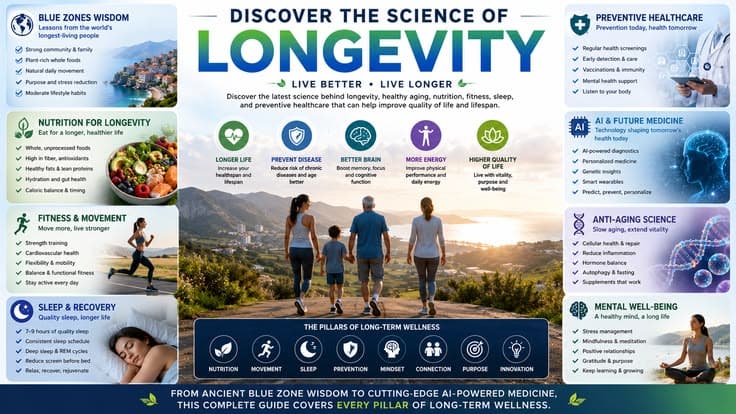
Longevity Science Explained: How to Live Healthier and Longer in the Future
📋 Table of Contents
- What Is Longevity Science? The Big Picture
- 7 Core Healthy Lifestyle Habits That Drive Longevity
- Nutrition Science: Fueling Your Body for a Longer Life
- Fitness & Strength Training: Beyond Muscle Growth
- Sleep Optimization: The Underrated Longevity Tool
- Mental Wellness & Stress Management for Modern Life
- Healthy Aging Strategies: Science-Backed Tips
- Preventive Healthcare: Stop Disease Before It Starts
- Personalized Healthcare: The Future of Medicine
- Wearable Health Technology: Your Body's Dashboard
- Biohacking & the Future of Human Health
- Conclusion: Your Longevity Roadmap
1. What Is Longevity Science? The Big Picture
Longevity science is the systematic study of why we age and how to slow — or even partially reverse — that process. Its central goal is not simply to add more years to life, but to add more life to years. Researchers distinguish between two critically different concepts:
- Lifespan: The total number of years a person lives.
- Healthspan: The number of those years spent free from chronic disease, disability, or cognitive decline.
Over the last century, global average lifespan has doubled — largely due to antibiotics, sanitation, and vaccines. But many people spend their final decade managing multiple chronic conditions. Longevity science asks: what if we could compress that period of decline and live vibrantly into old age?
Chronological Age vs. Biological Age
Your chronological age is simply how many years you have been alive. Your biological age measures how well your cells and organs are actually functioning. Two people who are both 55 years old can have biological ages of 40 and 70 — and lifestyle choices are the primary driver of that difference. Diet, exercise, sleep, stress, and social connection all profoundly influence biological age.
The Hallmarks of Aging
Scientists have identified 12 core biological processes — called the "hallmarks of aging" — that collectively explain why our bodies decline over time. These include DNA damage accumulation, shortening of telomeres (the protective caps on chromosomes), cellular senescence (zombie cells that stop working but refuse to die), chronic inflammation ("inflammaging"), and mitochondrial dysfunction. Modern longevity research targets each of these processes with lifestyle interventions, pharmaceuticals, and emerging biotechnologies.
Table 1: Lifespan vs. Healthspan — Key Differences
| Concept | Definition | Primary Driver | Science Goal |
|---|---|---|---|
| Lifespan | Total years lived | Genetics (~20–25%) | Extend maximum age |
| Healthspan | Years lived in good health | Lifestyle (~75–80%) | Compress morbidity period |
| Biological Age | Functional cellular age | Diet, exercise, sleep, stress | Reduce biological age |
| Chronological Age | Calendar years alive | Uncontrollable | Decouple from biological age |
"Longevity is not built on trends. It is built on daily dietary patterns and small, consistent choices repeated gently over a lifetime." — Dr. William Li
2. Seven Core Healthy Lifestyle Habits That Drive Longevity
Building a healthier lifestyle comes down to consistent, small, daily choices. Research from Harvard Health, the American Heart Association, and the Blue Zones project converge on the same foundational habits. None of them require expensive supplements or extreme regimens — they are accessible to everyone.
Habit 1: Eat a Balanced, Nutrient-Dense Diet
Focus on incorporating whole foods like fruits, vegetables, lean proteins, and whole grains. Limit processed foods, excess refined sugars, and high amounts of sodium. A diverse, nutrient-rich diet is consistently associated with reduced risk of heart disease, type 2 diabetes, and certain cancers. The Mediterranean and DASH dietary patterns remain the most extensively studied models for longevity-supportive eating.
Habit 2: Move Your Body Daily
Physical activity is the single most powerful lifestyle intervention for preventing chronic disease. Aim for at least 150 minutes of moderate-intensity aerobic exercise per week — this does not require a gym. Brisk walking, cycling, swimming, dancing, or gardening all count. Supplementing cardio with 2 sessions of resistance training per week dramatically amplifies the benefits.
Habit 3: Prioritize Restorative Sleep
Most adults need 7 to 9 hours of quality sleep per night. Sleep is when the body performs its most critical repair functions — clearing toxins from the brain (via the glymphatic system), regulating hormones, consolidating memories, and restoring immune function. Consistently sleeping fewer than 6 hours is associated with significantly elevated risks of obesity, cardiovascular disease, and cognitive decline.
Habit 4: Stay Hydrated
Proper hydration keeps every system in your body functioning optimally. The UK's National Health Service recommends 6 to 8 glasses of fluids daily. Carrying a reusable water bottle and sipping throughout the day — choosing water over sugary beverages — is a small habit with outsized benefits for energy, metabolism, and kidney health.
Habit 5: Manage Stress Actively
Chronic stress accelerates cellular aging, suppresses immune function, and raises cortisol levels that damage the cardiovascular system over time. Daily stress-relief practices — mindfulness, deep breathing, meditation, journaling, or even dedicated time for hobbies — meaningfully lower these biological costs.
Habit 6: Limit Harmful Exposures
Avoiding tobacco in all forms is one of the single highest-impact health decisions a person can make. Limiting alcohol to moderate levels, avoiding secondhand smoke, and minimizing exposure to air pollution and ultra-processed foods each independently reduce the risk of premature death.
Habit 7: Get Routine Medical Checkups
Preventive care is an essential pillar of long-term health. Regular physical exams, dental cleanings, blood panels, and recommended screenings allow healthcare providers to catch potential issues early — when they are most treatable. Annual checkups also provide a baseline that helps track changes over time.
Table 2: The 7 Healthy Lifestyle Habits — Quick Reference Guide
| Habit | Daily Target | Primary Benefit | Difficulty Level |
|---|---|---|---|
| Balanced Diet | 5+ servings fruits/vegetables | Reduced chronic disease risk | ⭐⭐ Moderate |
| Physical Activity | 30 min movement | Heart health, metabolic function | ⭐⭐ Moderate |
| Quality Sleep | 7–9 hours nightly | Cellular repair, brain health | ⭐ Low–Moderate |
| Hydration | 6–8 glasses of water | Energy, kidney health | ⭐ Easy |
| Stress Management | 10–15 min mindfulness | Lower cortisol, better mood | ⭐⭐ Moderate |
| Limit Harmful Habits | No tobacco, minimal alcohol | Reduced cancer and heart disease | ⭐⭐⭐ Harder |
| Routine Checkups | Annual exam + screenings | Early disease detection | ⭐ Easy (once scheduled) |
3. Nutrition Science: Fueling Your Body for a Longer Life
Nutrition is the foundation of health optimization. What you eat directly influences inflammation levels, metabolic function, gut microbiome diversity, hormonal balance, and even gene expression. Modern nutritional science has moved well beyond calorie counting — it now examines how specific foods interact with your biology at a cellular level.
The Power of Whole Foods
Whole foods — minimally processed, nutrient-dense, and rich in fiber — consistently outperform supplements and processed alternatives in long-term health outcomes. Vegetables, fruits, legumes, whole grains, nuts, seeds, and lean proteins provide a complex matrix of vitamins, minerals, antioxidants, and phytonutrients that work synergistically in ways no supplement can fully replicate.
The Blue Zone Diet: What the World's Longest-Living People Eat
Researchers studying populations in Sardinia, Okinawa, Loma Linda, Nicoya, and Ikaria — the so-called Blue Zones — found striking dietary patterns shared among those living well past 100. These populations eat predominantly plant-based diets with beans as a daily staple, consume fish moderately, limit red meat and dairy, avoid processed sugars, and eat until they are approximately 80% full (the Okinawan principle of Hara Hachi Bu).
Inflammation and Diet
Chronic, low-grade inflammation is a root driver of virtually every major age-related disease — cardiovascular disease, type 2 diabetes, Alzheimer's, and many cancers. An anti-inflammatory diet prioritizes omega-3-rich foods (fatty fish, flaxseed, walnuts), colorful vegetables, olive oil, and spices like turmeric and ginger, while minimizing ultra-processed foods, refined carbohydrates, and trans fats that amplify inflammatory pathways.
Protein and Muscle Preservation
As we age, maintaining adequate protein intake becomes increasingly important to prevent sarcopenia (age-related muscle loss). Research suggests that spreading protein consumption across meals — rather than consuming it all at once — optimizes muscle protein synthesis. High-quality sources include eggs, lean poultry, fish, legumes, Greek yogurt, and plant proteins like tempeh and edamame.
Table 3: Longevity Foods vs. Foods That Accelerate Aging
| Category | Longevity-Supporting Foods | Foods to Minimize | Reason |
|---|---|---|---|
| Protein | Fish, legumes, eggs, poultry | Processed meats (bacon, hot dogs) | Nitrate content, saturated fat |
| Carbohydrates | Oats, quinoa, sweet potato, brown rice | White bread, sugary cereals | Glycemic impact, fiber deficit |
| Fats | Olive oil, avocado, walnuts, salmon | Trans fats, vegetable shortening | Inflammatory pathways |
| Beverages | Water, green tea, black coffee (moderate) | Soda, energy drinks, excessive alcohol | Sugar, addictive compounds |
| Vegetables | Leafy greens, cruciferous, alliums | — | Phytonutrients, fiber, antioxidants |
| Longevity Superfoods | Beans, blueberries, nuts, dark chocolate | Ultra-processed snacks | Polyphenols vs. empty calories |
4. Fitness & Strength Training: The Benefits Go Far Beyond Muscle
Exercise is the closest thing science has found to a genuine anti-aging drug. Its benefits touch virtually every organ system in the body — from the heart and brain to bones, hormones, and immune function. Among all types of exercise, strength training is increasingly recognized as the most critical modality for healthy aging.
Why Strength Training Is Non-Negotiable After 30
From our early 30s onward, adults lose approximately 3–8% of muscle mass per decade without resistance training — a process called sarcopenia that accelerates dramatically after 60. Loss of muscle mass drives slower metabolism, increased fall risk, insulin resistance, and poorer outcomes from illness or surgery. Two resistance training sessions per week are sufficient to halt or reverse this process at any age.
The Physical Benefits of Strength Training
- Musculoskeletal health: Increases bone density, reducing osteoporosis risk; strengthens tendons and ligaments
- Metabolic function: Improves blood sugar regulation, insulin sensitivity, and cholesterol profiles
- Weight management: Raises resting metabolic rate — you burn more calories around the clock
- Cardiovascular health: Reduces blood pressure and lowers cardiovascular disease risk independently of cardio exercise
- Chronic disease prevention: Linked to reduced risks of type 2 diabetes, arthritis, and certain cancers
The Mental Benefits of Strength Training
Beyond the physical, resistance training has profound neuroprotective effects. It increases the expression of brain-derived neurotrophic factor (BDNF) — sometimes called "Miracle-Gro for the brain" — which supports memory, learning, and cognitive function. Regular strength training is associated with reduced symptoms of depression and anxiety, comparable in effect size to antidepressant medication in some studies.
Cardio vs. Strength Training: Which Is Better?
The answer is: both, and in combination. Cardiovascular exercise primarily benefits heart health, lung capacity, and endurance. Strength training primarily benefits musculoskeletal health, metabolism, and body composition. The two types are synergistic — combining 150 minutes of moderate cardio with 2–3 resistance sessions weekly provides more comprehensive protection than either alone.
Table 4: Cardio vs. Strength Training — Benefits Comparison
| Health Dimension | Cardio Exercise | Strength Training | Combination (Best) |
|---|---|---|---|
| Heart health | ★★★★★ | ★★★ | ★★★★★ |
| Bone density | ★★ | ★★★★★ | ★★★★★ |
| Muscle preservation | ★★ | ★★★★★ | ★★★★★ |
| Fat loss | ★★★★ | ★★★★ | ★★★★★ |
| Blood sugar control | ★★★★ | ★★★★★ | ★★★★★ |
| Mental health | ★★★★ | ★★★★ | ★★★★★ |
| Longevity impact | ★★★★ | ★★★★ | ★★★★★ |
5. Sleep Optimization: The Underrated Longevity Tool
Sleep is not passive downtime — it is one of the most biologically active periods of the day. During sleep, the brain clears metabolic waste through the glymphatic system, the immune system conducts surveillance and repair, growth hormone is released for tissue regeneration, and memories are consolidated. Neglecting sleep undermines every other healthy habit you practice.
What Happens When You Sleep
A full night of sleep consists of 4–6 complete sleep cycles, each lasting roughly 90 minutes. Each cycle includes light sleep, deep slow-wave sleep (the most physically restorative phase), and REM sleep (critical for emotional processing and memory). Consistently cutting short sleep disproportionately eliminates REM and deep sleep — the most valuable stages.
The Consequences of Poor Sleep
- Elevated cortisol and inflammatory markers
- Increased appetite (especially for high-calorie foods) due to disrupted ghrelin and leptin balance
- Impaired glucose metabolism and insulin resistance
- Accelerated beta-amyloid accumulation linked to Alzheimer's disease risk
- Weakened immune response — consistently under-slept individuals are 3× more susceptible to the common cold
Evidence-Based Sleep Optimization Strategies
Improving sleep quality does not require medication. The following behavioral interventions are supported by extensive clinical evidence and endorsed by the Mayo Clinic, CDC, and NIH:
1. Set a Consistent Sleep Schedule
Go to bed and wake at the same time every day — including weekends. This anchors your circadian rhythm, making it far easier to fall asleep and wake feeling refreshed. Avoid spending more than 8 hours in bed; if you do not fall asleep within 20 minutes, get up and do something calming until drowsy.
2. Optimize Your Sleep Environment
Keep your bedroom cool (ideally 15–19°C / 60–67°F), dark, and quiet. Reserve your bed exclusively for sleep and sex — working, eating, or watching screens in bed trains your brain to associate the bed with wakefulness, not rest. Use blackout curtains and consider a white noise machine if your environment is loud.
3. Manage Intake and Timing
Cut caffeine consumption at least 6–8 hours before bedtime. Avoid alcohol in the hours before sleep — while it may induce drowsiness, it fragments sleep and suppresses REM phases. Avoid heavy meals within 2–3 hours of sleep to prevent digestive discomfort and acid reflux.
4. Build a Pre-Sleep Ritual
Turn off screens at least 30–60 minutes before bed. The blue light emitted by phones, tablets, and laptops suppresses melatonin production by up to 50%. Replace screen time with a warm bath or shower, reading a physical book, light stretching, or meditation to gently shift the nervous system into parasympathetic rest mode.
Table 5: Sleep Quality by Age Group — Recommendations and Common Issues
| Age Group | Recommended Hours | Common Sleep Issue | Top Strategy |
|---|---|---|---|
| Teens (13–18) | 8–10 hours | Late-night screen use | Digital curfew, consistent schedule |
| Young Adults (19–25) | 7–9 hours | Irregular schedules, stress | Consistent bed time, stress management |
| Adults (26–64) | 7–9 hours | Insomnia, work stress | Sleep hygiene, CBT-I therapy |
| Older Adults (65+) | 7–8 hours | Sleep fragmentation, early waking | Limit naps, light exposure in morning |
6. Mental Wellness & Stress Management for Modern Life
Mental health and physical health are inseparable. Chronic psychological stress does not just feel bad — it measurably accelerates cellular aging, shortens telomeres, raises inflammatory markers, dysregulates the immune system, and increases the risk of cardiovascular disease. Managing stress effectively is therefore a core longevity strategy, not a luxury.
Understanding the Stress Response
The human stress response evolved for short, acute dangers — a predator, a physical threat. The hypothalamic-pituitary-adrenal (HPA) axis triggers release of cortisol and adrenaline, shunting energy to muscles and sharpening focus. This is adaptive in the short term. The problem is that modern stressors — work pressure, financial anxiety, relationship conflict, news cycles — activate this system chronically, with no recovery period. Over months and years, elevated cortisol damages the hippocampus, suppresses immunity, raises blood pressure, and promotes fat storage around the abdomen.
12 Evidence-Based Stress Management Techniques
- Exercise regularly — Physical activity metabolizes stress hormones and triggers endorphin release
- Practice box breathing — Inhale 4 sec, hold 4, exhale 4, hold 4; signals the nervous system to downregulate
- Set firm boundaries — Saying no to extra commitments prevents chronic overwhelm
- Limit news and social media — Designate tech-free hours; constant exposure amplifies anxiety
- Prioritize quality sleep — 7–9 hours dramatically improves stress resilience
- Journal your thoughts — Externalizing feelings reduces rumination and mental clutter
- Maintain social connections — Social support releases oxytocin, which counteracts cortisol
- Reduce caffeine — Excess caffeine amplifies anxiety and disrupts sleep
- Eat a balanced diet — Blood sugar instability (from sugar and refined carbs) worsens emotional reactivity
- Practice mindfulness — Even 5–10 minutes of daily meditation measurably lowers cortisol
- Engage in hobbies — Activities with no productivity requirement restore the nervous system
- Break tasks into small steps — Restores sense of control when feeling overwhelmed
The Mind-Body Connection: Mental Health and Longevity
Strong social connections are one of the most consistent predictors of longevity identified across multiple large-scale population studies. People with robust social networks have lower rates of depression, stronger immune function, and lower all-cause mortality — the equivalent protective effect of not smoking. In Blue Zone communities, maintaining social engagement and having a sense of purpose (ikigai in Okinawa) are considered foundational to long life.
Table 6: Stress Management Techniques — Time Required vs. Effectiveness
| Technique | Time Required | Immediate Relief | Long-term Benefit | Accessibility |
|---|---|---|---|---|
| Deep breathing / Box breathing | 2–5 minutes | Very High | High | Free, anytime |
| Exercise / Walking | 20–30 minutes | High | Very High | Free |
| Meditation / Mindfulness | 5–20 minutes | Moderate | Very High | Free (apps available) |
| Journaling | 10–15 minutes | Moderate | High | Free |
| Social connection | Varies | High | Very High | Free |
| Yoga / Stretching | 20–45 minutes | High | High | Low cost |
| Professional therapy (CBT) | 1 hour/week | Low initially | Very High | Requires access |
7. Healthy Aging Strategies: Science-Backed Tips for Every Decade
Healthy aging is not about stopping time — it is about maintaining function, vitality, and independence as long as possible. The science is clear that the lifestyle choices you make in your 30s, 40s, and 50s profoundly determine how you experience your 70s, 80s, and beyond.
The Seven Pillars of Longevity
Based on research from Stanford Lifestyle Medicine and other leading institutions, seven interconnected pillars form the foundation of healthy aging:
- Movement & Fitness — Combined cardio and resistance training 4–5 days per week
- Healthful Nutrition — Whole-food, nutrient-dense diet with minimal processed foods
- Restorative Sleep — 7–9 hours of quality, uninterrupted sleep nightly
- Stress Management — Daily practices for emotional regulation and nervous system recovery
- Social Engagement — Meaningful relationships and community participation
- Preventive Healthcare — Regular screenings, blood panels, and vaccinations
- Cognitive Enhancement & Purpose — Lifelong learning, ikigai, and keeping the mind engaged
Healthy Aging by Decade
In your 30s: Build the habits now. This decade is ideal for establishing exercise routines, sleep hygiene, and dietary patterns. Muscle mass and bone density are still near their peak — protect them. Begin tracking baseline health metrics (blood pressure, cholesterol, blood glucose).
In your 40s: Prioritize resistance training to counter the accelerating muscle loss of this decade. Increase dietary protein. Get comprehensive blood panels annually. Consider screening for conditions with strong genetic predispositions. Optimize sleep aggressively — sleep disruption becomes more common.
In your 50s and beyond: Social connection becomes increasingly critical. Falls become a real risk — balance training and lower-body strength work are essential. Regular cognitive engagement (new skills, learning, reading) protects against neurodegeneration. Ensure adequate vitamin D, B12, and calcium.
Table 7: The Blue Zones Power 9 — Longevity Habits of the World's Longest-Lived People
| # | Blue Zone Principle | Description | Modern Application |
|---|---|---|---|
| 1 | Move Naturally | Daily physical movement built into life, not gym-based | Walk, garden, take stairs, cycle |
| 2 | Purpose (Ikigai) | A reason for being — why you get up each morning | Find meaningful work or contribution |
| 3 | Downshift | Daily rituals to shed stress — prayer, naps, happy hour | Meditation, breathing, tech-free time |
| 4 | 80% Rule (Hara Hachi Bu) | Stop eating when 80% full | Slow eating, smaller plates, no distraction |
| 5 | Plant Slant | Plant-based diet with beans as the cornerstone | At least 5 servings of vegetables daily |
| 6 | Wine @ 5 | Moderate alcohol in social contexts (1–2 glasses, not every day) | Optional — overall evidence favors minimal alcohol |
| 7 | Belong | Participation in a faith or community group | Community clubs, volunteering, local groups |
| 8 | Loved Ones First | Prioritizing family and close relationships | Regular quality time with family |
| 9 | Right Tribe | Social circles that reinforce healthy behaviors | Choose friends who support your values |
8. Preventive Healthcare: Stop Disease Before It Starts
Preventive healthcare represents the single most cost-effective investment in long-term health. Rather than waiting for disease to manifest and then treating it, preventive strategies aim to identify and eliminate risk factors before damage occurs. The healthcare field classifies prevention into three tiers.
Primary Prevention: Stopping Disease Before It Begins
Primary prevention focuses on eliminating or minimizing risk factors. This includes:
- Nutrition: A balanced diet rich in whole foods, vegetables, and lean proteins
- Physical activity: 150 minutes of moderate aerobic activity weekly, plus strength training
- Vaccination: Staying current on immunizations (flu, HPV, tetanus, COVID-19)
- Lifestyle hygiene: Avoiding tobacco, limiting alcohol, managing stress, sleeping adequately
- Environmental hygiene: Handwashing, food safety, UV protection
Secondary Prevention: Catching Disease Early
Secondary prevention involves detecting conditions before symptoms appear, when treatment is most effective. Key components include:
- Routine checkups: Annual physical exams with vital sign monitoring
- Cancer screenings: Mammograms (breast), colonoscopies (colon), PAP smears (cervical), PSA tests (prostate)
- Metabolic blood panels: Cholesterol (lipid panel), blood glucose (A1C), thyroid function
- Cardiovascular monitoring: Blood pressure, resting heart rate, ECG if indicated
Tertiary Prevention: Managing Existing Conditions
For those already diagnosed with a chronic condition, tertiary prevention focuses on preventing complications, slowing progression, and maintaining quality of life. This includes strict medication adherence, rehabilitation programs, disease-specific lifestyle modifications, and specialist coordination.
💡 Key Insight: Prevention vs. Treatment Economics
The CDC estimates that 90% of the United States' $4.1 trillion annual healthcare expenditure goes to treating chronic and mental health conditions — the vast majority of which are preventable or manageable with lifestyle interventions. Investing in preventive healthcare is not just medically smart; it is economically rational.
9. Personalized Healthcare: The Future of Medicine Is Already Here
Traditional medicine has long operated on a one-size-fits-all model: the same drug at the same dose for everyone with the same diagnosis. Personalized medicine — also called precision medicine — fundamentally disrupts this paradigm by tailoring interventions to each individual's unique genetic makeup, microbiome, lifestyle, and environment.
The Four Ps of Personalized Medicine
- Predictive: Using AI and genomics to identify disease risks before symptoms appear
- Preventive: Creating custom wellness strategies based on individual risk profiles
- Personalized: Tailoring treatments to the genetic fingerprint of a patient's specific condition
- Participatory: Empowering patients with data and tools to actively manage their own health
Technologies Driving Personalized Healthcare
Genomic Medicine
Whole genome sequencing (WGS) costs have fallen from $3 billion in 2003 (the Human Genome Project) to under $200 today. This democratization means genetic profiling could soon become a standard part of routine checkups, allowing physicians to identify susceptibilities to cardiovascular disease, certain cancers, or drug metabolism issues years before they cause harm. Pharmacogenomics — analyzing how your DNA affects your response to medications — eliminates the "trial-and-error" phase of drug prescribing.
Digital Twins in Healthcare
Emerging medical technology now allows the creation of highly accurate, virtual replicas ("digital twins") of a patient's organs or physiology. Physicians can simulate different treatment approaches — testing chemotherapy dosages, cardiac interventions, or surgical plans on the digital twin — to identify the optimal strategy with zero risk to the actual patient before a single procedure is performed.
AI-Powered Diagnostics
Artificial intelligence algorithms trained on millions of medical images, patient records, and genetic datasets can now detect certain cancers, diabetic retinopathy, and cardiac abnormalities with accuracy matching or exceeding specialist physicians. AI-assisted diagnostics promise earlier, cheaper, and more accurate detection across populations at scale.
Continuous Wearable Monitoring
Smartwatches and biosensors are evolving into medical-grade devices. They continuously track heart rate variability, blood oxygen, skin temperature, ECG rhythms, and — in the near future — blood glucose and biomarkers. AI algorithms alert both patients and physicians in real time when readings suggest developing illness, enabling intervention days or weeks earlier than traditional periodic checkups.
Table 8: Traditional Medicine vs. Personalized Medicine — Key Differences
| Dimension | Traditional Medicine | Personalized Medicine |
|---|---|---|
| Approach | Reactive (treat symptoms) | Predictive and preventive |
| Treatment basis | Population averages | Individual genetic/biometric profile |
| Diagnosis timing | After symptoms appear | Before symptoms develop |
| Drug selection | Trial-and-error | Pharmacogenomically guided |
| Patient role | Passive recipient | Active, data-informed participant |
| Data used | Periodic snapshots | Continuous real-time monitoring |
| Cancer treatment | Standard chemotherapy protocols | Tumor-specific mRNA vaccines and targeted therapies |
10. Wearable Health Technology: Your Body's Real-Time Dashboard
Wearable health technology has moved decisively beyond step counters and into medical-grade monitoring. Devices worn on the wrist, chest, or finger now continuously track physiological data that was previously only measurable in clinical settings — transforming passive wearers into proactive health managers.
What Wearables Track Today
- Heart rate and heart rate variability (HRV) — An indirect measure of autonomic nervous system health and stress recovery
- Blood oxygen saturation (SpO2) — Critical for detecting respiratory issues including sleep apnea
- Electrocardiogram (ECG) — Detects atrial fibrillation and other arrhythmias in real time
- Sleep staging — Tracks light, deep, and REM sleep and quantifies sleep quality
- Activity and steps — Measures movement, active calories, and exercise intensity
- Skin temperature — Useful for detecting illness onset and tracking menstrual cycles
- Continuous glucose monitoring (CGM) — Real-time blood sugar tracking without finger pricks
- Stress levels — Estimated through HRV and galvanic skin response
How Wearables Drive Better Health Outcomes
Wearables improve outcomes through several distinct mechanisms: they enable early anomaly detection (an irregular ECG triggering a cardiac consultation before a stroke), motivate behavior change through gamification and daily targets, enable remote patient monitoring that reduces hospital readmissions, and provide longitudinal datasets that allow physicians to observe trends over months rather than relying on a single snapshot during an annual physical.
Table 9: Leading Wearable Health Devices — Features Comparison (2026)
| Device Type | Examples | Key Health Features | Best For |
|---|---|---|---|
| Smartwatch | Apple Watch, Samsung Galaxy Watch, Pixel Watch | ECG, SpO2, sleep, HRV, fall detection, ECG | General wellness, cardiac monitoring |
| Fitness Band | Fitbit, Garmin Vivosmart | Heart rate, steps, sleep, stress | Activity tracking, weight management |
| Smart Ring | Oura Ring, RingConn | Sleep staging, HRV, temperature, readiness score | Sleep and recovery optimization |
| CGM Patch | Dexcom, Abbott Libre | Continuous blood glucose monitoring | Diabetes management, metabolic health |
| Chest Patch | Zio Patch, BioTelemetry | Extended ECG monitoring | Cardiac arrhythmia detection |
| Smart Scale | Withings Body Comp | Weight, BMI, body fat %, visceral fat, muscle mass | Body composition tracking |
Challenges and Limitations
Wearable technology is powerful, but it is not without limitations. Consumer-grade devices vary considerably in accuracy, particularly for blood oxygen and blood glucose estimation. Data privacy remains a significant concern — health data is among the most sensitive personal information, and regulatory frameworks for its protection vary widely. Additionally, the current generation of wearables skews toward younger, wealthier, and more tech-literate demographics, raising important health equity questions that the industry must address.
11. Biohacking & the Future of Human Health
Biohacking sits at the frontier of longevity science — where evidence-based medicine meets experimental self-optimization. At its core, biohacking is the practice of making deliberate, systematic changes to lifestyle, environment, and biology to optimize human performance and extend healthspan.
Evidence-Based Biohacking Practices
Not all biohacking is fringe experimentation. Many of the most impactful biohacking practices are simply well-studied lifestyle interventions applied with precision:
- Time-restricted eating (TRE): Compressing daily food intake into a 8–10 hour window triggers autophagy (cellular self-cleaning) and improves metabolic markers
- Cold exposure: Brief cold showers or ice baths activate brown adipose tissue and improve metabolic rate; must be approached cautiously
- High-intensity interval training (HIIT): Short bursts of intense effort trigger mitochondrial biogenesis and improve insulin sensitivity more efficiently than steady-state cardio
- Sauna use: Regular Finnish-style sauna (4–7 sessions/week) is associated with a 40% reduction in all-cause mortality in Finnish cohort studies
- Supplement optimization: Evidence-backed options include vitamin D3 + K2, magnesium glycinate, omega-3 fatty acids, and creatine — though individual needs vary
- Sleep tracking: Using wearable data to identify optimal sleep windows and improve recovery consistently
Emerging Longevity Technologies
At the cutting edge, researchers are investigating senolytics (drugs that selectively eliminate zombie senescent cells), NAD+ precursors (compounds that restore cellular energy metabolism), mTOR pathway modulation (the mechanism behind why caloric restriction extends lifespan in animal models), and even partial cellular reprogramming — resetting the epigenetic clock of aged cells. While these remain experimental, several human trials are underway as of 2026.
The Responsible Biohacker Mindset
The most important principle for anyone exploring biohacking is to lead with established interventions before pursuing experimental ones. The highest-ROI "biohacks" available today are: consistent quality sleep, regular strength training, a whole-food diet, stress management, and social connection. No supplement or device yet developed delivers benefits comparable to these foundational habits.
Table 10: Biohacking Interventions — Evidence Levels and Risk Profiles
| Intervention | Evidence Level | Risk Level | Accessibility | Primary Benefit |
|---|---|---|---|---|
| Resistance training | Very High (gold standard) | Very Low | High | Muscle, bone, metabolic, cognitive |
| Time-restricted eating | High | Low | High (free) | Autophagy, metabolic health |
| Sauna (regular use) | High (observational) | Low–Moderate | Moderate | Cardiovascular, stress, longevity |
| Cold exposure | Moderate | Moderate | High (cold shower) | Metabolism, alertness, resilience |
| Vitamin D3 + K2 | High (if deficient) | Very Low | High (inexpensive) | Bone health, immune function |
| Omega-3 supplementation | High | Very Low | High | Anti-inflammatory, cardiovascular |
| Senolytics (dasatinib + quercetin) | Low (early human trials) | Moderate–High | Low (experimental) | Senescent cell clearance |
| NAD+ precursors (NMN/NR) | Low–Moderate | Low | Moderate | Energy metabolism, DNA repair |
12. Conclusion: Your Personalized Longevity Roadmap
Longevity science, at its heart, delivers a remarkably encouraging message: the vast majority of what determines how long and how well you live is within your control. Genetics accounts for only 20–25% of longevity outcomes. The other 75–80% is shaped by choices — daily, incremental, manageable choices.
The roadmap is not mysterious. Eat whole foods and avoid ultra-processed ones. Move your body daily, with particular emphasis on resistance training. Sleep 7–9 hours with consistent scheduling and a dark, cool environment. Manage chronic stress through proven techniques. Stay socially engaged and maintain a sense of purpose. Get regular preventive screenings and stay current on vaccinations. And — as personalized medicine matures — leverage the growing toolkit of genomic profiling, wearable monitoring, and AI-powered health insights to make increasingly precise decisions about your health.
None of these pillars operates in isolation. They are synergistic: better sleep improves exercise performance; exercise reduces stress; reduced stress improves sleep; good nutrition supports all three. The compounding effect of these habits over years and decades is profound — the difference between a vital, engaged 80-year-old and one burdened by multiple chronic conditions often comes down not to genetic luck, but to the accumulation of exactly these daily choices.
- Add one additional serving of vegetables or legumes to a daily meal
- Schedule a resistance training session this week — even bodyweight at home counts
- Set a consistent bedtime and stick to it for 7 days
- Book your annual physical if you have not had one in the last 12 months
- Spend 10 minutes on a stress-relief practice today — breathing, walking, journaling
The future of health is not a drug yet undiscovered or a technology not yet invented. It is, for most of us, the consistent application of what we already know — delivered with increasing precision by the AI, genomics, and wearable technologies that are reshaping medicine right now. Start with the fundamentals. Build from there. Your healthspan begins today.
Medical Disclaimer: This article is for informational and educational purposes only and does not constitute medical advice. Always consult a qualified healthcare provider before making significant changes to your diet, exercise routine, or health management strategy, particularly if you have pre-existing health conditions.