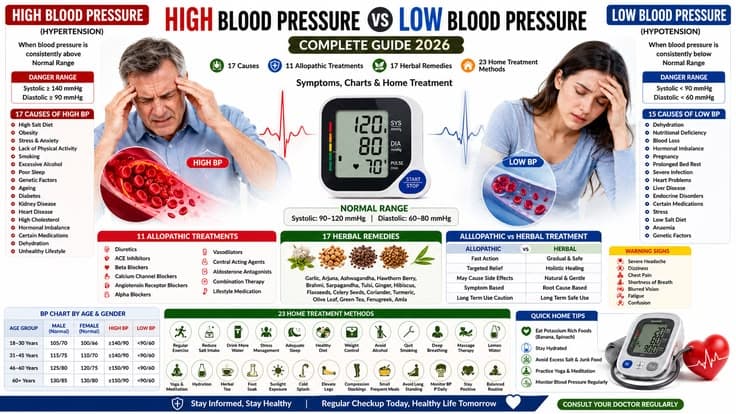
High Blood Pressure vs Low Blood Pressure: Complete Guide — 17 Causes, 11 Allopathic Treatments, 17 Herbal Remedies, Symptoms, Age Charts & 23 Home Treatments (2026)
Blood pressure is the silent measure of your heart's health. When it goes too high or too low, it can silently damage your organs, trigger a heart attack, or cause you to faint without warning. This comprehensive, medically-researched guide covers everything you need to know — from the 17 causes of high blood pressure and 15 causes of low blood pressure, to 11 allopathic treatments, 17 herbal remedies, warning signs, age-gender charts, and 23 proven home treatments.
What Is Blood Pressure? The Basics Explained
Blood pressure is the force that your blood exerts against the walls of your arteries as your heart pumps it throughout your body. It is measured using two numbers expressed in millimeters of mercury (mmHg):
- Systolic Pressure (top number): The pressure in your arteries when your heart beats and pumps blood out.
- Diastolic Pressure (bottom number): The pressure in your arteries when your heart rests between beats.
A reading is written as systolic over diastolic — for example, 120/80 mmHg. This is considered the gold standard for a healthy adult.
Blood Pressure Categories — Standard Classification Table
| Blood Pressure Category | Systolic (mmHg) | Diastolic (mmHg) | Action Required |
|---|---|---|---|
| Normal | Less than 120 | Less than 80 | Maintain healthy lifestyle |
| Elevated | 120–129 | Less than 80 | Lifestyle changes recommended |
| Hypertension Stage 1 | 130–139 | 80–89 | Consult a doctor |
| Hypertension Stage 2 | 140 or higher | 90 or higher | Medical treatment required |
| Hypertensive Crisis | Higher than 180 | Higher than 120 | Emergency — call 911 immediately |
| Low Blood Pressure (Hypotension) | Lower than 90 | Lower than 60 | Monitor; treat if symptomatic |
Blood Pressure Chart by Age and Gender (2026)
While the clinical definition of normal blood pressure remains below 120/80 mmHg for all adults regardless of age, population-level averages do vary by age and gender. The table below reflects statistical averages — not diagnostic targets.
| Age Group | Average BP — Women (mmHg) | Average BP — Men (mmHg) | Clinical Status |
|---|---|---|---|
| 18–39 years | 110/68 | 119/70 | Normal |
| 40–59 years | 122/74 | 124/77 | Normal to Elevated |
| 60+ years | 139/68 | 133/69 | Elevated / Stage 1 Risk |
Source: Heart Research Institute & American Heart Association. These are population averages, not personal targets. Always consult your healthcare provider for personalized guidance.
High Blood Pressure (Hypertension) — The Silent Killer
High blood pressure, medically known as hypertension, is defined as a consistently elevated blood pressure reading of 130/80 mmHg or higher. It is called the "silent killer" because it causes no noticeable symptoms in most people, even while silently damaging arteries, the heart, kidneys, eyes, and brain over years.
According to the World Health Organization (WHO), over 1 billion people worldwide have hypertension, making it the most common preventable risk factor for heart disease and stroke globally.
Types of High Blood Pressure
- Primary (Essential) Hypertension: Accounts for approximately 90–95% of all cases. It has no single identifiable cause and develops gradually over years due to a combination of genetics, age, and lifestyle habits.
- Secondary Hypertension: Accounts for 5–10% of cases. It is caused by a specific, identifiable underlying medical condition or medication and tends to appear more suddenly.
17 Causes of High Blood Pressure (Hypertension)
Lifestyle & Dietary Causes
1. High Sodium (Salt) Intake
Consuming too much sodium causes the body to retain excess fluid, which increases blood volume and directly raises pressure on artery walls. Most sodium comes from processed, packaged, and restaurant foods — not the salt shaker. The recommended daily limit is under 1,500–2,300 mg for most adults.
2. Physical Inactivity
A sedentary lifestyle leads to higher resting heart rates, weight gain, and weakened cardiovascular efficiency. People who do not engage in regular aerobic exercise tend to have hearts that must work harder to pump blood, raising blood pressure over time.
3. Obesity and Excess Body Weight
Excess body weight forces the heart to pump harder to supply blood to all tissues. Being overweight also disrupts kidney function and hormone regulation, both of which play critical roles in blood pressure control. Blood pressure typically drops by approximately 1 mmHg for every kilogram (2.2 lbs) of weight lost.
4. Chronic Stress
Long-term stress triggers the continuous release of stress hormones — adrenaline (epinephrine) and cortisol — which narrow blood vessels and increase heart rate. While a single stressful event causes a temporary spike, ongoing chronic stress can maintain elevated blood pressure and contribute to lasting arterial damage. Stress also drives harmful coping behaviors such as overeating, drinking alcohol, and smoking.
5. Excessive Alcohol Consumption
Regularly drinking more than the recommended amount — more than two drinks per day for men and one for women — raises blood pressure significantly. Alcohol also reduces the effectiveness of blood pressure medications and contributes to weight gain.
6. Smoking and Tobacco Use
Every cigarette you smoke causes an immediate, temporary spike in blood pressure. Over time, nicotine and other chemicals in tobacco permanently damage artery walls, causing inflammation, narrowing, and accelerated arterial stiffening that drives chronic hypertension. Vaping carries similar risks.
7. Poor Diet — Low Potassium and Magnesium
Diets low in potassium and magnesium make it harder for the body to regulate sodium and relax blood vessel walls. Potassium helps the kidneys flush out excess sodium; magnesium helps muscles — including blood vessel walls — relax. Deficiencies in both minerals are strongly linked to elevated blood pressure.
8. Poor Sleep Quality and Insomnia
During healthy sleep, blood pressure naturally dips by 10–20% — a process called "nocturnal dipping." When sleep is consistently poor or insufficient (less than 6 hours per night), this restorative dip fails to occur, keeping blood pressure elevated longer. Cortisol rises, nitric oxide production falls, and blood vessel walls remain constricted overnight.
9. High Sugar and Processed Food Diet
Diets high in added sugars, refined carbohydrates, and ultra-processed foods drive weight gain, insulin resistance, and inflammation — all of which contribute to vascular stiffness and elevated blood pressure. Fructose, in particular, is linked to higher uric acid levels, which impairs nitric oxide availability in blood vessels.
Biological & Genetic Causes
10. Genetics and Family History
High blood pressure has a strong hereditary component. If one or both of your biological parents have hypertension, your risk is significantly elevated. Genes influence how your body regulates sodium, how your kidneys filter fluid, and how your blood vessels respond to stress hormones.
11. Age
Aging is a major non-modifiable risk factor. As people grow older, artery walls naturally lose elasticity and become stiffer due to structural changes in collagen and elastin fibers. This stiffening forces the heart to pump harder to move blood through the body, gradually raising systolic blood pressure.
12. Race and Ethnicity
Hypertension develops earlier, is more severe, and carries higher complication rates in certain ethnic populations. Black adults have some of the highest rates of hypertension globally. People of South Asian descent also carry elevated risks, partly due to dietary patterns and genetic predispositions to metabolic syndrome.
Medical Condition Causes
13. Chronic Kidney Disease (CKD)
The kidneys play a central role in regulating blood pressure by filtering sodium and fluid from the blood. When kidney function declines due to disease, excess fluid and sodium accumulate in the body, directly raising blood pressure. This creates a vicious cycle — high BP damages the kidneys, and damaged kidneys further raise BP.
14. Obstructive Sleep Apnea (OSA)
In sleep apnea, breathing repeatedly stops and restarts throughout the night. Each episode drops blood oxygen levels, triggering a sympathetic nervous system surge that spikes blood pressure. This cycle — repeated dozens of times per night — chronically overstimulates the cardiovascular system and is one of the most common causes of treatment-resistant hypertension.
15. Diabetes
People with type 2 diabetes are at significantly higher risk of developing hypertension. Chronically high blood sugar damages the inner lining (endothelium) of blood vessels, impairs nitric oxide production, promotes inflammation, and causes arterial stiffening. Insulin resistance also causes the kidneys to retain more sodium.
16. Thyroid Disease
Both an underactive thyroid (hypothyroidism) and an overactive thyroid (hyperthyroidism) can raise blood pressure through different mechanisms. Hypothyroidism raises diastolic pressure by reducing heart rate and increasing peripheral vascular resistance; hyperthyroidism raises systolic pressure by increasing heart rate and cardiac output.
17. Medications and Substances
Certain commonly used medications and substances can raise blood pressure significantly, including: non-steroidal anti-inflammatory drugs (NSAIDs) like ibuprofen and naproxen, hormonal birth control pills (especially those containing estrogen), decongestants, ADHD stimulant medications, antidepressants, and illegal stimulants such as cocaine and methamphetamine.
7 Warning Signs of High Blood Pressure You Should Never Ignore
Most people with high blood pressure experience zero symptoms — which is precisely why it is called the "silent killer." However, when blood pressure reaches dangerously elevated levels, the following warning signs may appear:
| # | Warning Sign | What It Indicates | Action |
|---|---|---|---|
| 1 | Severe Headaches | Throbbing pain from increased intracranial pressure | Measure BP immediately |
| 2 | Shortness of Breath | Heart straining to pump against high arterial resistance | Seek medical attention |
| 3 | Blurred or Double Vision | Damaged blood vessels in the retina (hypertensive retinopathy) | Emergency evaluation needed |
| 4 | Chest Pain or Tightness | Heart muscle under excessive strain | Call emergency services (911) |
| 5 | Dizziness and Confusion | Reduced blood flow to the brain | Monitor and consult doctor |
| 6 | Nosebleeds | Elevated pressure bursting fragile nasal vessels | Check BP; consult doctor if frequent |
| 7 | Pounding in Chest / Neck / Ears | Palpitations from overworked heart and stiff vessels | Record BP and report to doctor |
Hypertensive Crisis Warning: If your blood pressure reads 180/120 mmHg or higher and you experience any of the above symptoms, this is a medical emergency. Call 911 immediately. Do not drive yourself to the hospital.
11 Allopathic (Conventional Medical) Treatments for High Blood Pressure
Allopathic medicine uses clinically tested, standardized pharmaceutical drugs to lower blood pressure and prevent complications such as heart attack, stroke, and kidney disease. These are the first-line treatments recommended by major health authorities including the American Heart Association (AHA), the WHO, and the Mayo Clinic.
| # | Drug Class | How It Works | Common Examples | Key Side Effects |
|---|---|---|---|---|
| 1 | Thiazide Diuretics ("Water Pills") | Helps kidneys flush excess sodium and fluid from the body, reducing blood volume | Hydrochlorothiazide, Chlorthalidone | Frequent urination, low potassium, muscle cramps, dehydration |
| 2 | ACE Inhibitors | Blocks the production of angiotensin II — a hormone that narrows blood vessels | Lisinopril, Ramipril, Enalapril | Persistent dry cough, high potassium, not safe in pregnancy |
| 3 | ARBs (Angiotensin II Receptor Blockers) | Blocks angiotensin II from binding to receptors, keeping blood vessels relaxed | Losartan, Valsartan, Irbesartan | Dizziness, high potassium; avoid in pregnancy |
| 4 | Calcium Channel Blockers (CCBs) | Prevents calcium from entering heart and artery muscle cells, allowing them to relax | Amlodipine, Nifedipine, Diltiazem | Ankle swelling, constipation, dizziness, flushing |
| 5 | Beta-Blockers | Slows heart rate and reduces the force of heart contractions | Atenolol, Metoprolol, Bisoprolol | Fatigue, cold hands and feet, sleep disturbances, may worsen asthma |
| 6 | Alpha-Blockers | Relaxes muscle tone in artery walls to reduce resistance to blood flow | Doxazosin, Prazosin | Dizziness on standing (orthostatic hypotension), headache |
| 7 | Aldosterone Antagonists | Blocks aldosterone, a hormone that causes sodium and water retention | Spironolactone, Eplerenone | High potassium, breast tissue swelling in men (spironolactone) |
| 8 | Central Alpha Agonists | Acts on the brain to reduce nerve signals that narrow blood vessels | Clonidine, Methyldopa | Dry mouth, drowsiness, rebound hypertension on sudden stop |
| 9 | Direct Vasodilators | Directly relaxes and widens the walls of blood vessels | Hydralazine, Minoxidil | Fast heartbeat, fluid retention, headache; minoxidil causes hair growth |
| 10 | Renin Inhibitors | Blocks renin — an enzyme that starts the chain reaction leading to blood vessel narrowing | Aliskiren (Tekturna) | Diarrhea, dizziness; not recommended with ACE inhibitors or ARBs |
| 11 | Combination Drug Therapy | Two or more drug classes combined into a single pill to improve compliance and effectiveness | Amlodipine + Lisinopril, Valsartan + HCTZ | Depends on combined drugs; typically requires regular monitoring |
Important: Never start, stop, or change blood pressure medications without consulting your healthcare provider. The right medication depends on your age, overall health, kidney function, ethnicity, and other existing conditions.
17 Herbal Treatments for High Blood Pressure
Herbal remedies can act as natural complements to support blood pressure management by reducing inflammation, dilating blood vessels, and acting as mild diuretics. They work best alongside — not as replacements for — prescribed medications and lifestyle changes. Always consult your doctor before adding any herbal supplement, as interactions with medications are possible.
| # | Herb / Spice | Active Compound / Mechanism | How to Use | Evidence Level |
|---|---|---|---|---|
| 1 | Garlic | Allicin — relaxes arteries, promotes blood flow, and reduces arterial stiffness | 1–2 fresh raw cloves daily; garlic extract capsules | Strong — multiple clinical studies |
| 2 | Hibiscus (Karkade Tea) | Anthocyanins act as natural ACE inhibitors, relaxing blood vessel walls | 2–3 cups of hibiscus tea daily | Strong — clinically significant reductions in BP shown |
| 3 | Hawthorn (Crataegus) | Flavonoids improve circulation, reduce arterial resistance, and strengthen heart muscle | Standardized extract capsules (250–500 mg/day) | Moderate — traditional use with supporting studies |
| 4 | Cinnamon | Cinnamaldehyde — relaxes blood vessel walls; improves insulin sensitivity | 0.5–2g cinnamon powder in food or tea daily | Moderate — short-term BP reduction shown in trials |
| 5 | Ginger | Gingerols — improve blood circulation and relax muscles surrounding blood vessels | Fresh ginger tea, 1–2g daily in food or drink | Moderate |
| 6 | Cardamom | Antioxidant + diuretic properties flush excess fluid through urine | 1.5–3g cardamom powder daily in tea or food | Moderate — studies show measurable BP reduction |
| 7 | Basil | Eugenol — blocks compounds that tighten blood vessels | Fresh basil in salads, meals, or as basil extract | Preliminary — more human studies needed |
| 8 | Celery Seed | Phthalides — mild diuretic and vasodilator; reduces vascular resistance | Celery seed extract (500–1000 mg/day) or whole seeds in food | Moderate — animal and small human studies |
| 9 | Cat's Claw (Uncaria tomentosa) | Natural calcium channel blocking effect — prevents calcium from constricting vessels | Standardized extract 20–30 mg/day; or tea | Preliminary — traditional Chinese medicine use |
| 10 | Lavender | Linalool calms the nervous system — reduces heart rate and cortisol spikes | Aromatherapy inhalation; lavender tea (1–2 cups/day) | Preliminary |
| 11 | Olive Leaf Extract | Oleuropein — reduces arterial stiffness, lowers both systolic and diastolic BP | 500–1000 mg olive leaf extract supplement daily | Moderate — several human trials |
| 12 | Beetroot / Beetroot Juice | High in dietary nitrate — body converts to nitric oxide, which widens blood vessels | 250 ml fresh beetroot juice daily; BP reduction within 30 minutes | Strong — well-supported by multiple clinical trials |
| 13 | Berberine | Found in barberry — activates AMPK pathway, reduces arterial stiffness | 500 mg twice daily with meals | Moderate — research ongoing |
| 14 | Turmeric (Curcumin) | Curcumin — potent anti-inflammatory; improves endothelial function in blood vessels | 500–1000 mg curcumin extract with black pepper (piperine) daily | Moderate |
| 15 | Parsley | Contains apigenin — acts as a calcium channel blocker; natural diuretic properties | Fresh parsley in food; parsley seed tea | Preliminary — animal data is strong |
| 16 | Flaxseed (Omega-3 Source) | Alpha-linolenic acid (ALA) — reduces inflammation and arterial stiffness | 1–2 tbsp ground flaxseed daily in yogurt or smoothies | Moderate |
| 17 | CoQ10 (Coenzyme Q10) | Antioxidant that improves mitochondrial energy production in heart muscle; relaxes blood vessel walls | 100–200 mg CoQ10 daily | Moderate — several randomized trials show reduction of 10–17 mmHg systolic |
Critical Warning: If you are taking prescription blood pressure medication, herbs like licorice root, ginseng, or ephedra can dangerously raise blood pressure or interact with your drugs. Always disclose all supplements to your doctor.
Herbal vs Allopathic Treatment — Which Is Better for High Blood Pressure?
This is one of the most common questions patients ask. The honest answer: it depends on the severity of your condition. Both approaches have distinct roles, strengths, and limitations.
| Feature | Allopathic (Conventional) Treatment | Herbal Treatment |
|---|---|---|
| Regulation | Strictly regulated by FDA, EMA, and health authorities worldwide. Standardized dosing. | Often regulated as dietary supplements. Potency, purity, and dosing can vary greatly by brand. |
| Speed of Action | Fast and predictable. Some drugs lower BP within hours of the first dose. | Slow. Effects may take weeks to months and are generally mild (3–10 mmHg reductions). |
| Clinical Evidence | Extensive — supported by thousands of randomized controlled trials (RCTs) with millions of patients. | Growing but inconsistent — many herbs show promise in small or short-term studies. More RCTs needed. |
| Side Effects | Well-documented and monitored. Includes fatigue, dizziness, cough, electrolyte imbalances. | Generally milder. However, herb-drug interactions and contamination of supplements are real risks. |
| Use in Emergencies | The ONLY safe option during a hypertensive crisis (BP above 180/120). Life-saving in emergencies. | Completely unsafe for medical emergencies. Never delay emergency care for herbal remedies. |
| Best For | Moderate to severe hypertension (Stage 1 and above), people with co-existing conditions like diabetes or kidney disease, and anyone at high cardiovascular risk. | Mild, borderline elevated BP as a complementary strategy alongside lifestyle changes; or as adjunct support when approved by a physician. |
| Cost | Varies widely; generics like lisinopril and hydrochlorothiazide are very affordable. | Variable; quality herbal supplements can be expensive, and cheaper products may be impure. |
| Doctor Supervision | Always required. Requires prescription in most countries. | Recommended strongly before starting any herbal regimen, especially if on medications. |
The Verdict
For Stage 1 or Stage 2 hypertension, allopathic treatment is medically essential. Delaying pharmaceutical treatment in favor of herbs alone at these levels significantly increases the risk of heart attack, stroke, and kidney failure. However, herbal remedies like beetroot juice, garlic, and hibiscus tea are excellent complementary strategies that can enhance the effects of lifestyle changes and may reduce the dose of medication needed over time — always under medical supervision.
Low Blood Pressure (Hypotension) — What It Is and Why It Matters
Low blood pressure, known medically as hypotension, is defined as a blood pressure reading below 90/60 mmHg. Unlike hypertension, which is a silent long-term threat, hypotension often causes immediate, noticeable symptoms because vital organs — including the brain — are temporarily deprived of adequate blood flow.
Hypotension is not always dangerous. Athletes and highly fit individuals often have naturally low blood pressure with no symptoms. However, when low BP causes symptoms or results from an underlying condition, it requires attention.
Types of Low Blood Pressure
- Orthostatic Hypotension: A sudden drop in BP when standing up from a sitting or lying position. Common in older adults and those on certain medications.
- Postprandial Hypotension: A drop in BP after eating a meal, as blood flow is redirected to the digestive system.
- Neurally Mediated Hypotension: Caused by a miscommunication between the heart and brain, often triggered by prolonged standing or emotional distress.
- Severe Hypotension (Shock): A life-threatening emergency where BP drops drastically due to infection, blood loss, or severe allergic reaction.
15 Causes of Low Blood Pressure (Hypotension)
| # | Cause | Mechanism / Explanation |
|---|---|---|
| 1 | Dehydration | When the body loses more fluid than it takes in, blood volume drops, reducing the pressure of blood against artery walls. Even mild dehydration can cause dizziness and lightheadedness. |
| 2 | Significant Blood Loss | Major bleeding — from injury, surgery, or internal hemorrhage — drastically reduces blood volume, causing a sudden and dangerous drop in BP. |
| 3 | Heart Problems | Conditions including heart failure, very low heart rate (bradycardia), heart valve problems, and heart attacks reduce the heart's ability to pump sufficient blood, lowering BP. |
| 4 | Severe Infection (Septic Shock) | Widespread infection releases toxins that dilate blood vessels throughout the body simultaneously, causing BP to collapse to dangerously low levels — a life-threatening emergency. |
| 5 | Severe Allergic Reaction (Anaphylaxis) | A severe allergic response triggers massive vasodilation and fluid leakage from blood vessels, causing BP to crash rapidly. Requires immediate epinephrine injection. |
| 6 | Endocrine Disorders | Adrenal insufficiency (Addison's disease) reduces aldosterone production, causing sodium and fluid loss. Underactive thyroid (hypothyroidism) and low parathyroid hormone also lower BP. |
| 7 | Blood Pressure Medications (Overdose or Interaction) | Diuretics, beta-blockers, ACE inhibitors, and calcium channel blockers — when taken in excess or with certain other drugs — can lower BP too aggressively, causing hypotension. |
| 8 | Nutritional Deficiencies | Severe deficiencies in Vitamin B12 and folate impair the body's ability to produce red blood cells, leading to anemia — a condition that reduces the oxygen-carrying capacity of blood and lowers BP. |
| 9 | Prolonged Bed Rest | Extended periods of lying down cause the body to lose its ability to adjust BP when moving to an upright position, leading to orthostatic hypotension — a sudden BP drop when standing. |
| 10 | Pregnancy | During the first 24 weeks of pregnancy, BP naturally falls as the circulatory system expands to supply blood to the developing placenta. This is usually normal and resolves after delivery. |
| 11 | Alcohol and Drug Use | Alcohol acts as a vasodilator — it widens blood vessels, temporarily dropping BP. Certain recreational drugs and prescription opioids also significantly lower blood pressure. |
| 12 | Diabetes (with Autonomic Neuropathy) | Long-standing diabetes can damage the nerves that control automatic body functions — including the nerves responsible for regulating blood pressure in response to position changes. |
| 13 | Prolonged Standing (Vasovagal Syncope) | Standing for long periods causes blood to pool in the legs. The brain and heart misinterpret signals and trigger a sudden drop in heart rate and BP, causing fainting. |
| 14 | Extreme Heat and Sweating | High temperatures cause blood vessels to dilate and the body to lose large amounts of fluid through sweat, reducing blood volume and BP — particularly risky in elderly individuals. |
| 15 | Diuretic Abuse or Overuse | Excessive use of water pills (diuretics) — whether prescribed or over-the-counter — causes the body to excrete too much fluid and sodium, leading to hypovolemia (low blood volume) and hypotension. |
7 Warning Signs of Low Blood Pressure (Hypotension)
Unlike hypertension, low blood pressure often causes very noticeable and immediate symptoms because the brain and organs are not receiving adequate blood flow. The seven most common warning signs include:
| # | Warning Sign | Why It Happens | What To Do |
|---|---|---|---|
| 1 | Dizziness and Lightheadedness | Reduced blood flow to the brain, especially when standing up quickly | Sit or lie down immediately; hydrate |
| 2 | Fainting (Syncope) | Severe drop in cerebral blood flow causes temporary loss of consciousness | Lie flat; elevate legs; seek care if recurring |
| 3 | Blurred or Tunnel Vision | Eyes are deprived of adequate blood and oxygen | Stop activity; rest; measure BP |
| 4 | Nausea | Reduced blood flow disrupts digestive system signaling | Sit quietly; hydrate with small sips |
| 5 | Fatigue and Weakness | Muscles and organs receiving less oxygen-rich blood | Rest; check hydration status |
| 6 | Rapid or Shallow Breathing | Body attempting to compensate for reduced oxygen delivery | Lie down; slow breathing; seek care |
| 7 | Cold, Clammy, or Pale Skin | Blood redirected away from skin to vital organs; poor peripheral circulation | Warm the person; lay them flat; check BP |
High Blood Pressure vs Low Blood Pressure — Complete Comparison
| Feature | High Blood Pressure (Hypertension) | Low Blood Pressure (Hypotension) |
|---|---|---|
| Definition | Consistently 130/80 mmHg or above | Below 90/60 mmHg |
| Nickname | The "Silent Killer" | No common nickname |
| Symptoms | Usually none; rare: headaches, blurred vision, nosebleeds | Dizziness, fainting, nausea, weakness (common) |
| Onset | Gradual, over months to years | Can be sudden (acute) or gradual |
| Primary Danger | Long-term organ damage — heart attack, stroke, kidney failure | Immediate: fainting, falls, inadequate organ perfusion |
| Most Dangerous Type | Hypertensive crisis (above 180/120 mmHg) | Septic shock, anaphylaxis, severe hemorrhage |
| Primary Causes | Salt, obesity, genetics, age, stress, kidney disease | Dehydration, blood loss, heart failure, medications, pregnancy |
| Who Is Most Affected | Adults over 40; those with family history, obesity, or high sodium diet | Elderly, pregnant women, people on BP medications |
| Diagnosis | Multiple BP readings on separate occasions | BP reading plus symptom assessment |
| Treatment — Lifestyle | Low sodium diet, exercise, weight loss, stress reduction | Increase fluid intake, add salt, rise slowly, eat smaller meals |
| Treatment — Medical | Diuretics, ACE inhibitors, ARBs, calcium channel blockers | Fludrocortisone, midodrine; treat underlying cause |
| Which Is More Dangerous? | Both are serious. Hypertension kills more people globally due to its silent, long-term damage. However, severe hypotension (such as septic shock) can be immediately fatal within hours. | |
23 Home Treatments for High Blood Pressure
These evidence-based home strategies are recommended by major health organizations including the Mayo Clinic, American Heart Association, and WHO. They are most effective when practiced consistently as part of a daily lifestyle — not as occasional remedies.
Category A: Dietary Changes (9 Methods)
1. Follow the DASH Diet
The Dietary Approaches to Stop Hypertension (DASH) diet is the most clinically proven dietary approach to reducing blood pressure — lowering it by up to 11 mmHg in some studies. It emphasizes whole grains, fruits, vegetables, low-fat dairy, lean protein, nuts, and seeds while severely limiting sodium, added sugars, and saturated fats. The target: 4–5 servings of vegetables and fruits daily, with sodium under 1,500 mg/day.
2. Reduce Sodium Intake
Cutting sodium to under 1,500–2,300 mg per day can reduce systolic blood pressure by 5–6 mmHg. Read nutrition labels on all packaged foods — bread, soups, sauces, and deli meats are the biggest hidden sources of sodium. Cook at home using herbs and spices instead of salt.
3. Increase Potassium-Rich Foods
Potassium helps the kidneys eliminate excess sodium and relaxes blood vessel walls. Aim for 3,500–5,000 mg of potassium daily. Best sources include bananas, sweet potatoes, avocados, spinach, oranges, yogurt, lentils, and almonds. Every 1g increase in daily potassium intake is associated with a 2.4 mmHg reduction in systolic BP.
4. Eat More Magnesium-Rich Foods
Magnesium helps blood vessel walls relax and plays a role in over 300 enzyme reactions including those that regulate BP. Best sources: leafy greens (Swiss chard, spinach), nuts and seeds (pumpkin seeds, almonds), whole grains (amaranth, oats), and dark chocolate (70%+).
5. Drink Beetroot Juice Daily
Fresh beetroot juice is rich in dietary nitrates that the body converts to nitric oxide — a compound that relaxes and widens blood vessels. Research shows that 250 ml of beetroot juice can reduce systolic BP by 4–10 mmHg within 30 minutes to 24 hours. This is one of the most immediately effective food-based strategies available.
6. Drink Hibiscus Tea
Drinking 2–3 cups of hibiscus (roselle/karkade) tea daily has been shown in clinical studies to reduce systolic blood pressure by 6–7 mmHg. It works as a natural ACE inhibitor. It is widely available, inexpensive, and has a pleasant tart flavor.
7. Eat Raw Garlic Daily
One to two raw garlic cloves per day provide allicin — a compound that dilates blood vessels by stimulating nitric oxide production. If raw garlic is too strong, aged garlic extract capsules (600–1,200 mg/day) offer similar benefits with less odor.
8. Reduce Added Sugar and Processed Foods
High fructose corn syrup and added sugars raise uric acid levels, which in turn impairs nitric oxide production in blood vessels — stiffening them. Replace sugary drinks, packaged snacks, and fast food with whole food alternatives. Even reducing processed food intake by 50% can meaningfully impact BP within weeks.
9. Limit Alcohol to Moderate Levels
Limiting alcohol to no more than one standard drink per day for women and two for men can reduce systolic BP by 3–4 mmHg. Complete abstinence provides even greater benefits. Remember that even moderate alcohol use can reduce the effectiveness of some blood pressure medications.
Category B: Physical Activity (4 Methods)
10. Aerobic Exercise — 30 Minutes Daily
Regular moderate-intensity aerobic exercise (brisk walking, jogging, cycling, swimming, or dancing) for at least 30 minutes on most days of the week can reduce systolic blood pressure by 5–8 mmHg. This effect persists only as long as exercise is maintained consistently — it is not a one-time benefit.
11. Isometric Exercises (Wall Sits and Planks)
Recent research (2023 meta-analysis) found that isometric exercises — which involve holding a static muscle contraction without movement — produce the largest reductions in both systolic and diastolic blood pressure of any exercise type. Wall sits (2 minutes × 4 sets) and planks performed 3 times per week showed reductions of 8–10 mmHg in some trials. These can be done at home with no equipment.
12. Strength / Resistance Training (2 Days/Week)
Adding weight training or resistance band exercises at least two days per week improves body composition, reduces fat mass, and improves insulin sensitivity — all of which contribute to lower blood pressure. Always breathe steadily during strength exercises and avoid breath-holding (Valsalva maneuver), which temporarily spikes BP dangerously.
13. Walking After Meals
Even a 10-minute gentle walk after meals has been shown to reduce post-meal blood pressure spikes and improve glucose metabolism. Three 10-minute walks after breakfast, lunch, and dinner can be as effective as one 30-minute continuous walk for BP control.
Category C: Lifestyle & Mind-Body Methods (6 Methods)
14. Deep Breathing and the 4-4-8 Method
Slow, controlled breathing (6–10 breaths per minute) activates the parasympathetic nervous system and reduces blood pressure within minutes. The 4-4-8 method: inhale through the nose for 4 seconds, hold for 4 seconds, exhale slowly through the mouth for 8 seconds. Practice for 5–10 minutes daily. Clinical trials show this can reduce systolic BP by 3–5 mmHg with consistent practice.
15. Meditation and Mindfulness
Regular meditation — including Transcendental Meditation (TM) and mindfulness-based stress reduction (MBSR) — lowers cortisol, reduces sympathetic nervous system activity, and produces sustained reductions in blood pressure of 4–5 mmHg when practiced daily for at least 8 weeks.
16. Yoga
Yoga combines physical postures, breathing exercises, and meditation — all of which individually reduce BP. Studies show regular yoga practice (30–60 minutes, 3–5 days per week) lowers both systolic and diastolic pressure. Restorative and Hatha yoga styles are most appropriate for people with hypertension; avoid hot yoga or very intense forms.
17. Quit Smoking Completely
Quitting smoking is one of the single most impactful changes you can make for blood pressure and overall cardiovascular health. Within 20 minutes of your last cigarette, BP begins to drop. Within a year of quitting, your risk of heart disease drops by 50%. Nicotine replacement therapy (NRT) — patches, gum, lozenges — can ease the process without the cardiovascular dangers of tobacco.
18. Prioritize 7–9 Hours of Quality Sleep
During healthy sleep, blood pressure dips by 10–20%. Getting consistently less than 6 hours per night prevents this restoration and keeps BP elevated. Maintain a fixed sleep schedule — same bedtime and wake time every day, including weekends. Keep your bedroom dark, cool, and quiet. Avoid screens and caffeine for 1 hour before bed.
19. Manage and Reduce Chronic Stress
Identify your primary stress triggers and develop concrete coping strategies. This may include time management techniques, delegating responsibilities, setting firm boundaries at work, spending time in nature, pursuing creative hobbies, and maintaining strong social connections. Chronic social isolation is itself a significant risk factor for elevated blood pressure.
Category D: Monitoring and Medical Compliance (4 Methods)
20. Monitor Blood Pressure at Home
Use a validated, automatic, upper-arm cuff monitor to check your BP at the same time each day — ideally twice (morning before medication and evening before dinner). Sit quietly for 5 minutes before measuring. Take two readings 1–2 minutes apart and record the average. Track your readings in a journal or app. Share one full week of readings with your doctor at each visit.
21. Maintain a Healthy Weight
Blood pressure typically drops by approximately 1 mmHg for every kilogram (2.2 lbs) of weight lost. Even losing 5–10% of your body weight can significantly reduce BP and may reduce or eliminate the need for medication. Focus on sustainable, gradual weight loss through diet and exercise rather than crash diets.
22. Control Blood Sugar and Cholesterol
High blood sugar damages blood vessel walls, and high LDL ("bad") cholesterol causes arterial plaque buildup — both of which directly raise blood pressure and cardiovascular risk. Managing these through the same lifestyle habits (diet, exercise, weight control) provides compounding cardiovascular benefits.
23. Stay Hydrated with Water
Chronic mild dehydration causes the body to constrict blood vessels to maintain blood pressure — paradoxically raising it in the process. Drinking adequate water throughout the day (generally 2–3 liters for most adults) supports kidney function, helps flush excess sodium, and maintains healthy blood volume. Plain water is the best choice; avoid excessive caffeine and sugary drinks.
Foods to Avoid with High Blood Pressure
| Food Category | Why It Raises BP | Healthy Swap |
|---|---|---|
| Processed and Packaged Snacks | Extremely high sodium content | Unsalted nuts, fresh fruit, raw vegetables |
| Canned Soups and Sauces | One can can contain 800–1,200 mg sodium | Homemade soups with low-sodium broth |
| Deli Meats and Processed Meats | High sodium + saturated fat | Fresh chicken, turkey, or plant protein |
| Sugary Drinks and Sodas | High fructose drives insulin resistance and vascular stiffening | Water, hibiscus tea, unsweetened green tea |
| Fried and Fast Foods | Trans fats + high sodium + caloric density | Home-cooked meals; air-fried alternatives |
| Alcohol (excess) | Raises BP and reduces medication effectiveness | Sparkling water with lemon; non-alcoholic options |
| Grapefruit and Grapefruit Juice | Interferes with metabolism of many BP medications (dangerous interaction) | Oranges, lemons, limes (safe alternatives) |
Summary — Quick Reference Prevention Guide
| Goal | Action | Expected BP Reduction |
|---|---|---|
| Reduce sodium | Limit to under 1,500 mg/day | 5–6 mmHg systolic |
| Exercise daily | 30 min moderate aerobic activity most days | 5–8 mmHg systolic |
| Follow DASH diet | Whole grains, fruits, vegetables, low-fat dairy | Up to 11 mmHg systolic |
| Lose weight | Shed 5–10% of body weight | 1 mmHg per kg lost |
| Quit smoking | Stop completely; use NRT if needed | Significant long-term reduction |
| Limit alcohol | Max 1 drink/day (women), 2 drinks/day (men) | 3–4 mmHg systolic |
| Sleep 7–9 hours | Fixed sleep schedule; dark, cool bedroom | 2–3 mmHg systolic |
| Manage stress | Meditation, yoga, breathing exercises | 3–5 mmHg systolic |
When to See a Doctor — Emergency Warning Thresholds
Do not wait for symptoms to see a doctor about your blood pressure. Schedule a check if you have not had a reading in more than 6 months, or if you have any risk factors. Seek emergency care immediately if:
- Your BP reads 180/120 mmHg or higher on two consecutive readings taken 5 minutes apart
- You experience sudden severe headache, chest pain, shortness of breath, vision changes, confusion, or weakness
- You have fainted or your BP has dropped below 70/40 mmHg with symptoms of shock (cold skin, rapid pulse, confusion)
Conclusion
Blood pressure — whether too high or too low — is a powerful indicator of cardiovascular health. High blood pressure silently damages the heart, brain, kidneys, and arteries over years, while low blood pressure can deprive the brain of oxygen immediately. Understanding the 17 causes of hypertension, the 15 causes of hypotension, recognizing the warning signs of each, and applying the right combination of 11 allopathic treatments, 17 herbal remedies, and 23 evidence-based home strategies gives you a complete toolkit for protecting your cardiovascular health for life.
No single pill, herb, or lifestyle change works in isolation. The most effective approach combines regular BP monitoring, a heart-healthy diet (especially the DASH approach), consistent physical activity, stress management, quality sleep, and medical treatment when clinically necessary — always guided by a qualified healthcare provider.
Start today: Check your blood pressure, make one dietary improvement, and schedule your next medical checkup. Your heart — and your future self — will thank you.