Iran-Israel War Reignites June 9, 2026 – UK Hypocrisy, Trump's Congressional Defeat, Lebanon Conflict, E1 Settlement and the Two-State Solution Deadlock
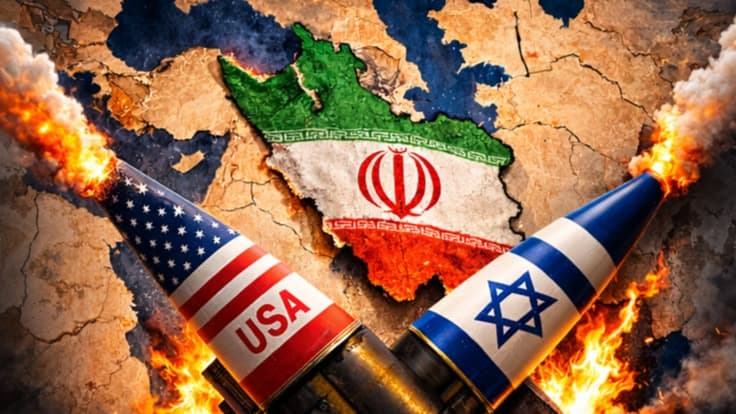
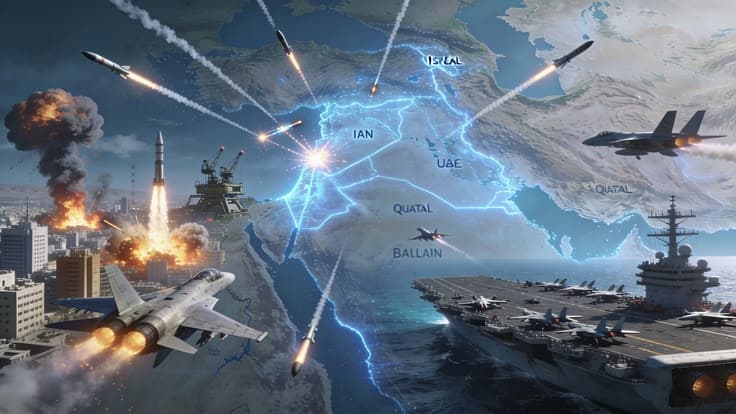
On the night of June 9, 2026, the Middle East was plunged back into crisis. The Iran-Israel war — which many had hoped was moving toward a ceasefire — reignited with devastating intensity. Iran launched a fresh ballistic missile barrage against Israel, citing Israel's seizure of territory in southern Lebanon as the trigger. Simultaneously, Israel struck Tehran, targeting Iran's capital directly. Donald Trump — already dealing with a historic congressional defeat on June 6, a viral media meltdown, and the looming threat of losing his remaining presidential powers in November's midterm elections — found himself desperately pressuring both sides toward a negotiating table. And in the background, the United Kingdom's breathtaking hypocrisy — simultaneously sanctioning Israeli ministers while bankrolling Israel's military machine — was being exposed for the world to see.
This comprehensive analysis covers everything: the military escalation, Iran's missile strikes, Israel's retaliatory strikes on Tehran, Trump's congressional defeat and psychological crisis, the Lebanon factor, the UK's E1 Settlement hypocrisy, the Two-State Solution deadlock, the impact on global energy markets, and what all of this means for the world's geopolitical future.

Point 1 – Iran Launches Ballistic Missiles on Israel: The June 9 Escalation
The renewed military escalation began when Iran launched a large-scale ballistic missile attack against Israel on the night of June 9, 2026. The trigger: Israel had moved beyond the Gaza conflict and was now actively seizing and consolidating territory in southern Lebanon, a move Iran viewed as crossing a red line it could not ignore. Iran's regional influence in Lebanon — exercised primarily through Hezbollah — was being directly threatened by Israeli military advances, and Tehran responded with what it called a defensive escalation.
Inside Israel, the missile strikes created scenes of panic. Sirens wailed across cities; people flooded into shelters; the atmosphere was described by witnesses as one of genuine terror. However, Israeli media immediately began claiming that the Iron Dome and Arrow missile defense systems had intercepted the majority of incoming missiles with high success rates. Israeli defense officials stated their air defense systems had "disabled" the Iranian missile threat.
But here lies a significant credibility problem: Israel has a well-documented history of minimizing and concealing the extent of damage it sustains in military exchanges — strategically managing public perception to maintain the image of invincibility that is central to its security doctrine. Israel's missile defense systems are advanced — the multi-layered system combining Iron Dome (short-range), David's Sling (medium-range), and Arrow 3 (long-range exo-atmospheric interception) represents perhaps the world's most sophisticated layered missile defense architecture. But no air defense system achieves 100% interception rates against a large-scale ballistic missile salvo, and Iran's missile program — comprising Shahab, Emad, Sejjil, Khorramshahr, and the hypersonic Fattah series — poses genuine penetration challenges to any defense system.
| Iran Missile System | Range | Type | Threat Level to Israel |
|---|---|---|---|
| Shahab-3 | 1,300 km | Ballistic | High – covers all of Israel |
| Emad | 1,700 km | Precision Ballistic | Very High – maneuverable warhead |
| Sejjil | 2,000+ km | Solid-Fuel Ballistic | Very High – faster launch cycle |
| Khorramshahr | 2,000 km | MIRVed Ballistic | Extreme – multiple warheads |
| Fattah (Hypersonic) | 1,400 km | Hypersonic Glide | Extreme – evades most systems |
Point 2 – Israel Strikes Tehran: Iran's Capital Under Fire
In a dramatic and historically significant escalation, Israel launched retaliatory strikes directly against Tehran — Iran's capital and political-religious center. This represented a major crossing of thresholds in the conflict. Striking a national capital is an act of war at its most direct, and Israel's decision to target Tehran — rather than limiting strikes to military installations or peripheral infrastructure — signaled a willingness to escalate beyond any previous exchange in the conflict's history.
Israel's air force capabilities and intelligence operations are widely acknowledged as among the most advanced in the world. The Israeli Air Force's fleet of F-35I "Adir" aircraft — adapted specifically for Israeli operational requirements — combined with the country's sophisticated aerial refueling capacity and decades of operational experience conducting long-range precision strikes, gave Israel the technical ability to reach Tehran. The strikes used a combination of standoff precision munitions and direct strike packages.
The atmosphere on both sides became intensely heated. Iran's strategic doctrine — based on asymmetric deterrence, proxy network activation, and the threat of closing the Strait of Hormuz — was now being tested at its most fundamental level. The regional security crisis had escalated from a conflict primarily conducted through proxy forces and missile exchanges to direct strikes between the two nations' core territories. This represented a qualitative shift in the nature of the confrontation — from a proxy war to something approaching direct inter-state warfare.
Point 3 – Trump's Congressional Defeat: The June 6 Vote That Changed Everything
To understand Trump's frantic diplomatic activity around the Iran-Israel conflict, it is essential to understand the political earthquake that struck him just three days earlier. On June 6, 2026, the US Congress voted on legislation that would strip the President of his unilateral war-making authority with respect to the Iran-Israel conflict — transferring those powers back to Congress.
Such votes had occurred before, but what made this one shocking and historically significant was its outcome. Trump's Republican (Congress) Party received 208 votes. The opposing Democrat Party received 215 votes. The legislation passed. Trump lost.
But the story gets worse for Trump. The margin of defeat was provided by four members of his own party who broke ranks and voted against him. These four Republican defectors were sufficient to flip the outcome from a Republican victory to a Republican defeat. For a President who had built his brand entirely around dominance, loyalty, and winning — this was a humiliation of the highest order.
The legislation, though passed by Congress, still needs to clear the Senate before becoming law. But the message had been sent loudly and clearly: Trump no longer commanded the legislative loyalty he once could assume. His foreign policy statements and national security stance were being actively challenged and constrained by his own political system.
| Congressional Vote – June 6, 2026 | Result |
|---|---|
| Republican (Congress) Party Votes | 208 |
| Democrat Party Votes | 215 |
| Republican Defectors | 4 (voted against Trump) |
| Outcome | Democrats win – War powers to be transferred to Congress |
| Senate Status | Bill not yet passed – still pending |
| Political Implication | Trump's authority over military action severely weakened |
Point 4 – Trump Offers Iran a Seat at the Table: The Negotiation Gambit
Following the June 9 escalation — with missiles flying between Iran and Israel and the region on the brink — Trump issued a public message to Iran: "Come sit at the table. Let's talk. Resolving Israel is my job." Trump positioned himself as the indispensable dealmaker who could bring the conflict to an end — framing Iran as the party being invited to make peace under his personal diplomatic umbrella.
This was a significant shift in Trump's diplomatic strategy. Throughout his administration, Trump had maintained a posture of maximum pressure on Iran — sanctions, threats, and support for Israeli military operations. His willingness to now offer Iran direct dialogue represented either a genuine pivot toward US diplomacy in the Middle East or — as many analysts argued — a politically motivated maneuver driven by his domestic political crisis rather than a coherent foreign policy vision. Trump's geopolitical views have always been transactional rather than principled, and his sudden interest in Iran negotiations was entirely consistent with a man who needed a diplomatic win to counteract his congressional losses and position himself favorably ahead of November's midterm elections.
Trump's response to global conflicts in this period was characterized by a combination of genuine alarm at the situation's unpredictability and naked political calculation about how the outcome would affect his own electoral prospects. Both motivations were simultaneously real and simultaneously limiting.
Point 5 – Trump Pressures Netanyahu: "You Have No Other Choice"
In a remarkable development, Trump privately communicated to Israeli Prime Minister Benjamin Netanyahu that Israel had exhausted its alternatives. According to reports from multiple sources, Trump told Netanyahu directly: "You have no other choice but to make peace with Iran."
This represented a fundamental shift in the relationship between the United States and Israel. Traditionally, American presidents — regardless of party — have given Israel extraordinary deference, avoiding direct pressure on Israeli security decisions. Trump's previous term was famous for being exceptionally pro-Israel: moving the US embassy to Jerusalem, recognizing Israeli sovereignty over the Golan Heights, and brokering the Abraham Accords. For this same Trump to now privately tell Netanyahu that he has no choice but to negotiate with Iran was — from Israel's perspective — a shocking reversal. Trump's international relations with Israel were being fundamentally reframed by his domestic political emergency.
Netanyahu, for his part, faced his own political constraints. His coalition government included extreme nationalist ministers like Itamar Ben-Gvir and Bezalel Smotrich who were ideologically committed to maximum territorial expansion and categorically opposed to any compromise with Iran or accommodation of Palestinian statehood. Any suggestion of negotiations with Iran would threaten his coalition's survival.
Point 6 – Trump's Public Meltdown: The Viral Interview Moment
The image of a composed, confident Trump directing American foreign policy from a position of strength was dramatically undermined by a widely circulated video from a recent interview. In the clip, a female news anchor pressed Trump for concrete evidence supporting his long-standing claim that the November 2020 US presidential election had been stolen through fraud — what he calls "rigged elections." Trump, as is typical, initially deflected and avoided providing substantive evidence. The anchor pressed further. Trump's composure crumbled.
He picked up his microphone, began hurling accusations at the anchor — calling her "dishonest" and accusing media organizations of deliberate bias — and walked out of the interview before completing it. The incident went viral globally. The timing was catastrophic: Trump had come to the interview specifically to build momentum ahead of November 2026's midterm elections. Instead, he produced footage that his opponents immediately deployed as evidence of instability, fragility, and unfitness for office.
Trump's foreign policy statements and his trump defense policy analysis in this period must be understood through the lens of this psychological and political context. A man simultaneously dealing with congressional defections within his own party, viral proof of his emotional volatility, a losing congressional vote, and the prospect of losing his war powers entirely in November — this is not a leader operating from a position of strategic clarity. His Iran diplomacy was as much emotional regulation as it was statecraft.
Point 7 – The Contradiction: What Trump Says to the Media vs. What He Says in Congress
One of the most revealing aspects of Trump's Iran policy during this period is the stark contradiction between his public messaging and his private congressional communications. Trump's military policy narrative to the media remained triumphalist: the United States and Israel had won against Iran, Iran had been defeated, American power had prevailed. This narrative served the domestic political need to appear strong and decisive.
But inside Congress, Trump was telling a completely different story. In private and semi-private congressional sessions, Trump acknowledged that the Iran-Israel conflict was not winnable in any meaningful sense from Israel's perspective. He was arguing that engineering an Iran-Israel peace deal would allow him to claim "good points" — political victories — that he desperately needed going into November's midterm elections.
This fundamental dishonesty — telling the public a war is won while telling Congress it cannot be won and must be ended — is a defining feature of Trump's trump geopolitical views in the 2026 period. His primary objective was never strategic stability in the Middle East; it was managing the domestic political optics of the conflict in a way that maximized his approval ratings and electoral prospects.
Point 8 – The Five-Month Window: Iran Deal by November?
Inside Congress and in his communications with both Iran and Israel, Trump was working toward a specific timeline. His goal: achieve an Iran-Israel ceasefire and normalization agreement before November 2026's midterm elections — a period of approximately five months from the June escalation. The strategic logic was clear:
If Trump could broker an Iran deal before November, the political benefits would be enormous. The Strait of Hormuz — closed or threatened by Iran — could be permanently reopened, restoring global oil supply chains. The impact of middle east conflict on global economy — which had been devastating — could begin to reverse. Oil prices could fall, reducing cost-of-living pressures on American consumers. Global financial markets could stabilize. And Trump could stand before American voters in November claiming personal credit for ending one of the most dangerous Middle East conflicts in decades.
But Trump faced a structural political impossibility: he could not openly support or legitimize Iran in any way without alienating America's powerful Jewish lobby — a constituency whose support, or at least neutrality, was essential to Republican electoral performance. He was therefore pursuing a strategy of simultaneously pressuring Israel toward compromise (privately) while publicly maintaining pro-Israel rhetoric, and approaching Iran with diplomatic signals while publicly maintaining a tough anti-Iran posture. This balancing act was extraordinarily difficult to sustain and was already showing visible signs of strain.
| Trump's Strategic Objective | Method | Political Goal | Risk |
|---|---|---|---|
| Iran-Israel Ceasefire | Pressure Netanyahu privately | Claim peace deal credit before November | Lose Jewish lobby support |
| Reopen Strait of Hormuz | Iran negotiations | Lower oil prices, boost economy | Appear weak on Iran |
| Restore US economic confidence | End geopolitical uncertainty | "Make America Great Again" narrative | Failure to deliver = electoral disaster |
| Maintain congressional authority | Win Senate vote on war powers bill | Preserve presidential power | Senate may also vote against him |
Point 9 – Trump's Ground Invasion Threat Against Iran
In his communications with Iran, Trump issued what amounted to an ultimatum: if a ceasefire agreement is not reached through negotiation, the United States reserves the right to conduct a "ground invasion" of Iran. This threat was made in the context of the ongoing military escalation scenarios in the region, where US military assets — aircraft carrier groups, forward-deployed air assets, and special operations forces — were already positioned throughout the Persian Gulf region.
The credibility of this threat was significantly undermined by Trump's congressional situation. With the war powers legislation moving through Congress, Trump's legal authority to initiate military action against Iran without congressional approval was already being legally challenged. A ground invasion — one of the most consequential military decisions a president could make — would require resources, logistics, and political support that Trump demonstrably did not currently possess.
Nevertheless, the threat served a negotiating function. Iran, whatever its confidence in its own iran military capabilities and iran defense strategy, could not entirely dismiss the possibility of American military intervention, particularly given the massive american military presence middle east already in place. US military deployments in the region include carrier strike groups in the Persian Gulf and Arabian Sea, forward air bases in Qatar, Bahrain, UAE, and Kuwait, and a significant special operations footprint across multiple countries.
Point 10 – The Lebanon Factor: Why the War Reignited
The specific trigger for the June 9 escalation — Israel's seizure of territory in southern Lebanon — requires examination in the context of the broader lebanon conflict analysis and the strategic importance of the persian gulf and surrounding region.
Lebanon's geopolitical importance to Iran is immense. Hezbollah — Iran's primary proxy group in Lebanon — has functioned for decades as Iran's forward deterrent against Israel. Hezbollah's arsenal of over 150,000 rockets and missiles, positioned in southern Lebanon, represents a continuous threat to northern Israel and is the cornerstone of Iran's iran proxy groups analysis strategy. Israeli advances into and seizure of southern Lebanese territory directly threatened this strategic asset, making Iran's response — ballistic missile strikes on Israel — a predictable consequence of crossing this particular red line.
The southern lebanon tensions had been building since the 2023-2024 Gaza conflict, during which Hezbollah began regular rocket exchanges with Israel across the Lebanese border in solidarity with Hamas. As Israel's military operations expanded following Gaza, its strategic planners increasingly viewed the Hezbollah threat from Lebanon as an existential issue that needed to be permanently resolved — not merely managed. The move into southern Lebanon was therefore not impulsive but reflected a calculated Israeli decision to use the current period of American diplomatic cover to reshape the security architecture of its northern border.
UK's Hypocrisy – Sanctions, E1 Settlement Support, and Arms Deals
Perhaps the most intellectually dishonest behavior in this entire conflict has come not from the Middle East combatants but from Europe — and specifically from the United Kingdom. UK Prime Minister Keir Starmer and his Labour government have presented themselves publicly as champions of Palestinian rights and critics of Israeli excesses. But a careful examination of British policy reveals a pattern of hypocrisy so profound it borders on deliberate deception.
On one hand, the UK has: banned Israeli ministers Itamar Ben-Gvir and Bezalel Smotrich from entering the country; suspended free trade negotiations with Israel; and announced intentions to impose sanctions on Israel over illegal West Bank settlement activity, including the announcement: "UK readies sanctions against Israel to deter proposed illegal West Bank settlement." These actions have been presented to the British public and international community as evidence of British moral seriousness about international law and Palestinian rights.
But simultaneously, the UK has been actively supporting the E1 Settlement Plan — a deeply controversial Israeli project that directly threatens the viability of any future Palestinian state. The E1 plan was originally conceived in 1990 under Israeli Prime Minister Yitzhak Rabin. Due to sustained international pressure, it was never fully implemented. But since 2023, Israeli Finance Minister Bezalel Smotrich — the same minister the UK has banned — declared that the time had come to execute E1. The plan involves seizing approximately 4,000 dunams of land in the West Bank to build infrastructure connecting Israeli settlements, in the process cutting Jerusalem into two separate sections and making the geographic contiguity required for a viable Palestinian state virtually impossible.
At the United Nations Security Council, the UK's stated position is that the Two-State Solution — a Palestinian state alongside Israel, with borders based on 1967 lines, with East Jerusalem as the Palestinian capital — is the only viable peace framework. The UK supports dividing the land according to 1967 borders, with Gaza and East Jerusalem as part of the Palestinian state. Most of the international community agrees with this framework.
But Israel categorically refuses this framework. Israel's stated goal — particularly under the current Likud and Religious Zionist coalition — is a "Greater Israel" that incorporates the West Bank, annexes East Jerusalem, and faces no obligation to create a viable Palestinian state. If this is Israel's actual policy, and if the UK is simultaneously: (a) claiming to support Two-State Solution, (b) sanctioning Israeli extremist ministers, and yet (c) continuing to supply Israel with arms and strategically supporting E1 implementation at the UN — then UK policy is internally incoherent and functionally dishonest.
The most damning evidence: in November and December 2024, even as the Gaza conflict was producing images of mass civilian casualties that shocked the world, the UK continued supplying Israel with $160 million worth of arms. Sanctioning Ben-Gvir while simultaneously funding the military operations his political faction supports is not a coherent moral position — it is political theater designed to manage domestic constituencies without actually changing any material outcome on the ground.
| UK Action | What It Claims | What It Actually Does | Verdict |
|---|---|---|---|
| Ban Ben-Gvir and Smotrich | Protests Israeli extremism | No material impact on Israeli policy | Symbolic only |
| Suspend Free Trade Talks | Economic pressure on Israel | Minimal economic impact; Israel trades globally | Largely symbolic |
| West Bank Sanctions Threat | Opposes illegal settlements | E1 implementation continues with no UK material opposition | Contradictory |
| Support Two-State at UN | Backs Palestinian statehood | Arms deliveries enable Israeli military expansion into Palestinian territory | Hypocritical |
| $160M Arms Supply (Nov-Dec 2024) | Allies with Israel for security | Directly funds the military operations displacing Palestinians | Contradicts stated values |
The Two-State Solution Deadlock – Why Peace Remains Impossible
The Two-State Solution — the international consensus framework for resolving the Israeli-Palestinian conflict — calls for the establishment of an independent Palestinian state alongside Israel, with borders based on the pre-1967 lines. Under this framework, the West Bank and Gaza Strip would form the territory of the Palestinian state, with East Jerusalem (Al-Quds) as its capital.
The vast majority of the international community supports this framework — including most European nations, the Arab League, the United Nations, and officially (if increasingly nominally) the United States. The Palestinian Authority formally accepts Two-State Solution as the basis for negotiations. Hamas — the governing authority in Gaza — has historically rejected it, though its positions have occasionally shown tactical flexibility.
Israel — under its current right-wing and far-right coalition — categorically rejects the Two-State Solution. Prime Minister Netanyahu has stated repeatedly that he will not allow a Palestinian state. Finance Minister Smotrich has described the Palestinian people as historically non-existent. National Security Minister Ben-Gvir has advocated for the ethnic displacement of Palestinians from Gaza. These are not fringe positions within the current Israeli government — they are the governing coalition's stated program.
The logical conclusion is one that the international community has been unwilling to act on: if Israel will not accept Two-State Solution, and if the international community genuinely believes Two-State is the only viable framework, then the only remaining lever is comprehensive international enforcement — including a complete arms embargo and economic isolation of Israel until it complies with international law. Without such enforcement, all the symbolic gestures — banning ministers, suspending trade talks — are simply political theater that allows Western governments to appear principled while enabling the continuation of exactly the policies they claim to oppose.
Impact on the Global Economy – Energy, Trade Routes, and Markets
The impact of middle east conflict on global economy in 2026 has been severe and multi-dimensional. The effects of geopolitical tensions on energy prices were immediate and dramatic when hostilities intensified: how regional wars affect oil markets became a lived reality as Brent crude prices surged past $120 per barrel at peak tension moments.
The strategic importance of the Persian Gulf cannot be overstated: approximately 21 million barrels of oil per day pass through the Strait of Hormuz — representing roughly 20% of global petroleum liquids consumption. Iran's threat to close the Strait — and its demonstrated ability to disrupt shipping through missile strikes, naval harassment, and proxy attacks on commercial vessels — created real supply chain disruptions that rippled through global energy markets. The effects of war on international trade extended beyond oil: insurance costs for commercial shipping in the Persian Gulf and Arabian Sea surged dramatically, disrupting supply chains for manufactured goods, food commodities, and industrial materials.
Geopolitical risks and financial markets: Global stock markets experienced significant volatility during periods of peak military tension, as institutional investors priced in the risk of a broader regional conflict. Defense stocks surged; airlines, tourism operators, and consumer discretionary sectors fell sharply. Emerging market currencies — particularly those of oil-importing nations — depreciated significantly against the US dollar as energy import costs rose.
| Economic Impact Area | Effect | Severity | Recovery Timeline |
|---|---|---|---|
| Oil Prices | Brent crude surged to $120+/barrel | Severe | 6–12 months post-ceasefire |
| Strait of Hormuz Shipping | Disruption to 20% of global oil supply | Critical | Immediate on reopening |
| Global Stock Markets | High volatility; defense up, tourism down | High | 3–6 months |
| Emerging Market Currencies | Significant depreciation vs USD | High | 6–18 months |
| Food and Commodity Trade | Insurance costs surge, supply chains disrupted | Moderate–High | 3–9 months |
| Aviation and Tourism | Airspace closures, route disruptions | High | Immediate on ceasefire |
Military Technology Changing Modern Warfare
The Iran-Israel conflict of 2026 has become a live demonstration laboratory for military technology changing modern warfare. The conflict has showcased: the limits and capabilities of layered missile defense architectures; the role of drone swarms in saturating air defense systems; how missile defense systems work under real operational stress rather than controlled test conditions; the integration of AI-driven targeting systems; and the increasing importance of cyber warfare as a force multiplier in conventional military confrontations.
Air defense systems comparison between the two sides illustrates the technological asymmetry: Israel's multi-layered defense architecture (Iron Dome/David's Sling/Arrow 3) is qualitatively superior to Iran's air defense systems (Russian-derived S-300 variants and domestically produced Bavar-373). However, Iran's offensive missile capability — particularly its hypersonic Fattah system, which achieves speeds of Mach 13-15 — poses genuine penetration challenges to even the most advanced missile defense architectures currently deployed.
Missile interception technology has advanced dramatically in the past decade, but the fundamental physics of intercepting hypersonic glide vehicles remains an unsolved technical challenge for all existing systems. This asymmetry — where offensive hypersonic technology outpaces defensive capabilities — is reshaping the strategic military operations calculus for all major military powers and will define the next generation of defense procurement globally.
The Role of Superpowers in Regional Conflicts
The role of superpowers in regional conflicts is being dramatically illustrated by the divergent positions of the United States, Russia, and China in the Iran-Israel war. The United States — under Trump — is simultaneously allied with Israel, attempting to negotiate with Iran, and constrained by domestic political crisis from exercising decisive leverage over either party. Russia has maintained ambiguous positions — critical of US-Israeli actions in public while conducting pragmatic energy and arms relationships with Iran. China has called for de-escalation through diplomatic channels while protecting its massive economic interests in both Iranian oil purchases and regional trade.
Global power competition in the Middle East is therefore being conducted through the Iran-Israel conflict as a proxy arena. The outcome — whether the US successfully brokers a deal, whether the conflict escalates to involve other regional powers, or whether it reaches a frozen-conflict equilibrium — will materially affect the relative standing of all major powers in the post-2026 geopolitical order.
Conclusion – A Region at the Crossroads
The events of June 9, 2026 — Iran's ballistic missile strikes on Israel, Israel's retaliatory strikes on Tehran, Trump's frantic diplomatic maneuvering driven as much by his domestic political crisis as by strategic calculation, and the UK's exposure as a state actor pursuing a fundamentally hypocritical Middle East policy — represent a moment of profound clarity about the Middle East's underlying dynamics.
The iran-israel war will not end through military victory by either side. Neither Iran nor Israel can destroy the other militarily without triggering consequences that would be catastrophic for their own survival. The conflict will end — if it ends — through political negotiation driven by the exhaustion of all parties and the pressure of economic costs that become unsustainable.
But for that negotiation to produce a durable peace rather than a temporary ceasefire, it must eventually address the foundational issue: the legitimate rights of the Palestinian people to statehood, dignity, and self-determination. As long as the international community — particularly the UK and US — continues to support Israel's settlement expansion program while verbally endorsing Two-State Solution, the contradiction at the heart of Middle East diplomacy will continue to generate exactly the conditions that make wars like this one inevitable.
Global security challenges in 2026 have rarely been more acute. The intersection of military escalation, domestic political crisis in the world's most powerful democracy, economic disruption, and foundational injustice that has never been resolved — all converging in a region that sits astride the world's most critical energy supply routes — makes the current moment one of the most genuinely dangerous in the post-Cold War era. The world is watching. And the decisions made in the next five months — before November's American midterm elections — may determine the shape of Middle Eastern geopolitics for the next generation.
"In war, truth is the first casualty." — Aeschylus (5th century BCE) — a principle as relevant in 2026 as it was in ancient Athens.