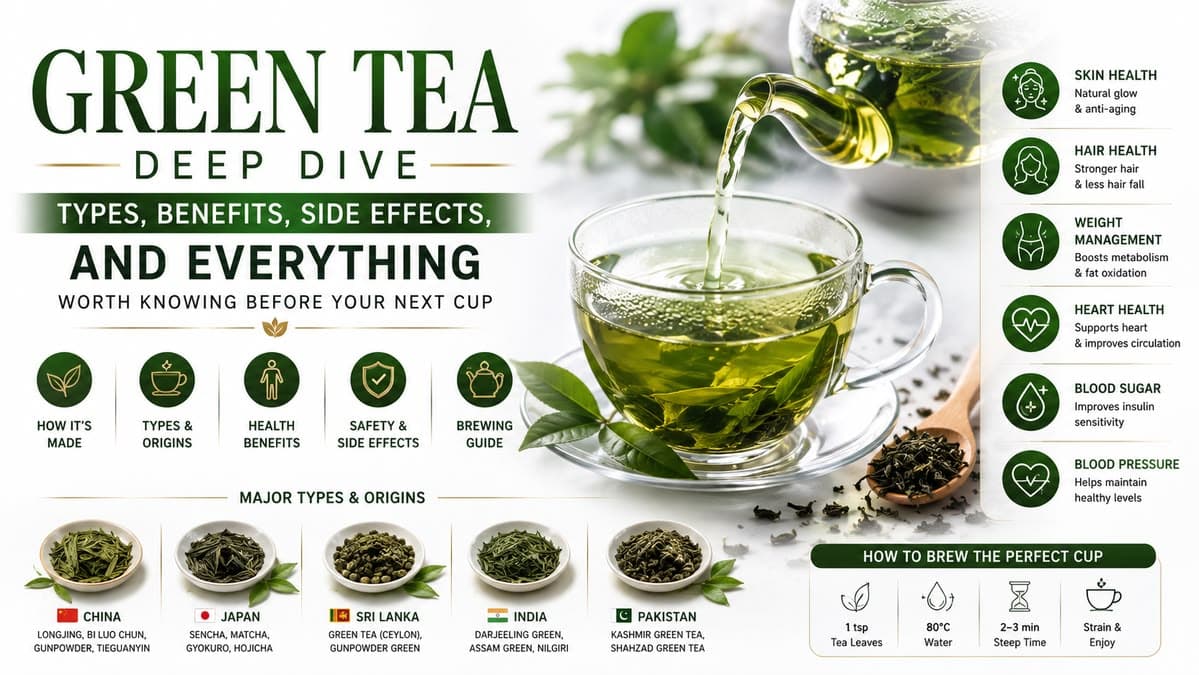
Green Tea Deep Dive: Types, Benefits, Side Effects, and Everything Worth Knowing Before Your Next Cup
Green tea has one of the strongest health reputations of any drink on the planet, and unlike a lot of wellness trends, most of that reputation actually holds up under real scientific scrutiny. But "green tea is good for you" is such a broad, overused claim that it barely tells you anything useful. Good for what, exactly? How much do you actually need? Is it safe for your kids, or while pregnant? Does the type of green tea even matter?
This guide goes deep on all of it: how green tea is actually made and why that matters, the major types you'll find from China, Japan, Sri Lanka, India, and Pakistan, what the research genuinely supports for skin, hair, weight, heart health, blood sugar, and blood pressure, and the honest safety picture for children and pregnancy. And once this one's done, the next piece in this series will put green tea head-to-head against black coffee — how they actually compare, not just which one has more caffeine.
1. What Is Green Tea?
Green tea is a type of tea made from the leaves of the Camellia sinensis plant, processed in a way that prevents the leaves from oxidizing, which is what preserves their green color and their distinctive, lighter flavor compared to black tea made from the same plant.
2. Where Green Tea Actually Comes From
Green tea originated in China, where it's been cultivated and consumed for thousands of years, before spreading to Japan and eventually becoming a globally cultivated crop, with major production today across China, Japan, and a growing number of other countries including Sri Lanka, India, and parts of Pakistan.
3. How Green Tea Is Made
After picking, green tea leaves are heated very quickly, either through steaming (the traditional Japanese method) or pan-firing (the traditional Chinese method), which halts the natural enzymatic process that would otherwise begin oxidizing the leaves. The leaves are then rolled and dried.
4. Why Minimal Oxidation Matters
By stopping oxidation almost immediately, green tea processing preserves a group of natural compounds called catechins in a much more concentrated, unaltered form than black tea, where the same leaves are deliberately allowed to fully oxidize into an entirely different set of compounds. This is the single biggest chemical difference between green and black tea, despite both coming from the same plant.
5. Green Tea's Signature Compound: EGCG
EGCG, or Epigallocatechin Gallate, is the most abundant and most studied catechin in green tea, and it's considered the primary reason green tea carries such a strong antioxidant reputation. Most of the specific health claims associated with green tea trace back, at least in part, to this single compound.
6. What Else Is Inside a Cup of Green Tea
| Compound | Role |
|---|---|
| EGCG and other catechins | Primary antioxidants, supporting cellular protection |
| Caffeine | Mild stimulant effect, supports alertness |
| L-theanine | An amino acid associated with calm, focused alertness |
| Vitamin C | Additional antioxidant support |
| Minerals (including magnesium) | Minor but meaningful nutritional contribution |
7. Green Tea's Caffeine Content
A typical cup of green tea contains roughly 25 to 45 milligrams of caffeine, considerably less than black tea and substantially less than coffee, making it a reasonable option for people who want some alertness without a strong stimulant effect.
8. Major Types of Green Tea: Overview
Green tea isn't a single, uniform product — different regions and processing traditions produce genuinely distinct types, varying in flavor, caffeine content, and preparation method.
9. Chinese Green Tea: Longjing (Dragon Well)
Longjing, also known as Dragon Well, is one of China's most famous green teas, pan-fired by hand in a traditional method that gives it a flat leaf shape and a smooth, slightly nutty, chestnut-like flavor.
10. Chinese Green Tea: Gunpowder
Gunpowder tea gets its name from its tightly rolled leaves, which resemble small pellets. This rolling helps preserve freshness during storage and transport, and the tea itself has a slightly smoky, robust flavor compared to more delicate green tea varieties.
11. Japanese Green Tea: Sencha
Sencha is Japan's most widely consumed green tea, made using the steaming method rather than pan-firing, which gives it a grassy, slightly sweet flavor and a vibrant green color.
12. Japanese Green Tea: Matcha
Matcha is made from shade-grown tea leaves that are ground into a fine, vivid green powder, then whisked directly into hot water rather than steeped and removed. Because the whole leaf is consumed rather than just an infusion, matcha generally delivers a more concentrated dose of both caffeine and antioxidants than standard steeped green tea.
13. Japanese Green Tea: Gyokuro
Gyokuro is a premium, shade-grown Japanese green tea known for its rich, mellow, umami-forward flavor, achieved by covering the tea plants for several weeks before harvest, which increases chlorophyll and amino acid content in the leaves.
14. Green Tea in Sri Lanka
Sri Lanka, historically better known for black tea (Ceylon tea), has also developed a growing green tea industry, producing green teas with a distinct character shaped by the island's high-altitude growing regions.
15. Green Tea in India
India, particularly regions like Assam and Darjeeling traditionally known for black tea, has increasingly expanded into green tea production as well, offering a range of green teas that reflect the same diverse growing regions responsible for India's broader tea reputation.
16. Green Tea in Pakistan
Green tea, often referred to locally as "sabz chai," has become a widely consumed everyday drink across Pakistan, commonly enjoyed after meals and often marketed and sold alongside more traditional black tea, or "doodh patti," in the same households.
17. Matcha vs Steeped Green Tea: The Real Difference
| Feature | Steeped Green Tea | Matcha |
|---|---|---|
| Form | Loose leaves or tea bags, leaves removed after steeping | Fine powder, fully dissolved and consumed |
| Caffeine | Lower (25–45mg per cup) | Higher, since the whole leaf is consumed |
| Antioxidant Concentration | Moderate | Higher, for the same reason |
18. Green Tea for Skin: What the Evidence Says
Green tea's antioxidants, particularly EGCG, help neutralize free radicals that contribute to oxidative stress and premature skin aging, which is why green tea extract shows up in a wide range of topical skincare products, alongside its use as a drink.
19. Green Tea for Skin Whitening and Glow Claims
Green tea's antioxidant support can contribute to a healthier-looking, more even complexion over time by reducing oxidative damage, but claims about dramatic "skin whitening" or instant glow should be treated with reasonable skepticism — antioxidants support skin health generally, rather than delivering an overnight cosmetic transformation.
20. Green Tea for Hair
Some research suggests green tea's catechins may support scalp health and, in topical formulations, could play a supporting role in hair growth-related products, though it's generally considered a complementary measure rather than a primary treatment for significant hair loss.
21. Green Tea for Weight Loss
Green tea's combination of caffeine and EGCG is associated with a modest boost to metabolism and fat oxidation in some studies, which is part of why it's so commonly featured in weight loss discussions and supplement marketing.
22. Why Green Tea Isn't a Weight Loss Shortcut
It's important to be realistic here: the metabolic effect green tea provides is generally small, and it works best as one supporting piece of a broader healthy diet and consistent physical activity, rather than something that meaningfully drives weight loss on its own.
23. Green Tea for Heart Health
Green tea's polyphenols are associated with supporting healthy blood vessel function and have been studied for a potential role in supporting healthy cholesterol levels, contributing to its broader reputation as a heart-conscious beverage choice.
24. Green Tea and Blood Pressure
Moderate green tea consumption is generally considered fine for blood pressure, and its antioxidant content may offer some supportive benefit to vascular health, though very high caffeine intake — from green tea or any source — can cause a temporary increase in heart rate and blood pressure in sensitive individuals.
25. Green Tea and Blood Sugar Control
Some research suggests green tea's polyphenols may support healthy blood sugar regulation over time, contributing to its inclusion in discussions around metabolic health, though it should never be treated as a replacement for prescribed diabetes management.
26. A Caution for People With Diabetes
People with diabetes should monitor their blood sugar carefully when drinking green tea, since its caffeine content can, in some individuals, affect blood sugar control, meaning individual response should be tracked rather than assumed to always be beneficial.
27. Green Tea for Gut Health
Green tea's polyphenols may support a favorable balance of gut bacteria in some studies, contributing to broader digestive wellness, alongside general hydration benefits from the drink itself.
28. Green Tea and Immune Support
Green tea's antioxidant content, including vitamin C and catechins, is generally considered supportive of overall immune function, consistent with the broader role antioxidant-rich foods and drinks play in supporting the body's natural defenses.
29. Green Tea for Brain Function and Focus
The combination of caffeine and L-theanine in green tea is frequently cited as producing a calmer, more sustained form of alertness compared to caffeine alone, since L-theanine is associated with promoting relaxed focus without the jittery edge sometimes felt with stronger stimulants.
30. Green Tea Benefits for Women
Beyond its general antioxidant and metabolic benefits, green tea is often highlighted in the context of women's health for its potential supportive role in skin health, weight management, and general wellness, though its effects are broadly similar across men and women rather than being uniquely gender-specific.
31. Green Tea Benefits for Men
For men, green tea's benefits are generally discussed in similar terms — metabolic support, cardiovascular health, and general antioxidant protection — without meaningfully different effects specific to male physiology.
32. Drinking Green Tea at Night: Good Idea or Not?
Because green tea does contain caffeine, even though considerably less than coffee, drinking it too close to bedtime can still interfere with sleep for people sensitive to caffeine. Those wanting an evening cup without disrupting sleep may want to opt for a decaffeinated version or stick to earlier in the day.
33. Is Green Tea Safe for Kids?
Because green tea contains caffeine, it isn't generally recommended for young children, and any occasional use in older children or teens should be discussed with a pediatrician first, particularly given how differently children can respond to even modest amounts of caffeine compared to adults.
34. Green Tea and ADHD in Children
For children with ADHD specifically, caffeine's stimulant effects can interact unpredictably with certain medications or symptoms, which is why green tea, along with other caffeinated drinks, should only be introduced for a child with ADHD after a direct conversation with their doctor, rather than as a casual home remedy.
35. Is Green Tea Safe During Pregnancy?
Green tea is generally considered safe during pregnancy in moderation, typically kept to around 1 to 2 cups a day, which helps stay within the roughly 200mg daily caffeine limit most obstetric guidelines recommend during pregnancy. As always, individual circumstances vary, and pregnant women should discuss their specific situation with their doctor.
36. The Folate Concern Explained
Green tea's catechins have been associated with reduced folate absorption, which is why some healthcare providers recommend extra caution, or avoiding green tea altogether, specifically during the first trimester, when folate plays a particularly critical role in early fetal development.
37. Green Tea Side Effects to Know About
| Side Effect | Why It Happens |
|---|---|
| Difficulty sleeping | Caffeine content, especially if consumed later in the day |
| Stomach upset | Tannins and caffeine can irritate some people's digestive systems, particularly on an empty stomach |
| Increased heart rate | Caffeine's stimulant effect, more noticeable in sensitive individuals or with high intake |
| Reduced iron absorption | Tannins can bind to non-heme, plant-based iron, similar to black tea |
| Rare liver concerns with concentrated extracts | Reported specifically with very high-dose green tea extract supplements, not typical brewed tea |
38. Who Should Be Extra Cautious With Green Tea
People with heart rhythm conditions, those who are pregnant, individuals with diabetes, people with iron deficiency relying on plant-based iron sources, and anyone particularly sensitive to caffeine should be more mindful of their green tea intake and, where relevant, discuss it with a doctor.
39. How to Brew Green Tea Properly
| Step | Instruction |
|---|---|
| 1 | Boil water, then let it cool slightly to around 80°C to 85°C |
| 2 | Add a tea bag or about one teaspoon of loose leaves per cup |
| 3 | Steep for 1.5 to 2 minutes |
| 4 | Remove the leaves or bag promptly |
| 5 | Serve plain, or with a small amount of honey or lemon if desired |
40. Common Brewing Mistakes
The most common mistake is using fully boiling water directly on the leaves, which can scorch delicate green tea and produce a bitter, unpleasant taste while also degrading some of its beneficial compounds. Oversteeping is another common issue, similarly leading to excess bitterness.
41. Green Tea Bags vs Loose Leaf
Tea bags offer convenience and consistency, while loose leaf green tea often provides a fresher, more nuanced flavor and allows for more control over strength, though both can deliver genuine health benefits when brewed properly.
42. Choosing a Good Green Tea
Look for a vibrant green color rather than a dull, brownish tone, a fresh, grassy aroma, and, where possible, a clear harvest or packaging date, since green tea's delicate compounds degrade faster than more processed teas like black tea.
43. Myths vs Facts
| Myth | Fact |
|---|---|
| Green tea has no caffeine | It does contain caffeine, just considerably less than black tea or coffee |
| Drinking lots of green tea will melt away fat quickly | Its effect on metabolism is real but modest, and works best alongside diet and exercise |
| All green teas are the same | Type, region, and processing meaningfully affect flavor, caffeine, and antioxidant concentration |
| Green tea is completely safe in unlimited amounts during pregnancy | Moderation and caffeine limits still apply, along with first-trimester folate considerations |
| Matcha and steeped green tea are basically identical | Matcha involves consuming the whole leaf, generally delivering more caffeine and antioxidants per serving |
44. Quick Glossary
| Term | Meaning |
|---|---|
| Catechins | A group of natural antioxidant compounds concentrated in green tea |
| EGCG | The most abundant and potent catechin in green tea |
| L-theanine | An amino acid in tea associated with calm, focused alertness |
| Oxidation (in tea processing) | The chemical process green tea processing deliberately halts, unlike black tea |
| Matcha | Powdered, shade-grown green tea consumed as a whole leaf rather than steeped and removed |
45. Frequently Asked Questions
Is green tea good for skin?
Yes, green tea's antioxidants, particularly EGCG, help combat oxidative stress that contributes to skin aging, and it's commonly used both as a drink and in topical skincare products for a calmer, clearer complexion.
Is green tea safe for kids?
Green tea contains caffeine, so it isn't recommended for young children, and any use in older children or teens should be occasional, in small amounts, and discussed with a pediatrician, particularly for children who are sensitive to caffeine or have ADHD.
Is green tea safe during pregnancy?
Green tea is generally considered safe in moderation during pregnancy, typically limited to about 1 to 2 cups a day to stay within recommended caffeine limits, though many providers suggest extra caution in the first trimester due to its potential effect on folate absorption. Pregnant women should discuss their specific situation with their doctor.
Does green tea help with weight loss?
Green tea's combination of caffeine and EGCG may offer a modest boost to metabolism and fat oxidation, but its effect is generally small and works best as part of a broader healthy diet and exercise routine, not as a standalone weight loss solution.
Can green tea help control blood sugar?
Some research suggests green tea's polyphenols may support healthy blood sugar regulation, but people with diabetes should monitor their blood sugar carefully when drinking green tea, since its caffeine content can also affect blood sugar control in some individuals.
Does green tea affect blood pressure?
Green tea's antioxidants are associated with supporting healthy blood vessel function, and moderate intake is generally considered fine for blood pressure, though very high caffeine intake can cause a temporary increase in heart rate and blood pressure in some people.
What are the main types of green tea?
Major types include Chinese green teas like Longjing and Gunpowder, Japanese green teas like Sencha, Matcha, and Gyokuro, along with green teas produced in Sri Lanka, India, and Pakistan, each varying in flavor and processing method.
What is the difference between matcha and regular green tea?
Matcha is a powdered form of green tea made from shade-grown leaves that are ground into a fine powder and whisked directly into water, so the whole leaf is consumed, generally giving it a higher concentration of caffeine and antioxidants compared to steeped green tea leaves.
How much green tea is safe to drink in a day?
For most healthy adults, 2 to 3 cups a day is generally considered a safe, moderate amount, though individual tolerance varies based on caffeine sensitivity and overall health.
Does green tea have side effects?
Possible side effects, mainly from its caffeine content, include difficulty sleeping, stomach upset, and increased heart rate in sensitive individuals, and very high intakes of concentrated green tea extract have been linked to liver concerns in rare cases.
46. Conclusion — And What's Coming Next
Green tea earns its health reputation honestly, even if it's often oversold. The real story is a plant processed just gently enough to preserve a genuinely powerful set of antioxidants, delivered with a modest, manageable amount of caffeine — useful for skin, heart, metabolic, and general wellness support, without being a miracle cure for anything on its own. Type matters, moderation matters, and context — whether that's pregnancy, a child's age, or an existing health condition — matters just as much as the tea itself.
Now that green tea has had its full deep-dive, the natural next question is how it actually stacks up against the other caffeinated drink most people reach for just as often: black coffee. That comparison — caffeine strength, antioxidant differences, effects on cholesterol depending on how it's brewed, and which one actually suits which part of your day — is coming up next in this series.