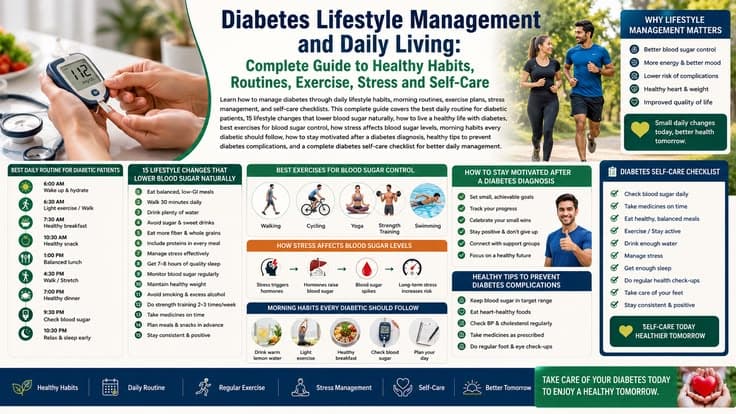
Diabetes Lifestyle Management and Daily Living: Complete Guide to Healthy Habits, Routines, Exercise, Stress and Self-Care
Living with diabetes is not something that happens only in a doctor's office or at the pharmacy. It happens in every single meal you eat, every hour of sleep you get, every walk you take, and every stressful moment you navigate through your day. Diabetes management is fundamentally a lifestyle practice — and the good news is that the daily habits you build have an enormous impact on your blood sugar, your energy, your mood, and your long-term health outcomes.
Medication is important, but it works best when it is supported by consistent, sustainable daily routines. Research published by the National Institutes of Health confirms that evidence-based lifestyle habits — including the timing and sequence of meals, post-meal physical activity, stress reduction, and quality sleep — are as powerful as many medications for controlling blood glucose in people with Type 2 diabetes. For people with Type 1 diabetes, these habits reduce the amount of insulin needed and improve overall glucose stability.
This guide covers everything: the ideal daily routine from morning to night, the most effective lifestyle changes for blood sugar control, the best exercises for diabetic patients, how stress directly affects your glucose, morning habits that set you up for a stable day, how to stay motivated after a diagnosis, tips for preventing complications, and a complete self-care checklist you can follow every single day.
Medical Disclaimer: This guide is educational and informational. Diabetes is a serious medical condition. Always consult your doctor, endocrinologist, or healthcare team before making changes to your diet, exercise routine, or medications. For personalized guidance on diabetes wellness, herbal support, or specialized products, contact our wellness team on WhatsApp: +923471936923.
The Complete Daily Routine for Diabetic Patients: Morning to Night
Consistency is the single most powerful tool in diabetes management. When your meals, activity, medication, and sleep happen at predictable times each day, your blood sugar becomes far more predictable and manageable. Erratic schedules — skipping breakfast, eating late at night, inconsistent sleep times — all create chaos in blood glucose patterns that even good medications struggle to overcome.
Morning: Setting the Foundation
Wake up at the same time every day. Your body has a circadian rhythm — an internal biological clock — that regulates hormone release, metabolism, and insulin sensitivity. When you wake at a consistent time (yes, including weekends), your body knows what to expect and adjusts its hormonal output accordingly. Irregular wake times disrupt this rhythm and worsen morning blood sugar readings.
Drink water immediately upon waking. After 7 to 9 hours without fluid, your body is mildly dehydrated. Dehydration causes blood to become more concentrated, which pushes blood glucose readings higher. A large glass of water first thing in the morning — before coffee, tea, or food — helps your kidneys begin flushing excess glucose and jumpstarts your metabolism.
Check your fasting blood sugar before eating. Your fasting glucose reading (taken before any food or drink other than water) gives you the most important data point of the day. It tells you how your body processed glucose overnight, whether your medication dose is working, and what kind of breakfast will be most appropriate. Keep a simple log of these readings to share with your doctor at checkups.
Take your morning medications on time. Oral diabetes medications like Metformin and insulin injections work best when taken at consistent times relative to meals. Skipping or delaying morning medication even by an hour can leave your blood sugar uncontrolled after breakfast. Set a daily alarm if needed and make medication part of a fixed morning sequence — something you do every day without thinking.
Eat a balanced, high-protein breakfast within 60 to 90 minutes of waking. Skipping breakfast is a common mistake among people with diabetes. Going without food for long periods after waking can cause compensatory overeating later in the day, creating the very blood sugar spikes you are trying to avoid. The ideal diabetic breakfast combines protein (eggs, Greek yogurt, cottage cheese, nuts) with fiber (vegetables, oats, seeds) and minimal refined carbohydrates. This combination digests slowly and keeps blood sugar stable for hours.
Take a 10-minute walk after breakfast. This single habit, supported by multiple clinical studies, can reduce your post-breakfast blood sugar spike by 20 to 30%. When your muscles are active, they absorb glucose from your blood independently of insulin — meaning physical movement is itself a glucose-lowering mechanism that works immediately and requires no medication.
Midday: Maintaining Stability
Midday is when many people with diabetes run into trouble because lunch happens at work, schedules are busiest, and planning often breaks down. Building reliable midday habits protects blood sugar during the most unpredictable part of the day.
Eat lunch at the same time each day. Consistent meal timing helps your body anticipate incoming food and prepare appropriate insulin responses. Erratic lunch timing — eating at noon one day and 3 PM the next — creates unpredictable glucose patterns that are difficult to manage.
Apply nutrient sequencing at every meal. Research published in Diabetes Care found that eating your vegetables and protein first, then waiting 10 to 15 minutes before eating your carbohydrates, reduces post-meal glucose spikes by up to 40% compared to eating everything simultaneously. This is one of the most powerful free tools available for blood sugar management — it costs nothing and requires no special foods.
Take a post-lunch walk. Even 10 to 15 minutes of walking after lunch activates your leg muscles, the largest muscle group in your body, which can absorb large amounts of glucose without requiring insulin. People who walk briefly after each meal consistently show lower post-meal blood sugar readings than those who sit immediately after eating.
Stay hydrated throughout the day. Aim for at least 8 to 10 glasses of water daily. Dehydration concentrates blood glucose and strains the kidneys, which work overtime filtering excess sugar from blood. Avoid sugary drinks, sweetened teas, and juices entirely — these cause rapid glucose spikes that water simply does not.
Evening: Wind Down and Monitor
Eat dinner at least 2 to 3 hours before bedtime. Eating a large meal right before sleep means your blood sugar peaks while your body is in a resting state with minimal muscle activity to absorb glucose. Eating earlier in the evening allows time for a post-dinner walk and gives your blood sugar adequate time to return toward normal before you sleep.
Check your blood sugar before bed. Your pre-bed reading helps you and your doctor evaluate whether your dinner and evening medication are working correctly. It also helps you identify patterns — if your morning fasting glucose is consistently high, the cause is often something happening the evening before.
Inspect your feet every night. Diabetic neuropathy (nerve damage) reduces sensation in the feet, meaning cuts, blisters, pressure sores, and infections can develop and worsen without you feeling pain. A 2-minute daily foot inspection — looking at the soles and between the toes, using a mirror if needed — is one of the most important habits for preventing serious complications including infections and potential amputations.
Prioritize 7 to 9 hours of quality sleep. Sleep deprivation is a significantly underestimated factor in blood sugar management. When you sleep poorly — fewer than 6 hours or with fragmented, low-quality sleep — cortisol and growth hormone levels rise, directly causing insulin resistance the following day. Studies show that even a single night of poor sleep can reduce insulin sensitivity by up to 25% the next morning, effectively undoing the benefits of a good diet and exercise.
15 Lifestyle Changes That Lower Blood Sugar Naturally
These evidence-based changes each address a specific aspect of blood glucose regulation. Implement them gradually — one or two per week — rather than attempting all of them simultaneously, which typically leads to overwhelm and abandonment.
| # | Lifestyle Change | How It Helps Blood Sugar | How to Start |
|---|---|---|---|
| 1 | Eat protein and fiber before carbohydrates at every meal | Reduces post-meal glucose spike by up to 40% | Serve vegetables and protein first; wait 10-15 min before eating carbs |
| 2 | Walk 10-15 minutes after every meal | Muscles absorb glucose independently of insulin | Set a post-meal walk alarm; start with dinner walks |
| 3 | Replace white refined carbs with whole grain alternatives | Fiber slows digestion and glucose absorption | Swap white rice for brown rice, maida roti for atta roti |
| 4 | Add soluble fiber to every meal | Forms gel in gut that slows carb absorption | Add chia seeds to yogurt, eat beans and oats daily |
| 5 | Build muscle with strength training 2-3 times per week | Muscle tissue stores glucose; more muscle = better glucose control | Start with bodyweight squats, lunges, and push-ups at home |
| 6 | Achieve 150 minutes of aerobic exercise weekly | Improves insulin sensitivity and cardiovascular health | 30 minutes brisk walking 5 days per week is sufficient |
| 7 | Sleep 7 to 9 hours at a consistent time each night | Poor sleep directly causes insulin resistance | Set a fixed bedtime and wake time and protect both strictly |
| 8 | Practice daily stress reduction | Reduces cortisol, which directly raises blood glucose | 10 minutes of deep breathing or meditation daily |
| 9 | Stay well hydrated with water and unsweetened drinks | Prevents blood concentration and supports kidney function | Drink a glass of water before every meal |
| 10 | Eat meals at consistent times daily | Allows body to anticipate and prepare insulin response | Set meal alarms for the same times every day |
| 11 | Lose 5-10% of body weight if overweight | Weight loss dramatically improves insulin sensitivity | Combine calorie reduction with daily walking |
| 12 | Eliminate sugary drinks entirely | Liquid sugar is absorbed almost immediately | Replace soda and juice with water and unsweetened tea |
| 13 | Track blood sugar readings with a log | Pattern recognition helps identify specific food and activity triggers | Use a notebook or free app to record readings |
| 14 | Practice intermittent fasting (with medical approval) | Reduces overall carbohydrate intake, lowers fasting glucose | Start with a 12-hour overnight fast and consult your doctor |
| 15 | Eat probiotic-rich foods daily | Gut bacteria affect insulin response and glucose metabolism | Include plain yogurt, dahi, or kefir in daily diet |
Best Exercise Routine for Diabetes Patients
Exercise is one of the most powerful non-medication interventions for diabetes management. When you are physically active, your muscles use glucose as fuel — independently of insulin in many cases — which directly lowers blood sugar. Regular exercise also improves insulin sensitivity, meaning your body becomes better at using the insulin it has (or the insulin you inject) over the days and weeks following exercise, not just during the workout itself.
The American Diabetes Association recommends a combination of aerobic exercise and resistance training, totaling at least 150 minutes of moderate-to-vigorous activity per week, with no more than two consecutive days without activity.
Aerobic Exercise: The Foundation
Aerobic exercise raises your heart rate, improves cardiovascular health, and helps your body use insulin more efficiently. The best options for people with diabetes are activities that are sustainable, low-impact, and enjoyable enough to be maintained long-term.
Brisk walking remains the single most accessible and evidence-supported exercise for diabetes management. Walking 30 minutes at a moderate pace — where you are breathing harder than normal but can still hold a short conversation — done five days per week meets the full 150-minute weekly recommendation. Walking after meals is particularly effective because it harnesses the timing advantage of using glucose from a recent meal as fuel.
Cycling (outdoor or stationary) is an excellent low-impact option for people with joint pain, knee problems, or neuropathy in the feet. Indoor cycling bikes are especially useful because they allow consistent exercise regardless of weather conditions.
Swimming provides a full-body workout with zero impact on joints, making it ideal for older patients or those with arthritis, neuropathy, or obesity.
Yoga deserves special mention because it simultaneously addresses physical fitness, stress reduction, and flexibility. Multiple studies have found that regular yoga practice reduces HbA1c levels, lowers fasting blood glucose, improves insulin sensitivity, and significantly reduces the psychological burden of living with diabetes. Even 20 to 30 minutes of yoga three times per week produces measurable improvements.
Resistance Training: Building Metabolic Capacity
Muscle tissue is the largest consumer of glucose in your body. The more muscle mass you have, the more glucose your body can store and use efficiently, and the better your insulin sensitivity becomes — even at rest. This is why strength training is not optional in a comprehensive diabetes exercise plan.
You do not need a gym membership. Effective resistance training for diabetes can be done entirely at home with bodyweight exercises. Start with squats, lunges, push-ups (modified if needed), and step-ups. As you build strength, add resistance bands, dumbbells, or water bottles for added challenge. Aim for 2 to 3 sessions per week on non-consecutive days, targeting all major muscle groups — legs, core, chest, back, and arms.
The 10-10-10 Rule
If a full 30-minute workout feels impossible, the 10-10-10 rule offers a powerful alternative. Take three 10-minute walks throughout the day — one after breakfast, one after lunch, and one after dinner. Research shows that three short post-meal walks produce better blood sugar control than a single 30-minute walk done at a neutral time of day, because they specifically target the post-meal glucose spikes that occur throughout the day.
Exercise Safety for Diabetic Patients
Always check your blood glucose before exercising. If it is below 100 mg/dL, eat a small carbohydrate snack (15 grams — a small apple, 4 to 5 crackers, or a tablespoon of peanut butter) before starting. If you take insulin, your doctor may recommend reducing your dose before planned exercise to prevent hypoglycemia. Always carry fast-acting glucose (juice, glucose tablets, or candy) during exercise in case your blood sugar drops too low. Inspect your feet before and after every exercise session, and always wear properly fitted athletic shoes with cushioning to protect against blisters and ulcers.
How Stress Affects Blood Sugar: The Mind-Body Connection
The connection between mental stress and blood glucose is biological, direct, and often dramatically underestimated. When you experience stress — whether from work pressure, financial worry, relationship conflict, physical illness, or emotional pain — your body activates its "fight or flight" response. This triggers the release of cortisol and adrenaline, two stress hormones that tell your liver to release stored glucose into the bloodstream to provide energy for the perceived emergency.
In a person without diabetes, the pancreas immediately releases extra insulin to manage this glucose surge. In a person with diabetes, either the insulin response is insufficient or insulin resistance prevents cells from absorbing the glucose. The result is a blood sugar spike that has nothing to do with what you ate — it is a direct physiological response to your emotional state.
Mental Health America reports that people with diabetes are 2 to 3 times more likely to develop clinical depression than the general population. This relationship runs in both directions: the constant demands of diabetes management cause psychological burden, and depression and anxiety make it harder to maintain the self-care habits that keep blood sugar stable. It is a cycle that can rapidly spiral if not actively addressed.
Diabetes Distress: The Invisible Burden
Diabetes distress is a specific form of emotional exhaustion caused by the relentless daily demands of diabetes management. Counting carbohydrates, monitoring blood sugar, timing medications, planning meals, worrying about complications, managing hypoglycemia — these responsibilities never stop, day after day, year after year. Diabetes distress is extremely common and does not mean the person is mentally ill; it is a normal response to an abnormal burden.
Signs of diabetes distress include feeling overwhelmed by the demands of diabetes management, frustration and anger about blood sugar readings, burnout where you simply stop monitoring or caring, feeling guilty when blood sugar is high even when you tried your best, and withdrawing from social activities that involve food. If you recognize these feelings in yourself, seeking support — from your healthcare team, a mental health professional, a support group, or trusted family and friends — is not a sign of weakness. It is a medically appropriate response to a real and significant stressor.
Practical Stress Management for Better Blood Sugar
The most evidence-supported stress reduction practices for blood sugar management are: regular aerobic exercise (which burns off cortisol directly), daily deep breathing exercises (even 5 minutes activates the parasympathetic nervous system and reduces cortisol), yoga and meditation (with multiple clinical studies showing blood sugar improvement in diabetics who practice regularly), adequate sleep (both a cause and consequence of stress — protecting sleep protects against stress), maintaining social connections (isolation worsens stress and diabetes outcomes), and journaling your stress levels alongside blood glucose readings to identify personal patterns.
Morning Habits Every Diabetic Should Follow
Your morning habits set the metabolic tone for your entire day. The choices you make in the first 60 to 90 minutes after waking influence your blood sugar, energy, mental clarity, and food choices for the next 12 to 16 hours. Building a consistent, health-supporting morning routine is one of the highest-leverage investments you can make in your diabetes management.
Wake at the same time every day. Circadian rhythm — your body's internal clock — regulates hormone production, insulin secretion, and metabolism. Consistent wake times anchor this rhythm and improve metabolic function over time.
Drink water before anything else. Before coffee, before checking your phone, drink a full glass of water. Overnight dehydration concentrates blood glucose. Water immediately upon waking begins correcting this.
Check fasting blood glucose before eating. This is the most important data point of the day for trend-tracking and medication adjustment. Record the number consistently, even if it is higher than you hoped. Numbers are information, not judgments.
Take morning medications at the exact same time. Consistency in medication timing is as important as the medication itself. Oral diabetes drugs and insulin have specific time-to-action profiles that work best when timed consistently relative to meals.
Eat a protein-first breakfast within 90 minutes of waking. Never skip breakfast. A protein and fiber-rich morning meal prevents the overeating and blood sugar crashes that follow extended morning fasting.
Move your body within 60 minutes of breakfast. A 10 to 20-minute walk, yoga session, or light stretching after breakfast is the most effective single morning action for blood sugar management. It uses the glucose from your breakfast as fuel and sets your insulin sensitivity on a positive trajectory for the day.
Limit or delay caffeine. Coffee and strong tea consumed on an empty stomach can raise cortisol levels, which raises blood glucose. Having your coffee after a balanced breakfast minimizes this effect. Always take coffee and tea without added sugar.
How to Live a Healthy Life with Diabetes
A diabetes diagnosis does not mean the end of a full, active, enjoyable life. Millions of people around the world live long, healthy, productive lives with diabetes — working demanding careers, raising families, exercising regularly, travelling, enjoying food, and maintaining robust social connections. The difference between thriving with diabetes and struggling with it lies primarily in the quality and consistency of daily habits rather than in the severity of the condition itself.
The five pillars of healthy living with diabetes are: consistent blood glucose monitoring and medical management, a balanced whole-food diet that stabilizes blood sugar, regular physical activity combining cardio and strength training, effective stress and sleep management, and strong social and emotional support. None of these pillars works in isolation — they are mutually reinforcing, and neglecting any one of them undermines all the others.
Build Your Diabetes Care Team
You do not need to manage diabetes alone. A strong care team includes your primary care physician or endocrinologist for medical management and prescription guidance, a registered dietitian or certified diabetes care and education specialist (CDCES) for personalized meal planning, a podiatrist for regular foot examinations, an ophthalmologist for annual dilated eye exams, and a mental health professional if you experience depression, anxiety, or diabetes distress. In Pakistan, Aga Khan University Hospital's diabetes program, Shifa International Hospital, and major public hospitals in Lahore, Karachi, and Islamabad offer comprehensive diabetes management services.
Prevent Complications Through Daily Habits
The long-term complications of poorly managed diabetes — heart disease, kidney disease, nerve damage, vision loss, and foot problems — are not inevitable. They develop gradually over years of chronically elevated blood glucose. This means that every day of better blood sugar management is a day of protection against these outcomes. Monitoring your A1C (aiming for below 7% for most adults, as recommended by the American Diabetes Association), maintaining blood pressure below 140/90 mmHg, controlling cholesterol, not smoking, performing daily foot inspections, and attending annual eye and kidney screenings are the habits that keep complications at bay.
How to Stay Motivated After a Diabetes Diagnosis
Receiving a diabetes diagnosis is a significant emotional event. Many people cycle through shock, denial, fear, anger, and grief before reaching acceptance — and all of these responses are completely normal and valid. The key is not to suppress these emotions but to work through them while gradually building the habits and knowledge that will allow you to thrive despite the diagnosis.
Reframe blood sugar numbers. Your glucose reading is not a grade on your performance. It is a data point that tells you how your body responded to a specific combination of food, activity, stress, and sleep. High readings happen. They tell you something useful. They are not failures.
Start with one small change at a time. Attempting to completely overhaul your diet, start a daily exercise routine, and begin tracking blood sugar simultaneously in your first week after diagnosis is a recipe for overwhelm and abandonment. Pick one change — drink more water, add a 10-minute walk after dinner, reduce your sugar intake — and maintain it consistently for two weeks before adding the next. Small, sustainable changes compound into significant results over months.
Celebrate non-food rewards. When you achieve a health goal — taking your medications consistently for a month, walking every day for a week, bringing your A1C down — celebrate with non-food rewards. A new book, a movie night, a phone call with a friend, new walking shoes. Separating achievement from food breaks the emotional eating cycle that many people with diabetes struggle with.
Build a support system. Diabetes management is significantly more successful when family and close friends understand the condition and support healthy habits. Teach your family what foods help and what foods harm. Ask a family member to walk with you in the evenings. Find a diabetes support group — in person or online — where you can share experiences, frustrations, and successes with people who truly understand what you are going through.
Address diabetes distress proactively. If you find yourself consistently skipping blood sugar checks, ignoring medication, eating destructively, or feeling hopeless about your condition, please speak with your healthcare team. These are signs of diabetes distress or depression — both of which are common, treatable conditions that require support, not judgment.
Diabetes Self-Care Checklist for Better Health
| Timeframe | Self-Care Task | Why It Matters |
|---|---|---|
| Every Morning | Drink water before eating or drinking anything else | Prevents dehydration-related blood glucose concentration |
| Every Morning | Check fasting blood glucose before breakfast | Provides baseline data for daily management |
| Every Morning | Take medications at the same time as prescribed | Consistent timing optimizes medication effectiveness |
| Every Morning | Eat a protein and fiber-rich breakfast within 90 minutes of waking | Prevents overeating and blood sugar crashes later in the day |
| After Every Meal | Take a 10 to 15-minute walk | Muscles absorb glucose, reducing post-meal spikes by 20-30% |
| Every Day | Drink at least 8 glasses of water | Supports kidney function and prevents blood glucose concentration |
| Every Day | Eat 3 balanced meals at consistent times | Consistent meal timing improves blood sugar predictability |
| Every Day | Move for at least 30 minutes (walking, stretching, yoga, or other activity) | Daily activity maintains insulin sensitivity between formal workouts |
| Every Evening | Inspect both feet for cuts, blisters, redness, or swelling | Neuropathy reduces foot sensation; early detection prevents serious infections |
| Every Evening | Check blood sugar 1 to 2 hours after dinner | Evaluates how your dinner and evening medication are working |
| Every Night | Sleep 7 to 9 hours at a consistent bedtime | Poor sleep directly causes insulin resistance and higher blood sugar |
| Every Week | Review blood sugar log for patterns | Identifies specific foods, activities, or stressors that affect your glucose |
| Every Week | Plan weekly meals and prepare healthy snacks in advance | Removes moment-of-hunger decision-making that leads to unhealthy choices |
| Every 3 Months | HbA1c blood test with your doctor | Measures average blood glucose over 3 months; key indicator of overall control |
| Every Year | Dilated eye exam by ophthalmologist | Screens for diabetic retinopathy before vision loss occurs |
| Every Year | Kidney function test (urine microalbumin) | Detects early kidney damage when it is still treatable |
| Every Year | Professional foot examination | Checks circulation and nerve function that daily self-exam cannot assess |
| Every Year | Cholesterol and blood pressure check | Diabetes doubles heart disease risk; monitoring prevents cardiovascular complications |
| Every Year | Dental cleaning and examination | Gum disease worsens blood sugar control; good oral health supports glucose management |
| Ongoing | Practise one stress reduction technique daily (breathing, yoga, meditation, walking) | Cortisol from stress directly raises blood glucose; daily stress reduction is as important as diet |
Diabetes Management Tips for Busy People
One of the most common reasons people struggle with diabetes management is the perception that it requires enormous amounts of time. In reality, the highest-impact diabetes habits take very little time. Blood glucose monitoring takes 30 seconds. Taking medication takes 10 seconds. A post-meal walk takes 10 minutes. Eating a high-protein breakfast instead of a high-carbohydrate one takes the same amount of time. The challenge is not time — it is building the habits and systems that make these actions automatic.
Meal prep on weekends. Spending 1 to 2 hours on Sunday preparing healthy food for the week — cooking a batch of dal, grilling chicken, washing and cutting vegetables, preparing hard-boiled eggs — eliminates most midweek food decisions. When healthy food is already prepared and accessible, you eat it. When it requires 45 minutes of effort on a weeknight, you order takeaway instead.
Keep healthy snacks strategically placed. Almonds in your desk drawer. An apple in your bag. Greek yogurt in the office refrigerator. Healthy snacks that are accessible in moments of hunger prevent the blood sugar damage of impulsive eating. Unhealthy options — biscuits, chips, mithai — should not be kept in easy reach at home or work.
Stack habits together. The most effective way to establish new routines is to attach them to existing behaviors. Take your morning medication at the same time you make your first cup of tea. Do your post-dinner walk at the same time you check your phone notifications. Set your glucose monitor next to your toothbrush so checking blood sugar becomes part of your morning hygiene routine. These habit stacks require no extra willpower because they ride on the momentum of established behaviors.
Use technology appropriately. Continuous Glucose Monitors (CGMs) show your blood sugar in real time on your phone and alert you when levels go too high or too low. Medication reminder apps ensure you never miss a dose. Calorie and carbohydrate tracking apps help you understand the glucose impact of different foods. These tools are not replacements for healthy habits — they are amplifiers that make your habits more informed and effective.
Frequently Asked Questions
Can Type 2 diabetes be reversed? In some cases, particularly when caught early and when significant weight loss is achieved, Type 2 diabetes can go into remission — meaning blood glucose returns to normal range without medication. This has been demonstrated in multiple clinical trials including the DiRECT trial in the UK, which showed remission in 46% of participants at one year with a structured weight management program. However, remission requires sustained lifestyle changes and should always be monitored by a doctor, as blood sugar can return if weight is regained.
How many steps per day should a diabetic aim for? Research suggests that 7,000 to 10,000 steps per day is associated with significantly better blood sugar control compared to fewer than 5,000 steps. A simple pedometer or smartphone step counter can help you track this. If 10,000 steps seems overwhelming initially, start with your current baseline and add 500 steps per week.
Does alcohol affect blood sugar? Yes, significantly and unpredictably. Alcohol initially lowers blood sugar (sometimes to dangerously low levels) by blocking the liver's ability to release stored glucose, but then can cause a rebound high blood sugar several hours later. If you choose to drink, do so only in moderation, only with food, monitor blood sugar more frequently, and discuss alcohol use with your doctor if you take insulin or sulfonylureas (which increase hypoglycemia risk).
Is fasting during Ramadan safe for diabetic patients? This is an important question for many Pakistani and South Asian Muslims. For most people with Type 2 diabetes managed by diet and Metformin alone, Ramadan fasting is generally manageable with proper planning. For those on insulin or other medications that can cause hypoglycemia, significant adjustments are required and medical supervision before and during Ramadan is essential. Consult your doctor at least 6 to 8 weeks before Ramadan for personalized guidance.
Conclusion: Building a Life That Works With Your Diabetes
The most important insight about diabetes management is this: you are not fighting against your body. You are learning to work with it. Blood sugar responds predictably to the choices you make — what you eat, when you eat, how you move, how much you sleep, and how you handle stress. Every positive habit you build gives your body better information and better tools to maintain the balance it is always trying to achieve.
You do not need to be perfect. Perfect is the enemy of good in diabetes management. A day where you took a 10-minute walk, drank enough water, ate a balanced dinner, and took your medications on time is a successful day — even if you also had a biscuit with your afternoon tea. Progress is cumulative. Small improvements compound over weeks and months into significantly better glucose control, more energy, and meaningfully lower risk of complications.
Start where you are. Choose one habit from this guide that feels manageable and sustainable. Practice it consistently for two weeks. Add the next. Build your routine slowly, and you will build it durably.
For personalized diabetes lifestyle coaching, herbal wellness products for blood sugar support, or guidance on creating a customized daily routine, contact our wellness team on WhatsApp: +923471936923